

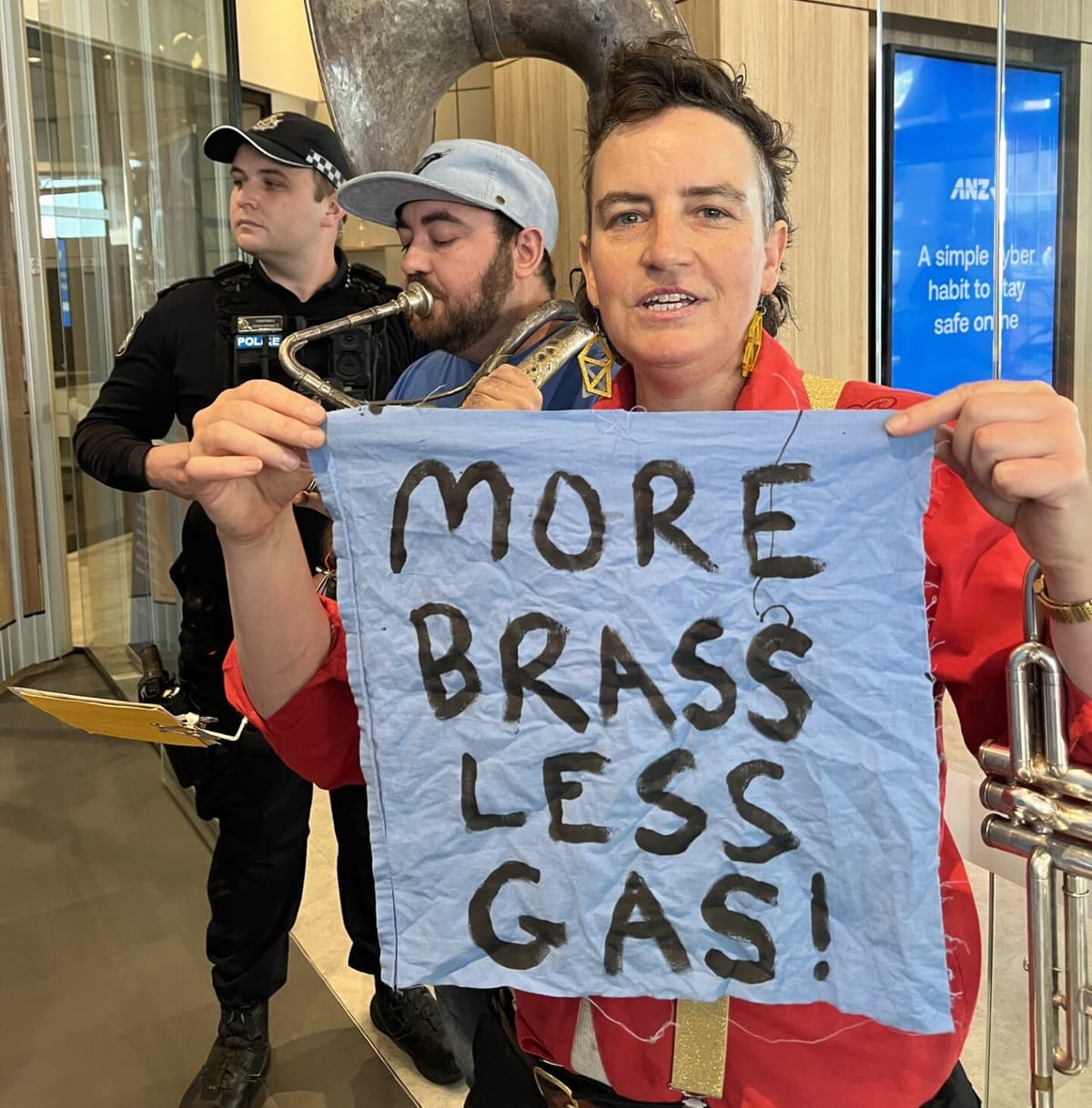
Marching band occupies ANZ branch over gas pipeline funding
This protest was the latest escalation in Rising Tide’s campaign calling on ANZ to rule out funding the North to East Australia (NEA) pipeline.
We are making progress in the transition to renewable energy at home, while remaining the world’s second-largest exporter of fossil fuels by climate-pollution content. Our neighbours are being asked to live with the consequences while we continue to profit from the cause.

Tue 13 Oct 2026 12.56 AEDT
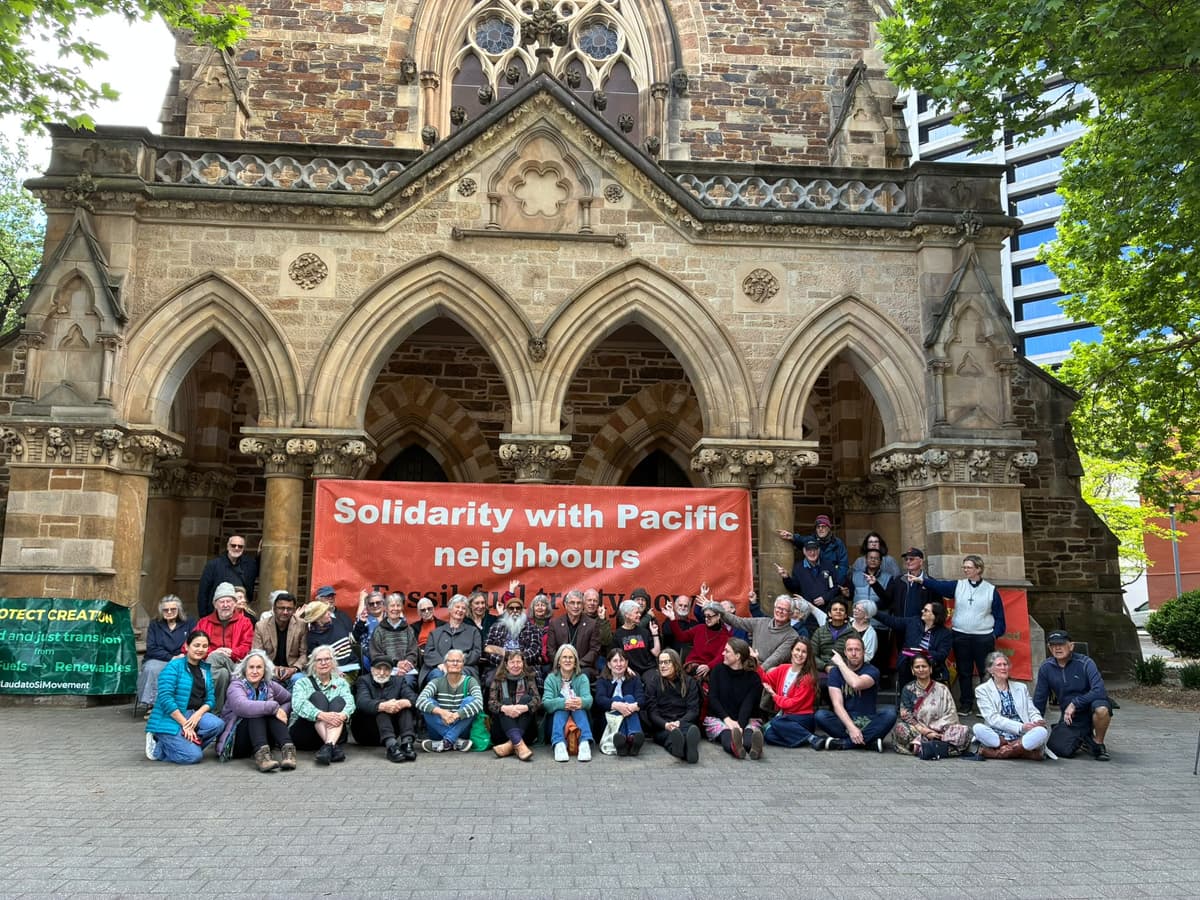
Photo: Supplied
This protest was the latest escalation in Rising Tide’s campaign calling on ANZ to rule out funding the North to East Australia (NEA) pipeline.
This week, the Pacific showed world leaders firsthand what climate change looks like. Back home, the Coalition and One Nation saw something else. They saw an opportunity to dog whistle and punch down on our Pacific nations.
The next round of negotiations will take place as a powerful El Niño intensifies those risks. In Papua New Guinea, water sources are already drying up, crops are failing, and food prices are rising. These impacts are arriving while the diplomatic calendar rolls ever forward.

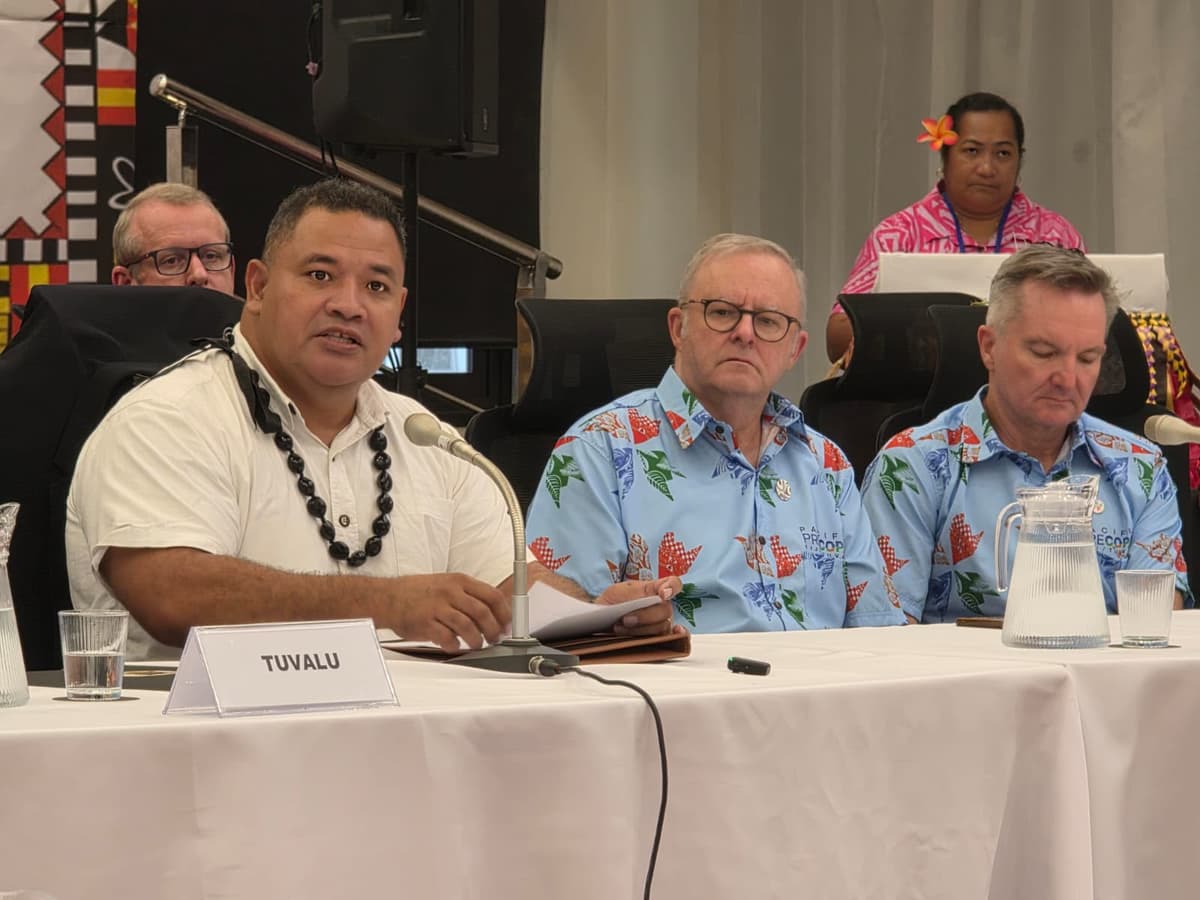
Canberra has become adept at speaking the language of Pacific solidarity. At the recent Pre-COP summit in Fiji, Anthony Albanese spoke of our Pacific family. Yet only weeks earlier, while Albanese was attending the Pacific Islands Forum, his government approved a further extension to a Queensland coal mine.
This is the contradiction at the heart of Australia’s response to the climate crisis. We are making progress in the transition to renewable energy at home, while remaining the world’s second-largest exporter of fossil fuels by climate-pollution content. Our neighbours are being asked to live with the consequences while we continue to profit from the cause.
Pacific church leaders have had enough of this contradiction. At the opening service of the Pre-COP summit in Fiji on 4 October, Archbishop Peter Loy Chong presented a statement organised by the Pacific Conference of Churches and the Fijian Council of Churches. Its words deserve not merely to echo around the world, but to thunder.
Do not stand at the foot of our suffering and admire us for how bravely we carry the cross of climate change. Help us take this cross down!
And then:
It is a sin before the Creator for wealthy nations and extractive industries to applaud our sacrifice while granting new drilling licenses, burning more coal, and offering empty pledges.
The impact of climate breakdown on Pacific peoples if we don’t keep 1.5°C alive hardly bears repetition here. As the Pacific church leaders themselves make clear, praising their people’s resilience while continuing to expand fossil fuels risks turning admiration for their suffering into an excuse for inaction.
There is a striking convergence here with a new Vatican statement on care for our common home, which frames ecological destruction as a sin against creation and the Creator. Pope Leo XIV is no mere follow-on from Francis on this issue.
The night before the Pre-COP began, Rev Charissa Suli, President of the Uniting Church in Australia, sent me photographs from Fiji of the statement. Archbishop Loy Chong had kindly given her a paper copy after she delivered a powerful sermon on moral accountability at the opening service. It made my hair stand on end. I emailed the statement to the Prime Minister’s Chief of Staff, Tim Gartrell, asking him to ensure the Prime Minister saw it as he travelled to Tuvalu and Fiji. Two days later, Gartrell replied that he had.
Australian faith communities responded two days later. Last Tuesday, 80 senior Australian faith leaders from different traditions signed an open letter asking the Prime Minister to stand with our Pacific neighbours, support a global Fossil Fuel Treaty, and commit to a fair, planned phase-out of coal, oil and gas. Faith communities in seven Australian cities held coordinated actions outside places of worship, unfurling giant banners reading “Love Our Pacific Neighbours – Fossil Fuel Treaty Now”.
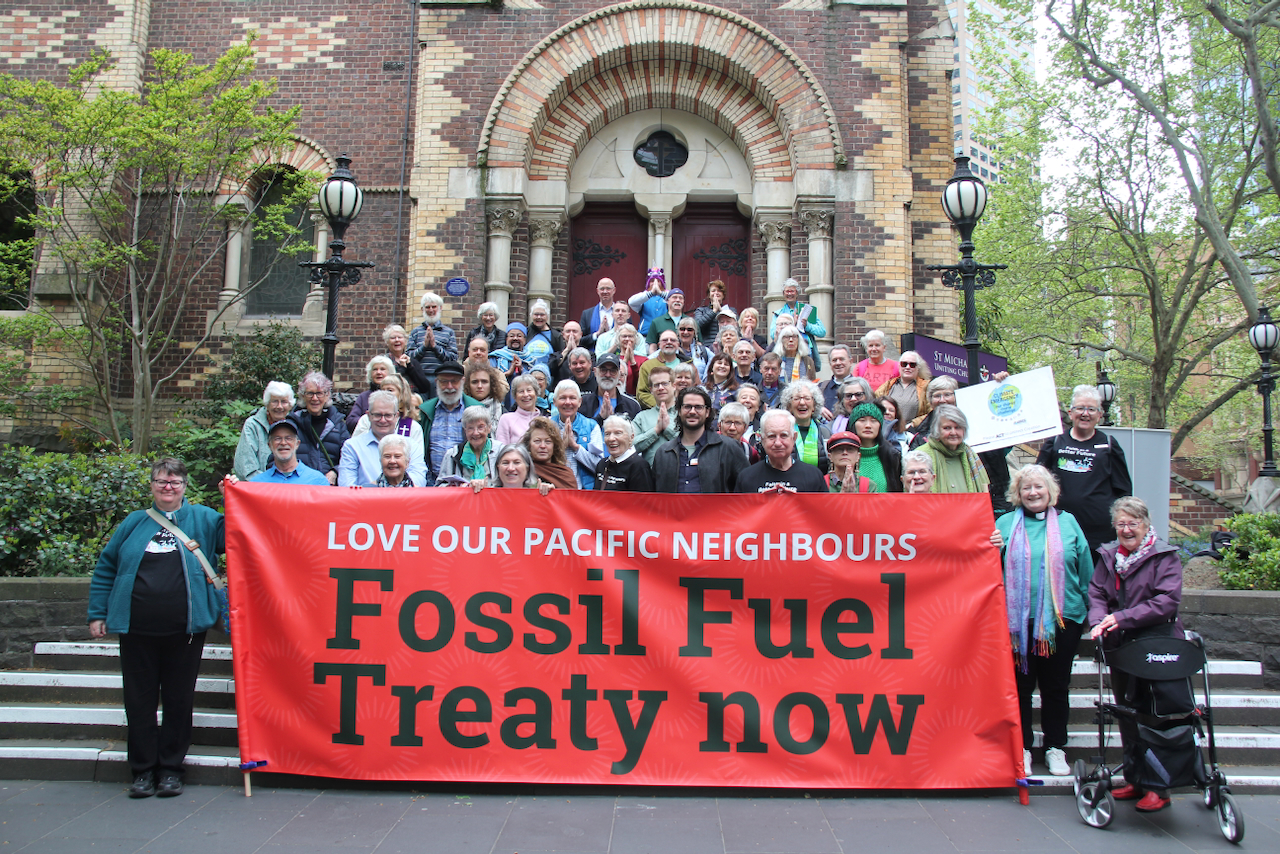
In Melbourne outside St Michael’s Uniting Church in the city.
Quality research, analysis, explainers and factchecks from experts you can trust.
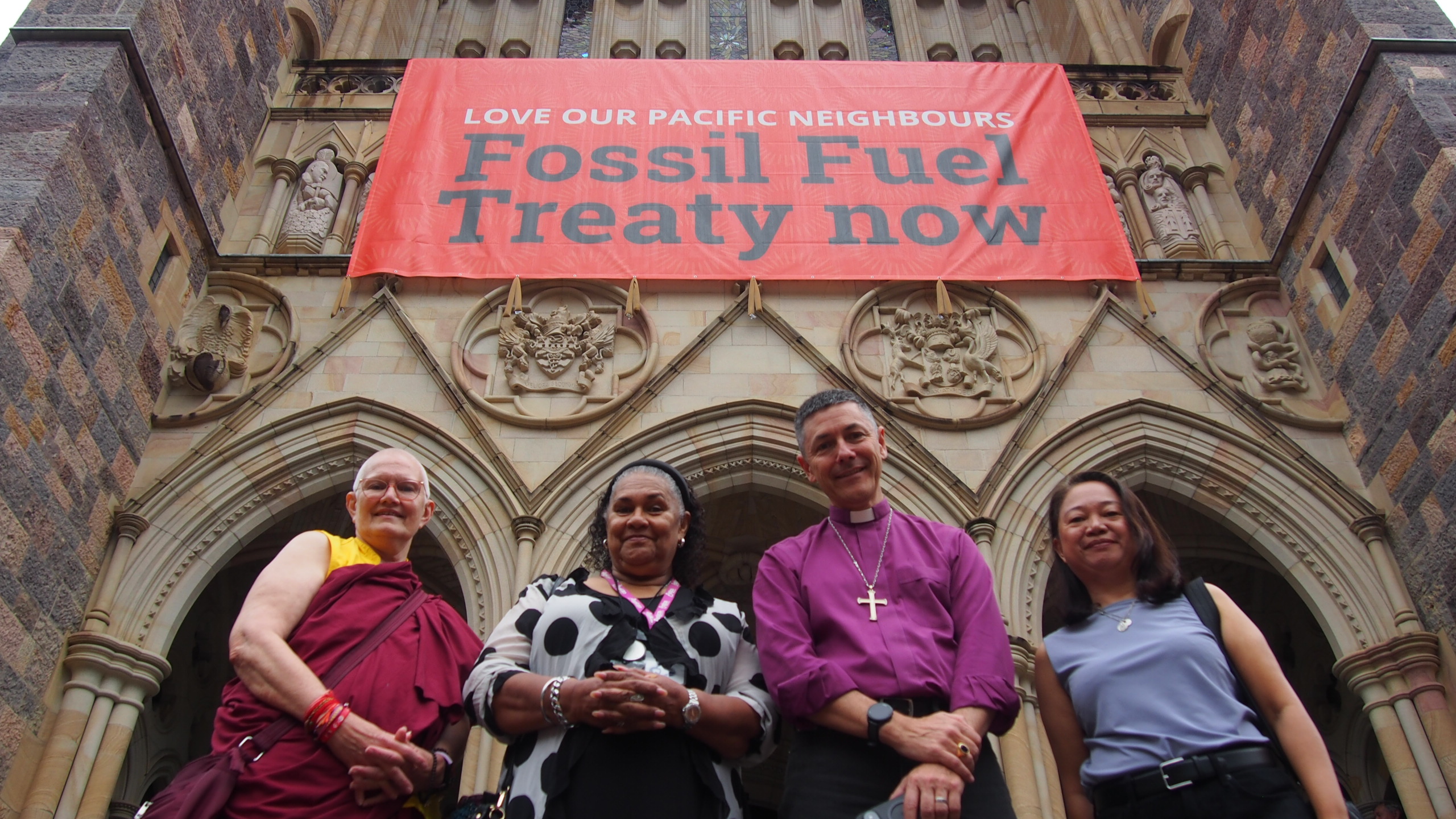
Outside St John’s Cathedral in Brisbane. Left to right: the Venerable Carla Pearse — Tibetan Buddhist; Sandra King OAM – Reconciliation Action Plan Coordinator for the Anglican Church Southern Queensland; Archbishop Jeremy Greaves — Archbishop, Anglican Church Southern Queensland; Cheryl Dugan — Director for Asia Pacific and Member Leadership, Laudato Si’ Movement
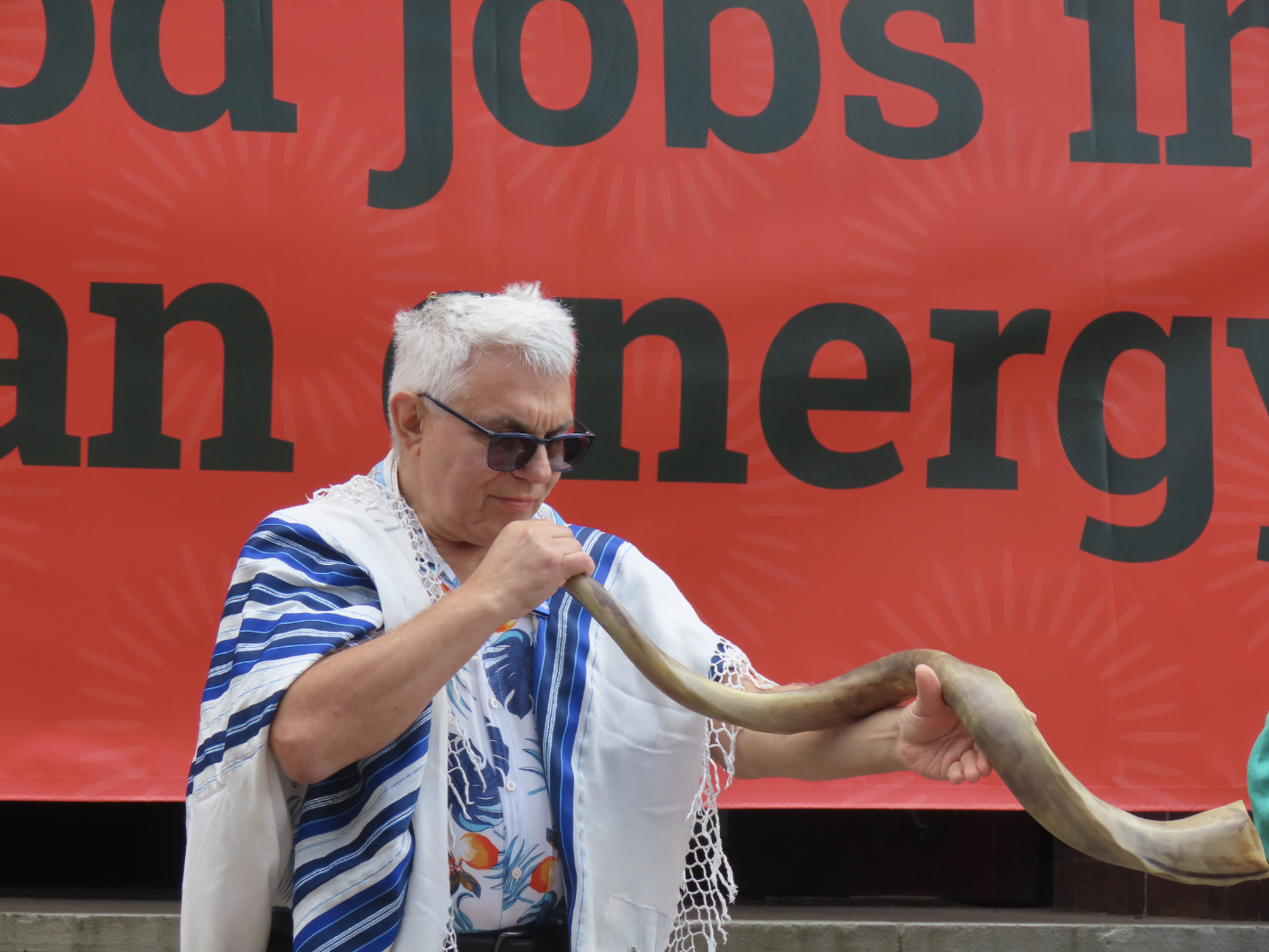
Rabbi Jonathan Keren-Black, Spokesperson on Climate Change, Association of Cantors and Rabbis, Australia and Aotearoa New Zealand, sounds a note on the shofar outside Christ Church Cathedral in Newcastle.
And then comes the Second Conference on Transitioning Away from Fossil Fuels, to be co-hosted by the governments of Tuvalu and Ireland, scheduled for July 2027. The Treaty campaign hopes this will be the moment to secure a formal mandate to negotiate a treaty. Australia will have another opportunity to show whether its commitment to climate action and the Pacific extends beyond rhetoric.
Support for a Fossil Fuel Treaty is growing among faith leaders and institutions in Australia. We are not starting from scratch. In 2022, the Vatican’s Dicastery for Promoting Integral Human Development expressed support for the proposed Treaty. More recently, the Catholic Bishops of the Global South called for a treaty in their March manifesto. The World Council of Churches, the international Muslim-led Ummah for Earth initiative and the Pacific Conference of Churches have also helped build a strong foundation of faith-based support. Our close relationships with Pacific churches and communities give Australian faith communities a particular responsibility – and an opportunity – to build momentum for a Treaty.
Our Pacific neighbours have been clear about what they need: an end to fossil-fuel expansion and transition away from fossil fuels, serious climate finance provided as grants rather than loans, support for loss and damage, and a meaningful role in decisions that affect their future.
What does it mean, in practice, to love our neighbours in the Pacific? It must mean more than warm words, family metaphors and admiration for their resilience. It must mean listening to their demands and changing course.
Our Pacific neighbours won’t let this go away. We won’t either.
Tejopala Rawls is the Executive Director of Australian Religious Response to Climate Change (ARRCC) and a member of the Triratna Buddhist Order.


