On Wednesday, 14 October, three speeches were given in Canberra at three different venues. The President of Palau spoke at the Australian National University. Tuvalu’s Minister for Climate Change and Environment, Maina Talia, spoke at the Australian Council for International Development (ACFID) conference. Australia’s Minister for Resources, Madeleine King, spoke at the National Press Club.
Together, they highlighted the gap between what the Pacific is telling us, and what Australia is saying back.
Halfway through President Surangel Whipps Jr’s address at the ANU, the alarms went off. The auditorium paused. Someone in the room remarked that, given the subject, the timing was entirely appropriate. They were right.
The President was speaking about the climate crisis. Science has been sounding that alarm for decades. Yet we treat the noise as an interruption instead of a warning. This is an immediate, current, existential threat, and the only sensible response to an alarm is to act.
Count who came
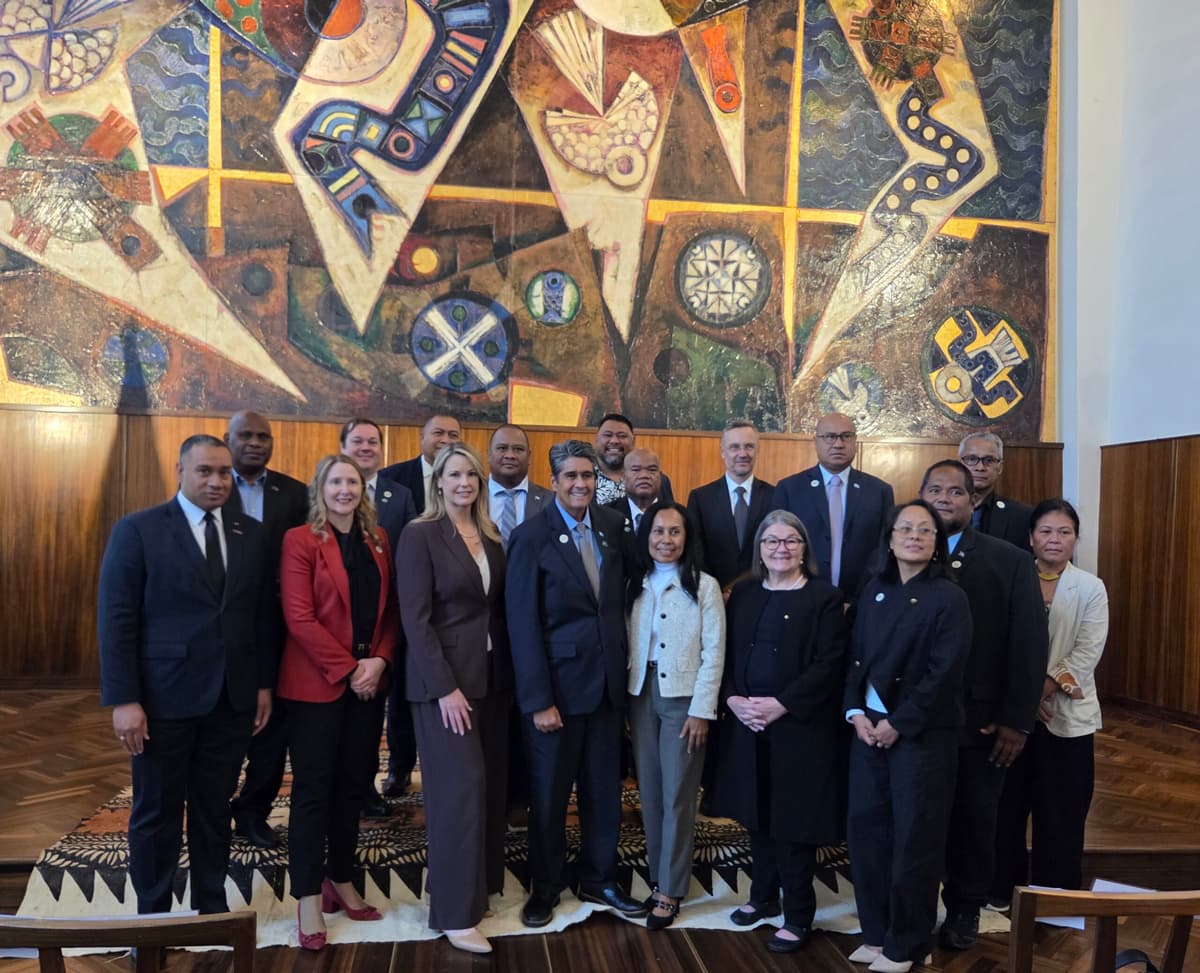
Whipps had just returned from Pre-COP in Fiji and Tuvalu, which Australia helped organise and co-fund. He had followed the media commentary here about who attended and what it cost. “Media scrutiny is important,” he said. “But so is perspective. And while cost matters, so does value.”
He called Pre-COP the most successful in its history. For the first time, Heads of State and Government were invited, at a meeting where leaders do not normally attend. Yet some dismissed it by “counting the leaders who were absent, rather than recognising the significance of those who came.” One commentator wrote that “all the big names were missing.”
So Whipps talked about size. Pacific states, he said, are custodians of nearly 20 per cent of the Earth’s surface. Their fisheries supply more than half the world’s tuna. Their currents shape rainfall and harvests across the globe. “The truth is, humanity actually depends upon our Blue Pacific for its food, climate stability and connectivity.”
Leaders of many of the largest emitters (except for Australia) were not there, he conceded. “But the Big Ocean States were. We came organised. We came prepared. And we came with solutions.”
Minister Talia, speaking to ACFID on the same morning, called Pre-COP “a resounding success.”
Most importantly, he said, communities in Tuvalu and Fiji “were able to witness firsthand what this international climate diplomacy was all about.” Leaders who visited Tuvalu left “with an impression of just how vulnerable our low-lying islands and states are to the devastating impacts of climate change.” The physical presence of leaders on Tuvaluan shores, he said, “means everything for those whose very lives, culture and future are at stake.”
Yet “the stark realities remain,” Talia said. “Our entire nation is under threat. For Tuvalu and other coral nations, we are standing on the absolute edge of survival.”
Tuākoi: what a good neighbour does
Talia then put a question to Australia. “Being a good neighbour is doing what ought to be done, doing the right thing,” he said. “Are they good neighbours to the Pacific or not? That is a question Australia should be pondering.”
The word he used for neighbour is tuākoi, a foundational concept in Tuvaluan culture. It means far more than the person next door. To be a tuākoi is to carry obligations of sharing, reciprocity and caring for others, especially the vulnerable.
That is how family speaks. It does not ask for charity. It asks those closest to it to do their share. At the Pre-COP in Tuvalu, Talia put it this way: “Today, we paddle in the same direction. When many paddles move together, even the longest journey becomes possible.”
Whipps made the same point. “The Pacific may feel these impacts first, but we share one region. What reaches our shores today will reach yours in Australia soon after.”
What our responsibility looks like
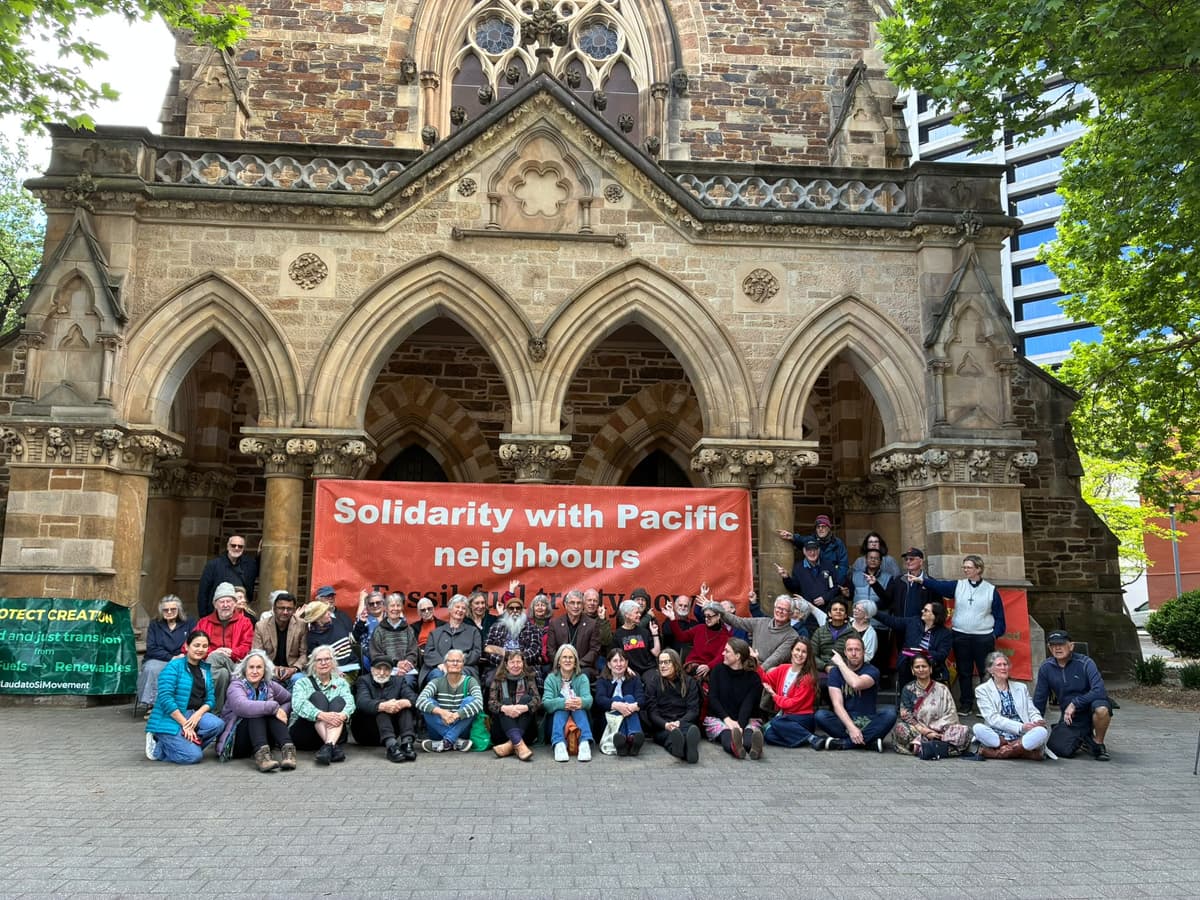
Talia was clear about what a good neighbour would do. “We cannot afford an overshoot,” he said, and the world needs “bold decisive action for more countries to lead us away from a fossil fuel dependent global economy.” He called on government, civil society, local communities and faith-based organisations to “stand together and push back against major greenhouse gas emitting polluters and fossil fuel exporters.”
Climate COPs are vital platforms, he said, but “they are simply not delivering at the speed that the crisis demands.” That is why he attended the first Transition Away from Fossil Fuels meeting in Santa Marta, Colombia, and why Tuvalu co-hosts the next one in July. The goal is “a dedicated platform where like-minded nations and civil society leaders can forge an unambiguous roadmap to phase out fossil fuels rapidly.”