

Shorter America This Week: Things are not normal; Muskism; Good men
In “Shorter America”, Dr Emma Shortis keeps you up-to-date on the United States with news and analysis that you can trust.
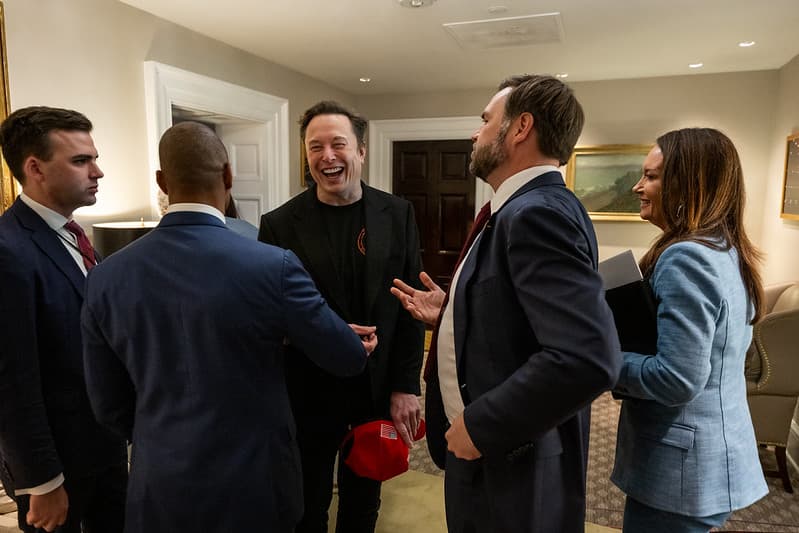
When did Russia win the war in Ukraine? Or when did Ukraine lose its war with Russia — not quite the same thing. Or when did President Trump hand Ukraine — or at least the valuable Russian-speaking parts of Ukraine — to President Putin? Again, not quite the same thing.

Sat 17 Oct 2026 09.36 AEDT
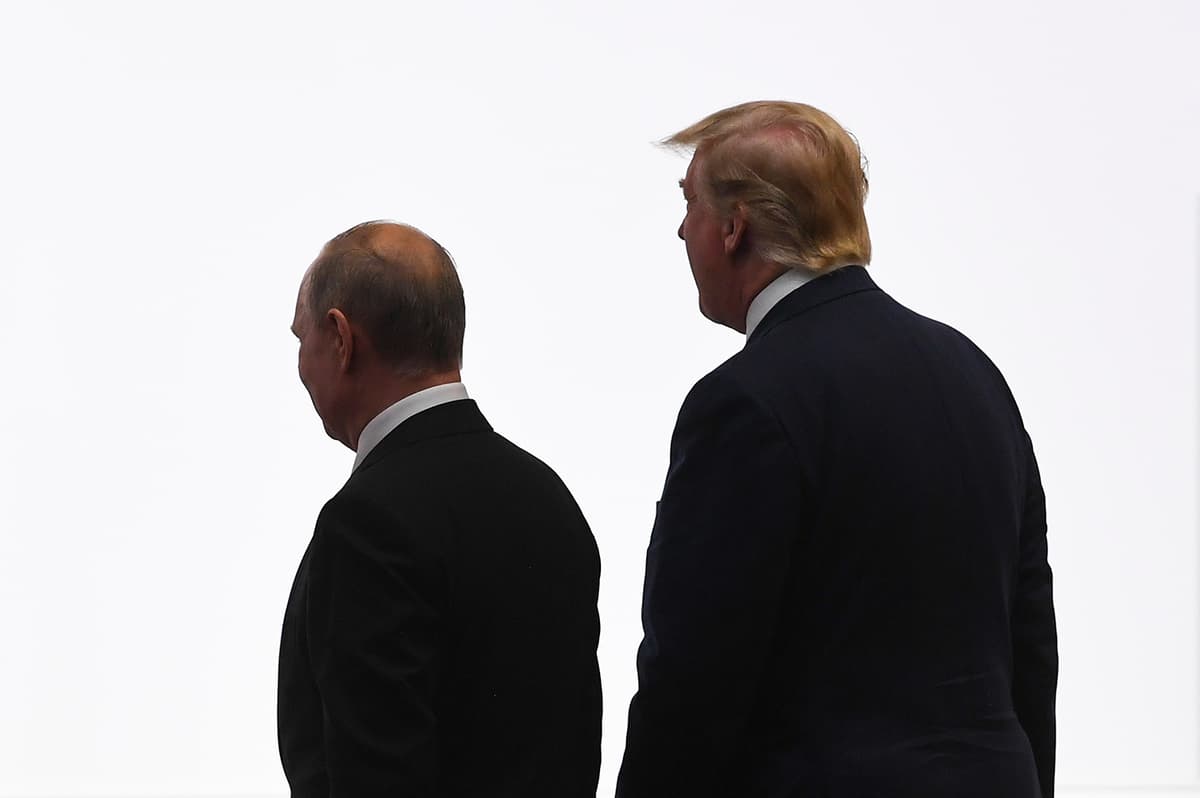
Photo: AAP Image/Lukas Coch
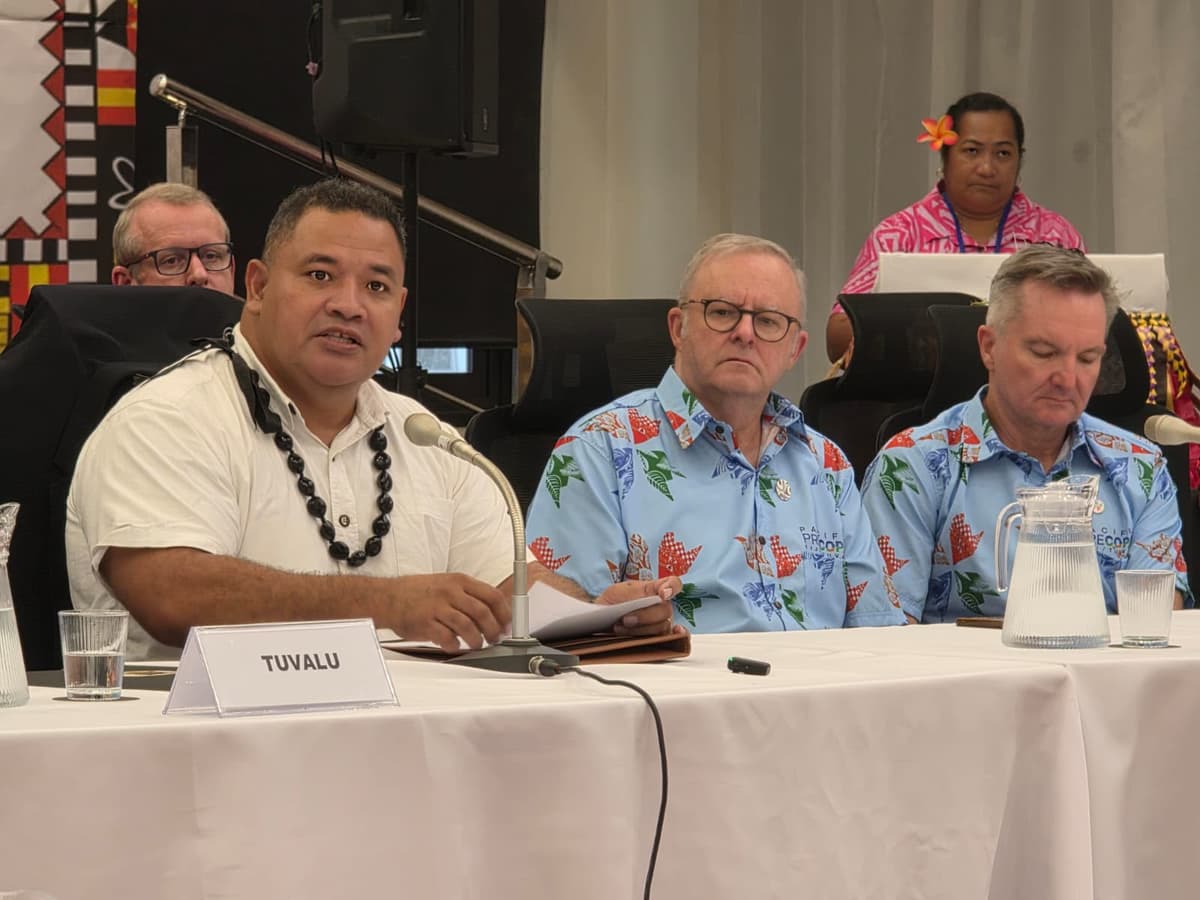
This week, the Pacific showed world leaders firsthand what climate change looks like. Back home, the Coalition and One Nation saw something else. They saw an opportunity to dog whistle and punch down on our Pacific nations.
In “Shorter America”, Dr Emma Shortis keeps you up-to-date on the United States with news and analysis that you can trust.
When did Russia win the war in Ukraine? Or when did Ukraine lose its war with Russia — not quite the same thing. Or when did President Trump hand Ukraine — or at least the valuable Russian-speaking parts of Ukraine — to President Putin? Again, not quite the same thing.
Was it Friday 10 October 2026, when Trump announced a deal with Putin that would inject Russian diesel (not much of it, in fact) into global supply lines in exchange for payment in American dollars that would fund Russia’s war effort? Or was it Tuesday 13 October 2026, when Elon Musk’s SpaceX corporation reduced speed limits on its Starlink communications channels thereby disabling Ukraine’s use of drones to attack Russian targets?
And now that Starlink services have been restored to Ukraine, who’s actually running US strategic policy anyway? Trump? Musk? Putin?
Trump’s obscene behaviour towards President Zelenskyy and his overbearing attitude towards America’s NATO partners have precipitated a serious security re-think in Europe. What is NATO without a substantially powerful and constantly engaged America in charge? And, more to the point, what is European security without a reliable American ally? Saudi Arabia is asking itself the same question, as is Taiwan and, if it can see through Prime Minister Netanyahu’s malevolent manipulation of Trump, Israel.
What Trump’s temperamental and impulsive behaviour demonstrates is that, all the blandishments of senior US diplomatic and military officers notwithstanding, none of them are bankable without the say-so of the President. This is a significant policy and command vulnerability for any US ally, as it is for the US itself.
Of course, Australia has known this since Prime Minister Menzies and his Treasurer Harold Holt were shown the Oval Office door by President Kennedy in 1963. Australia sought reassurance that America would have its back should Indonesia attack Australian forces during the confrontation over Malaysia’s independence. We didn’t get it.
But, despite all the evidence, and just like NATO members, Australia has pursued a faith-based approach to its alliance with America, believing that the US fleet would sail over the eastern horizon come what may, and that our security would be guaranteed. The AUKUS fiction is the latest indulgence in this triumph of faith over strategy. It doesn’t work like that, however. As Trump has so clearly demonstrated, the US will always follow self-interest, no matter how elegantly — or offensively — packaged.
Australia, like our WW2 European allies, also indulges in a comfortable nostalgia for the good old days when the American colossus bestrode the world and we could all shelter in its shadow. The good old days, we must remind ourselves, were a fiction based on the myth of American invincibility and altruism as the foundations of its victory in Europe and the Pacific. Without the mass of Stalin’s Red Army and the persistence of Chinese forces (from both sides of China’s then political spectrum) in tying down one and a half million Japanese troops, the outcome of war in Europe and the Pacific would have looked very different.
Quality research, analysis, explainers and factchecks from experts you can trust.
Australia’s strategic policy makers now need to face the fact that alliances no longer address the demands of an anomic, chaotic and multi-dimensional global system where interests once again define strategic possibilities. It’s a lesson that has been repeated throughout history. Since the formation of the Latin League (8th century BCE) to the dramatic end of the Concert of Europe in 1914, alliances have offered little more than breathing space between wars over the distribution of power. Until the establishment of globally recognised rules of behaviour in the UN Charter which emerged from the massive destruction and suffering of WW2, wars were the constant contestation for power.
As faith and nostalgia fade away like the dreams they were, the global community needs to find some way to prevent armed conflict and the increasing disregard for human rights that underpins inaction on global warming, the blasé acceptance of nuclear weapons as legitimate even in conventional warfare and the proliferation of nuclear weapons among rogue states.
We must remember that Australia has been here before. When Evatt and his team headed for San Francisco in 1945, they were charged by Prime Minister Curtin with getting a result. They did. The UN Charter, with its carefully drafted preamble, and the Universal Declaration of Human Rights were a tribute to Evatt’s tireless and at times pugnacious diplomacy. Globally accepted rules constituted a critical circuit-breaker in the perpetual recourse to war.
In a world that is deeply unsettled by America’s disregard for laws and conventions, Russia’s persistence in the belief that it has an historic right to set the rules in its sphere of influence regardless of the interests of its neighbours, and China’s ambivalence on rules in general, there is a growing fatalism.
That can only be addressed by leadership, such as the Canadian Prime Minister Mark Carney displayed at Davos in January this year. And for leadership to work, it must be based on trust, which is even harder to generate. Yet these are the real strategic challenges: how to prevent war, not how to win war when it occurs.
Australia has all the power it needs to exercise the agency required to push for a new world order built around current and emergent needs rather than nostalgia for some version of a past that never was. But whether we have the confidence and the initiative to exercise that agency is moot. Our docile acceptance of every weird pronouncement from the Oval Office and our silence on the severity of the global economic, political and strategic consequences of quixotic American policy diminish our authority as a constructive and substantial operator on the world stage.
We need to dump faith and nostalgia and advance the national interest. That’s the necessary challenge.
Allan Behm works in The Australia Institute’s International and Security Affairs Program.


