Wed 20 May 2026 15.03 AEST
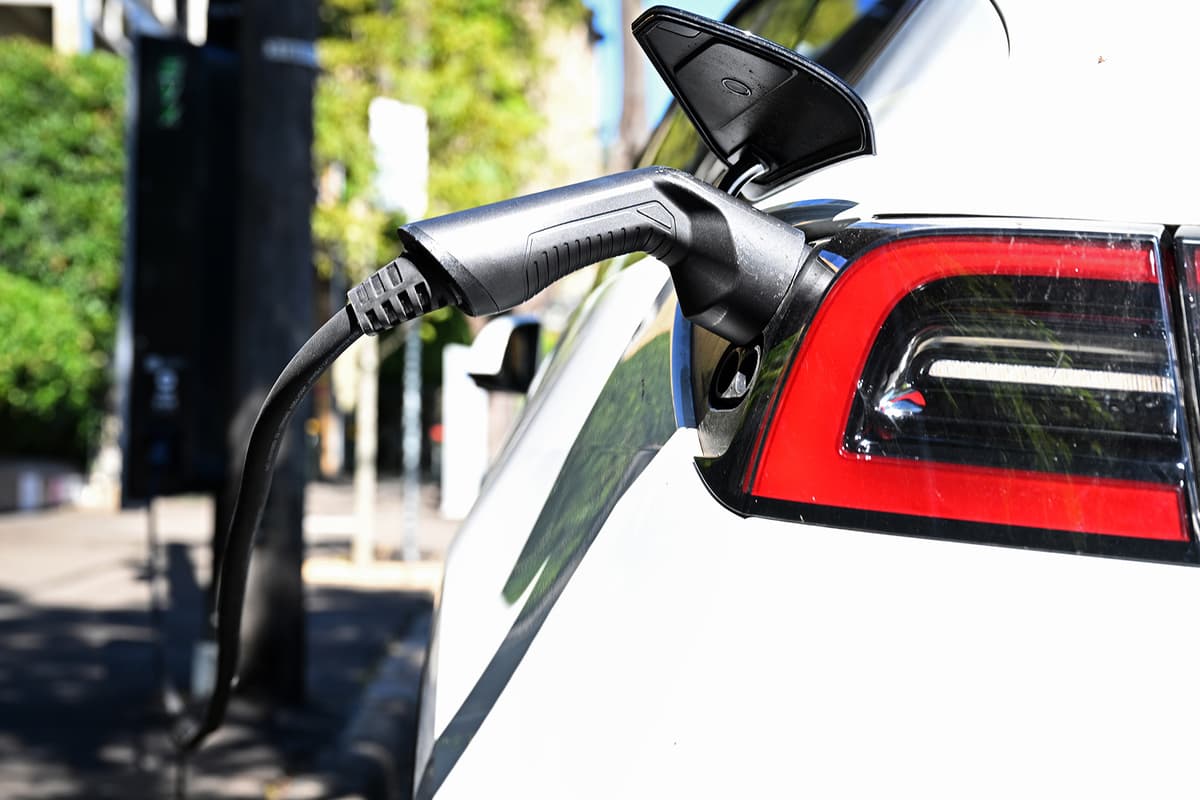
Photo: AAP Image/Dan Himbrechts


Like many people, I try hard to make a difference.
I care deeply about the planet, and feel uneasy about the increasingly grim outlook for our future. I feel motivated to do my bit to help wherever I can.
I enthusiastically recycle, I thoughtfully dispose of my green waste, and have both a worm farm and a compost bin to reduce household food waste and improve the health of my garden soil.
I’ve spent years teaching my family how to recycle properly, removing compostables, soft plastics, and general recyclables from the kitchen bin and disposing of them properly.
For the weekly shop, I take reusable bags, and (much to the dismay of my partner and two sons), I have been working hard to reduce our household’s meat consumption.
We’ve made changes outside too, installing water tanks and solar panels on our roof. Recently, we levelled up our solar panels and added a solar battery system – one step closer to being completely off the grid! But despite all of this, there was one glaring contradiction: I drove a turbocharged, six-cylinder sports SUV.
When I first thought about selling what I had in favour of a new car, I knew I wanted something more environmentally friendly, but I had the usual anxieties about electric vehicles. Like many Australians, I was ready to settle on a hybrid – fully electric vehicles (EVs) seemed too expensive, and I was nervous about how they would fit into my everyday life.
Questions kept circling in my head: How would I charge it? What about road trips? Could an EV possibly feel as responsive and enjoyable as my current car? Hybrid power seemed like a sensible stepping stone before eventually making the move to a full EV.
I set myself a budget of $35,000 and started researching. It quickly became obvious that my budget would not stretch to a new car. During the search process — admittedly with a lot of encouragement and coaching from my partner — I also realised something important: a hybrid still requires petrol, servicing, oil changes, and ongoing mechanical maintenance. With a full EV, my only worries would be tyres and battery health.
That realisation completely changed my thinking.
Quality research, analysis, explainers and factchecks from experts you can trust.
I began researching second-hand EVs and discovered there are far more options available than I had expected. My advice to anyone considering the switch is simple: do your homework. Read independent reviews and reliability reports from trusted sources such as Chasing Cars, Cars Guide, and ReDriven. (Full disclosure: my son works for one of these companies.)
In the end, I purchased a 2022 Volvo XC40 Recharge. The total price was about $5,000 over my original budget, but I could not be happier with the decision. The car still has one year remaining on the factory warranty and another four years on the battery warranty. It is incredibly quick off the mark, has adaptive cruise control, and an excellent sound system — all features that make long drives far more enjoyable.
At first, driving an EV felt strange. The car brakes for me, it makes almost no noise, and the acceleration is instant. But I quickly adapted to the regenerative braking, and now it makes perfect sense to me. In my opinion, every car should have it.
As for charging — one of my biggest initial concerns — it has turned out to be far easier than expected. Of course, we had a few teething problems at the very beginning, but adapting to the EV lifestyle is surprisingly quick and easy. We initially got by plugging in the Volvo’s battery with a standard household outlet overnight. After a few weeks (and a bit more homework), I had a home EVcharger installed for about $2700. Generally, we now charge the car once a week, usually timed for when the sun is shining and our solar system is generating power.
Last month we completed our first road trip in the EV. Before leaving, I planned the route and downloaded the Tesla, NRMA and PlugShare apps. The car conveniently estimates battery usage for each trip, which makes planning charging stops straightforward.
We stopped once in Goulburn and used a Tesla Supercharger. The battery was at 25% when we arrived, and within about 40 minutes it was charged to 95% at a cost of around $37 — just enough time to grab lunch and a coffee. The Tesla app even notified me when the car was ready to go.
For the remainder of the trip, we averaged around 150 kms per day and charged overnight at our Airbnb accommodation. While slower, overnight charging is significantly cheaper and incredibly convenient.
I can honestly say I am thrilled with the car. It looks great, drives beautifully, requires no petrol, and — best of all — produces zero exhaust emissions.
So, if you have been thinking about making the switch to an EV, my advice is simple: do the research, overcome the fear of the unknown, and take the leap. You may be surprised at just how easy — and enjoyable — the transition can be.

