In a Federal Parliamentary inquiry, the big brewers, Lion and Carlton United, estimated that together they control around 85% of the Australian beer market. They are owned by Japan’s Kirin and Asahi respectively. So, where to for Aussie beer? Regional Australia.

Mon 2 Nov 2026 10.13 AEDT
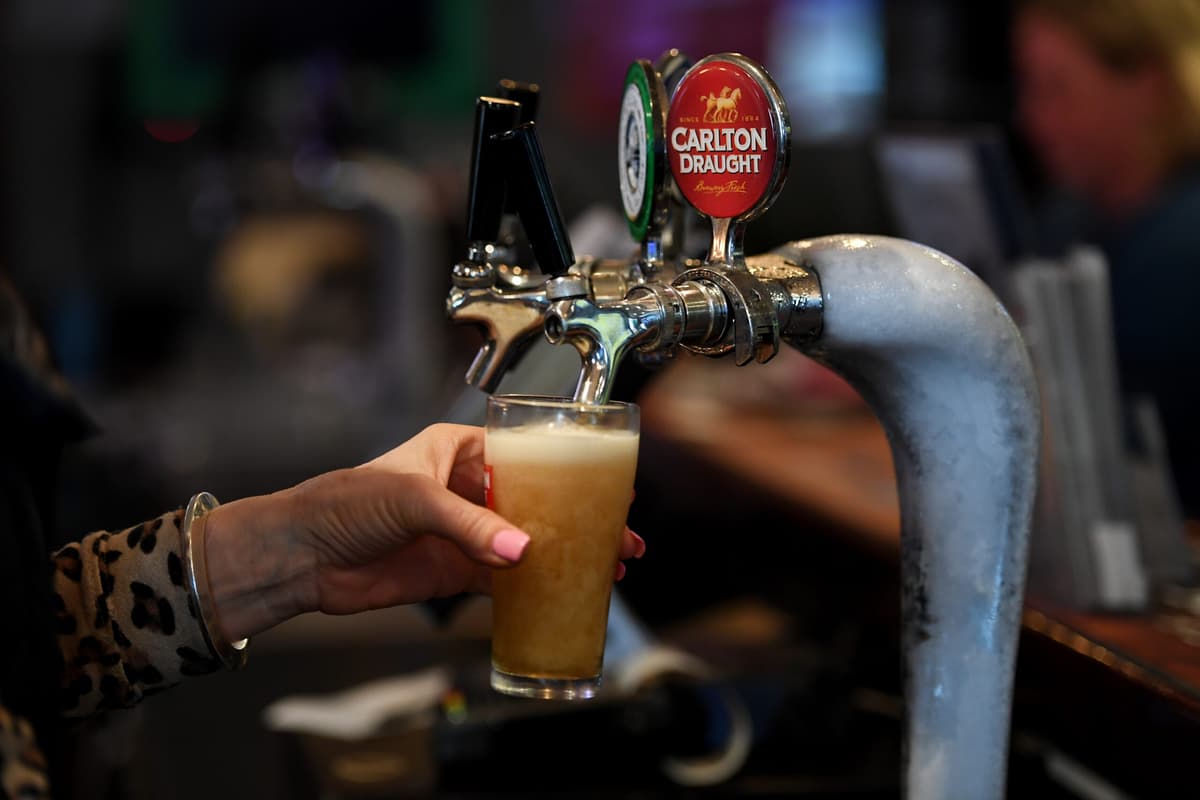
Photo: AAP Image/Tracey Nearmy


Australia’s beer market has a competition problem.
Multinational companies own at least 85% of our beer.
Read that again.
In a Federal Parliamentary inquiry, the big brewers, Lion and Carlton United, estimated that together they control around 85% of the Australian beer market. They are owned by Japan’s Kirin and Asahi respectively.
That follows an earlier Australian Competition & Consumer Commission (ACCC) estimate that the two foreign-owned brewing giants controlled more than 90% of the market, following Lion’s purchase of the formerly independent Stone & Wood.
Two giant Japanese corporations own the beers most Australians think of as our own – beers such as VB, Carlton, Great Northen, Tooheys, Cascade…even Fosters.
Even lots of the ‘craft’ beer brands are owned by these companies – Pirate Life, Balter, Mountain Goat, just to name a few
So, where to for Aussie beer?
Regional Australia.
More than 50% of Australia’s 600 independent breweries are located in regional/rural Australia, where they are often cornerstone businesses for the local economy.
Regional breweries are not just a manufacturer, but a hospitality venue, tourism destination and significant local employer all at once. Visitors might come for the brewery, but they also book accommodation, eat at other venues and spend money throughout the town.
I work at Bright Brewery in regional Victoria. A family-owned business in a town of 2,500 people, 4 hours from the nearest capital city, that has operated for 20+ years.
I am incredibly proud that our brewery is one of the largest employers in the area and is also a major sponsor of local sporting, social and arts clubs. I have seen firsthand the community ethos that comes with being a regional business and how often the first question asked by staff and management is what is best for the community, before what is best for the business. My experience at Bright, and the moral compass that guides the business, has led me to advocate for our industry as hard as I do. It has shown me the value of independent beer beyond what is in my pint glass.
But Bright isn’t alone in this ethos. On the other side of the country is Rocky Ridge Brewing, an independent brewery in Busselton, WA. One of the most community-minded teams in the industry, they are also pioneering sustainability, having phased plastic out of their business, among other initiatives. Since its inception in 2015, Rocky Ridge has grown into another regional business employing more than 100 people and reinvesting back into their community.
Independent breweries employ brewers, chefs, salespeople, drivers, marketers, hospitality workers and apprentices, while spending money with farmers, transport companies, electricians, plumbers, engineers, designers, printers and countless other Australian businesses. We sponsor sporting clubs, donate to school and community fundraisers, put on live music, support festivals and give community groups somewhere to hold events.
The economic footprint is much bigger than the beer itself.
We do these things because we aren’t just operating in these communities. We are part of them.
Quality research, analysis, explainers and factchecks from experts you can trust.
When one of these businesses does well, that success spreads. Another piece of equipment means work for a local tradie. More production means another order for an Australian grain or hop grower. A busier taproom means more shifts for local staff. This is money going directly into the local economy and a message that domestic manufacturing matters.
That is why Australian ownership matters.
The foreign-owned brewers do employ Australians. They do contribute to our economy, and that shouldn’t be dismissed. But the economic model is fundamentally different. Their ownership, profits and decision-making sit offshore. Their decisions aren’t based on what is best for the local economy; their decisions aren’t even based on what is best for Australia. Their decisions are what is best for their foreign shareholders.
That is why, despite selling only one tenth of all beer in the country, independent brewers employ nearly 60% of Australia’s brewing workforce. Imagine what we could do with 20% or more of the market.
To achieve this, we could use some help, not just from beer drinkers, but from governments.
First, beer tax needs to change.
Australia’s beer excise framework was introduced nearly four decades ago. That’s not only before the rise of independent brewing in Australia, but before the internet too. It has also just seen its 79th increase since its inception.
The industry has changed enormously since then, but the tax system has not. We need a framework that recognises the difference between small Australian-owned breweries and global multinationals.
If we want more Australian beer employing Australians and investing back into Australian communities, our tax system should help make that possible.
Secondly, excise reform means little if independent breweries can’t get their beer in front of consumers.
Because Kirin and Asahi control 85% of the beer market, competition is not about price and quality but about power. The giants can force pubs to exclude other brewers. Similarly, the best supermarket shelves are taken by the majors.
These barriers mean that no matter how tasty and well-priced we make our beer, we struggle for sales. This is not fair competition.
Government regulators like the ACCC need to break apart the exclusionary contracts that block independent producers from breaking into the draught beer market. For the retailers, the ACCC could mandate a minimum amount of shelf space in store for domestically owned beer.
Next time you walk into a pub, look at the taps. Count how many genuinely independent Australian beers are pouring.
Then ask yourself: does this pass the pub test?
Evin Craney is Chair of the Independent Brewers Association and Operations & Brand Manager at Bright Brewery.

