Australians have ourselves pegged as rascals. We tell ourselves that we are larrikins, disrespectful of authority with an unshakable sense of humour and a laid back attitude. We are deluding ourselves.

Fri 6 Nov 2026 09.01 AEDT
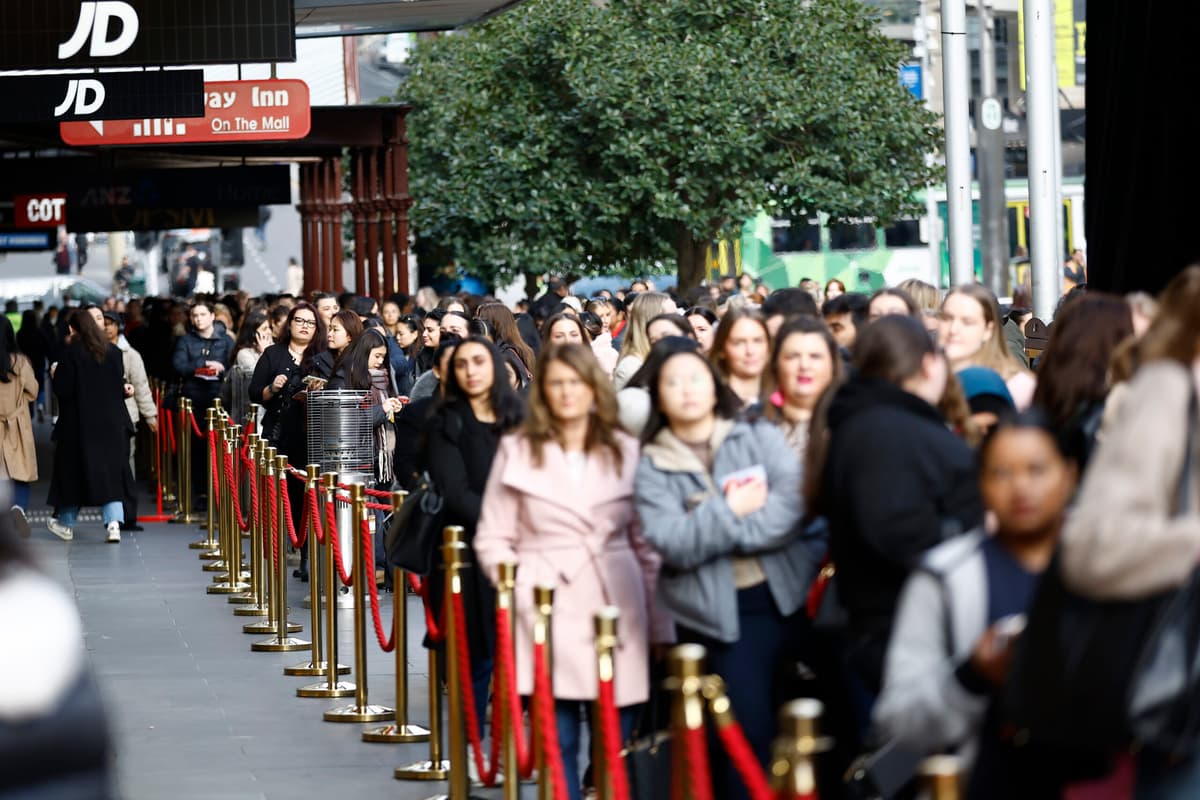
Photo: AAP Image/Con Chronis


Australians have ourselves pegged as rascals. We tell ourselves that we are larrikins, disrespectful of authority with an unshakable sense of humour and a laid-back attitude.
We are deluding ourselves.
It only takes a single loud neighbour, a faulty product, or, heaven forbid, an outdoor event, and we reach for the rule book. An ombudsman or an inquiry is paramount, and taking a grievance to NCAT is a national pastime.
I count myself among this number. We love a rule, we love procedural fairness, we want somewhere to direct our complaints. Things must be correct.
But we have taken it too far. So long spontaneity, getting something to eat after 10pm, letting people be or turning the other cheek. I briefly worked at the ‘000’ switchboard, and we spent a full half of our time on New Year’s Eve fielding noise complaints. Noise complaints!
To appreciate the level we have taken this obsession to, consider the normalisation of parking fines, not only for parking in valuable real estate for longer than allotted, but for parking pointing the wrong direction. Recently, my family were having a lovely Chinese meal, my husband diligently topping up the parking meter on his phone, only to find a $140 parking fine on the dash for not parking nose to curb.
Not to go the full French, but this is illegitimate. The angle isn’t safer, better, or less disruptive if the nose is to the curb. What are we doing as a society?
The rules have gone too far – and we don’t know where to stop.
I have an evocative pre-children memory that I like to cling to. Sitting in the Retiro Park in Madrid on a sunny day. Groups of young, vital people (like me at the time) enjoying the afternoon on the grassy hill on a perfect day. At some stage, young men carrying plastic bags filled with ice and loose cans of cold beer came around and made a buck selling god’s nectar to thirsty youths. If this scene played out in a major Australian city, the SWAT team would arrive in under three minutes.
Quality research, analysis, explainers and factchecks from experts you can trust.
It’s soothing knowing that there is order, that our homes and buildings and medicines are safe, that you’re unlikely to be cheated by your whitegoods retailer or your sunscreen manufacturer. That should the unthinkable happen, you can find a tribunal to take your complaint to.
The devotion to the rules and living in a society that really works masks the reality; in fact we are a more unequal country, with the rich getting richer, Aboriginal Australians incarcerated at horrifying rates and glaring generational wealth gaps growing day by day. For serious issues, of course, we should have trust in our systems, courts and institutions to help us resolve issues.
Meanwhile, the self-serve check out is filming us, the police investigate themselves when things go seriously wrong, our rights to protest are being chipped away, and a few American companies have access to essentially all of our data – maybe we could afford to be a little less relaxed and a little more French.
Instead, we are reaching for the rule book and the complaint line at the drop of a hat and the rules, and the surveillance needed to enforce them, are encroaching closer and closer into our everyday lives. With very little pushback. And we’ve arrived at a society where we are bamboozled and horrified when people don’t queue correctly.
Shouldn’t we aim for a bit more communicating before it gets to the stage of lodging paperwork, angling for revenge in the community facebook group or tagging your disappointing airline on social media? Is living in filter bubbles making it harder for us to encounter, let alone tolerate views different to our own? Couldn’t we try to navigate in the grey for our interpersonal disagreements and approach with a bit of curiosity?
We need to be able to disagree better. In days gone by, our families, our neighbours, our churches, our unions, our sports clubs had a normalising impact; they still do. But they also drummed into us that we are part of a broader collective; our individual concerns and grievances couldn’t subsume the collective. Someone would tell you to pull your head in. If someone was going off the deep end, there was support in real life, rather than crowds encouraging the worst online.
Maybe that is where the fine line between a functioning society and a country that has gone to the dogs lies. Systems and processes that support real fairness that people believe in and a healthy desire to resist the entrenchment of meaningless control.
Emily Mulligan is a writer based in Sydney.

