Woodside's announcements last week are symptomatic of deeper problems with how Australia regulates carbon pollution, and the Safeguard Mechanism sits at the heart of them.
Tue 10 Nov 2026 12.02 AEDT
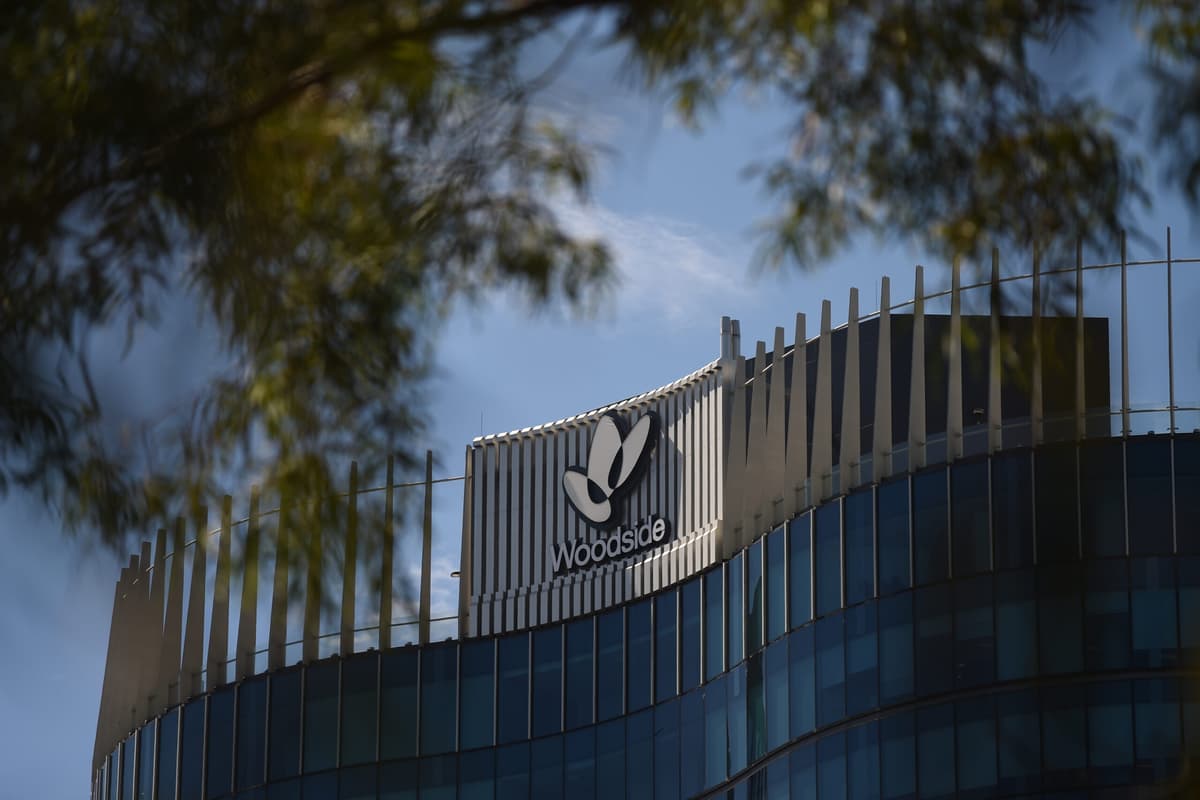
Photo: AAP Image/Aaron Bunch


Woodside’s announcements last week are symptomatic of deeper problems with how Australia regulates carbon pollution, and the Safeguard Mechanism sits at the heart of them.
Last Thursday, Woodside announced a new target to cut its Scope 1 and 2 emissions intensity by 30 per cent by 2035. It landed alongside bombshell news that it was also axing more than 500 jobs, despite making more than US$1.6 billion in half-year profit on the back of the spike in oil and gas prices during the Middle East conflict.
When it comes to emissions reduction targets, fossil fuel corporations are no strangers to gilding the lily, helped by government policy and regulation that’s harder to untangle than the annual Christmas tree lights.
The question that came to mind last Thursday was just how Woodside came to that 30 per cent figure, and whose carbon credits are actually doing the heavy lifting?
Let’s break down the change to its Scope 1 and 2 intensity target. Intensity measures emissions per unit of oil and gas produced, not the total pollution released. If Woodside’s overall production of oil and gas extracted and processed increases significantly, its total Scope 1 and 2 emissions can still go up, even if the intensity figure drops by 30 per cent.
It’s an accounting trick. The company gets a headline that sounds like a win, while the atmosphere gets more carbon, not less.
But that’s not all. Woodside’s net equity targets allow carbon credits to be used to lower the accounted net total, rather than cutting actual physical greenhouse gas emissions. Last year alone, Woodside used almost 1.3 million tonnes of credits to cover the gap between its target and what it actually emitted. That isn’t decarbonisation; it’s bookkeeping.
To go deeper, Woodside’s own reporting says it met its 2025 target through “a combination of underlying emissions performance at our facilities and the use of carbon credits”. Strip out the credits, and we see gross Scope 1 and 2 emissions were still around 6.6 million tonnes, just 2.5 per cent lower than the year before. Credits allow a company to report a headline reduction number, while the stacks and flares keep burning.
Carbon credit schemes in Australia and overseas have faced, and will continue to face, persistent questions about whether they deliver the abatement they promise, or simply allow fossil fuel companies to pay to keep polluting.
None of this is happening in isolation. In recent months, Woodside abandoned its Scope 3 investment and emissions abatement targets, including dropping plans to invest US$5 billion in clean energy projects by 2030. Scope 3 emissions, released when customers burn Woodside’s gas, account for about 90 per cent of the company’s total climate impact.
Woodside walked away from Scope 3 emissions while recording a 27 per cent jump in half-year net profit, boosted by oil prices spiking during the conflict in the Middle East.
Just yesterday we learned that emissions from Australian fossil fuel (coal and gas) exports – when burned overseas – have almost doubled over the past two decades. These exports account for roughly five per cent of global emissions.
Quality research, analysis, explainers and factchecks from experts you can trust.
The targets Woodside has kept are the ones with the most room to fudge: measures that can be flattered by intensity ratios and padded out with credits. Walking away from emissions targets, or seeking to hide the total volume through carbon credits, is a dereliction of its clean energy obligations.
This comes at a time when Woodside’s Scarborough gas project is on track to ship its first LNG cargo before the end of the year, and the Browse proposal to drill for gas around Western Australia’s pristine Scott Reef is under scrutiny by WA’s environmental watchdog.
Remember, this is a company that gets most of its gas for free, and pays marginal amounts of tax to export it overseas for vast profits.
Western Australia is not seeing emissions reductions overall, and the Safeguard Mechanism is a significant reason why.
Under the Safeguard Mechanism, the country’s biggest polluters don’t have to cut a single tonne of pollution at their own facilities. They can meet their legal limits by buying and surrendering carbon credits like ACCUs, and there is no cap on how many they can use. A company that leans on credits for more than 30 per cent of its baseline only has to explain to the regulator why it didn’t do more on site.
That’s the flaw at the heart of our carbon system. Credits change the net number on a compliance report, but they don’t change behaviour. A facility can meet its standard on paper while its turbines, flares and vents run exactly as before.
Woodside leans heavily on lobbyists to secure government support, yet without proper oversight and real obligations, corporations will keep walking away from what’s actually best for community and climate.
We are losing the fight on climate, and tinkering at the edges of this system won’t turn that around. Australia needs proper reform of how we account for and cut carbon pollution, starting with real abatement at the source and credits as a genuine last resort, not a business model.
With the government now reviewing the Safeguard Mechanism, there is an opportunity to stop big polluters marking their own homework. Companies like Woodside should be required to report gross absolute emissions first, before any credits or intensity ratios, with firm limits on how much of a target can be met through offsets.
Investors, regulators and the community should take every Woodside climate emissions claim with a pinch of salt until it comes with one simple number: how many tonnes of greenhouse gas pollution are actually going into the atmosphere?
Australians deserve straight answers, not tricky accounting.
Matt Roberts is the Executive Director of Western Australia’s peak environmental organisation, the Conservation Council of WA, working to establish robust nature protection laws, action on climate change, and ending fossil fuel projects to pave the way for a renewable energy future.

