Fri 13 Nov 2026 09.20 AEDT
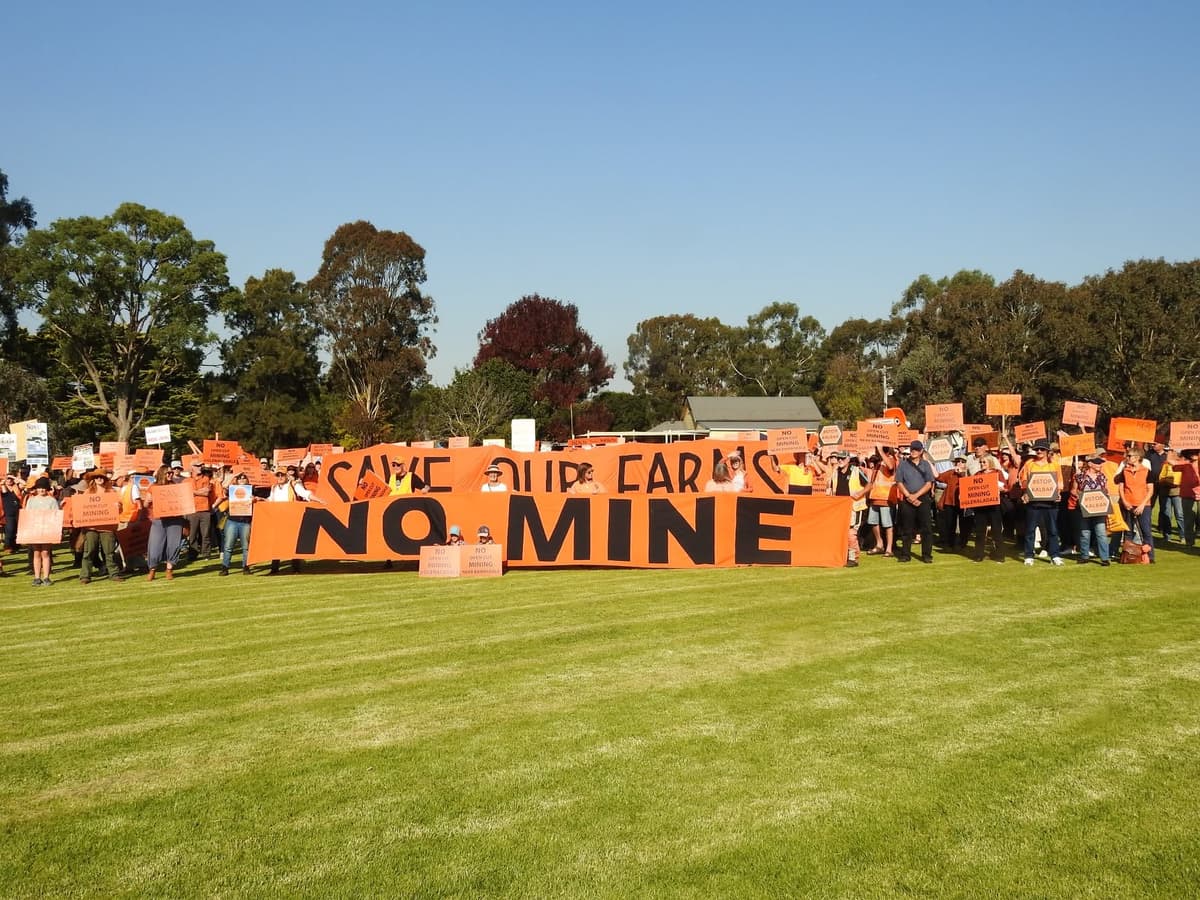
Photo: Mine Free Glenaladale


Have you eaten at McDonald’s recently? If so, or even if not, you’ve probably eaten lettuce and other vegetables grown in Glenaladale, a thriving horticultural area 25 kilometres west of Bairnsdale in eastern Victoria.
Growing food for Australians is the easy part of the job here in Glenaladale. The hard part has been fighting a mining project that is proposed to sit just over the Mitchel River from us, directly upwind.
You don’t need to be a vegetable expert to see the problems with this. Digging a big hole next to a river will affect the water we use to grow vegetables, while big piles of sand upwind will blow dust in the direction of your Big Mac.
We’ve been fighting this madness for 13 years, with considerable success.
In 2021, following an extensive environmental effects statement (EES) process, we argued that the serious environmental and social impacts of the mine meant it was not in the interests of our community or the state. We were helped by organisations like The Australia Institute and Environmental Justice Australia.
We won. Victoria’s Independent Advisory Committee and the former Victorian Planning Minister rejected the project, due to its potential impacts on our farms and community.
That should have been the end of what was then called Kalbar Resources.
But mining projects are like zombies – very hard to kill completely – and so Kalbar Resources was renamed Gippsland Critical Minerals and given 12 months to rescope the failed project, improve community consultation and obtain acceptance from First Nations People.
And so now we face a second EES process following the renewal of two retention licences in 2024.
Changes made to the mine do little to address the fundamental problems. One of the changes to address dust, a 1.5-kilometre buffer zone to protect the multi-million-dollar horticultural industry, has already been tested and failed.
The mining company made a “test pit” to assess the dust impacts of a full-scale mine. On four occasions, dust blew off the test pit and down the valley towards our farms, prompting the Victorian Farmers Federation to put in a formal complaint.
Quality research, analysis, explainers and factchecks from experts you can trust.
Runoff from the site was also observed going into the river following heavy rain. The rain also managed to bog the water trucks that are supposed to spray water for dust suppression.
If that sounds bad, you need to realise that the area of the test pit was only 4 hectares, whereas the proposed mine will have a disturbed area of 280 hectares at any one time.
The total mine site covers 1,950 hectares, situated on a plateau in the watershed of the heritage Mitchell River and the Perry River, both of which flow into the Ramsar-listed Gippsland Lakes and wetlands. These important waterways are threatened by the mine’s runoff and leaching of tailings (waste material from the mine). Even worse, this deposit is high in “slimes” and other attributes that make the proposed “inpit tailings disposal” slow to dewater, prone to ground water contamination and vulnerable to leaching.
Where the water will go is one question, and another is where it will come from.
The main water sources under consideration are fully allocated: the Mitchell River, the La Trobe aquifer and the Macalister River. Who will give up their water to this unwanted mine? Recycled water from East Gippsland Water and two gigalitres of indigenous-owned Cultural Water are also options.
The project will see the largest clearance of vegetation by any recent development in Victoria, including threatened species and hundreds of ancient red gums.
Despite these and many other problems, the Victorian Government has watered down the scoping requirements for the mine and announced a 40% reduction in approval times for mineral sands projects, changes that could see a fair and proper assessment being sidestepped.
The Victorian Government claimed that the project would assist with Victoria’s renewal energy transition, yet now Gippsland Critical Minerals has joined the US Defence Industrial Consortium and applied through that organization for funding.
This is what Mine Free Glenaladale is fighting! Dust in your burgers. Slime in your rivers and lakes. And all for the benefit of a mining company and the US Defence industry.
Robyn Grant is the President of Mine Free Glenaladale. Visit their Facebook page to learn more and consider making a submission on the upcoming Environmental Effects Statement.

