So, it is thanks to major party self-interest that the two minor parties were invited, and ironic that it will be on Sky News – no friend of the Greens – that the left-wing party makes its debate debut. But what the debate gains in depth, it loses in breadth. Just one debate has been scheduled, and only on subscription-based services.

Tue 17 Nov 2026 11.51 AEDT
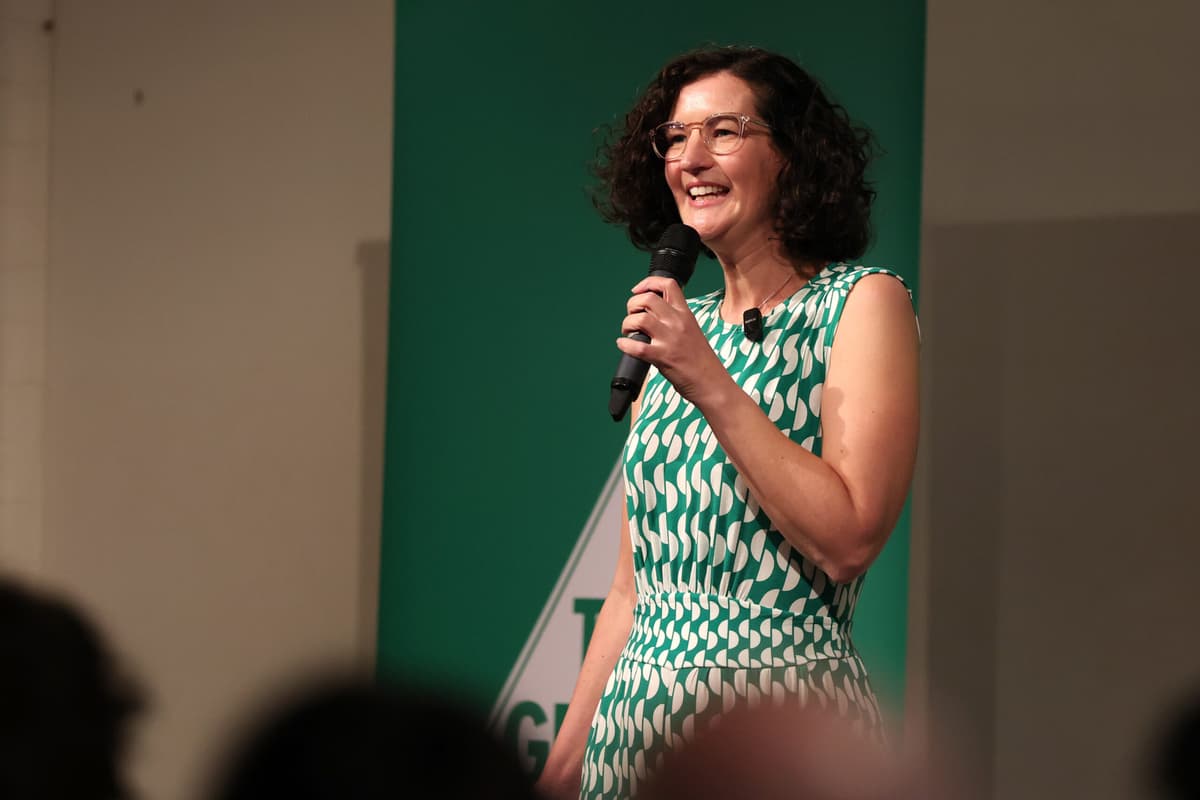
Photo: AAP Image/Con Chronis


Tonight, Ellen Sandell, leader of the Victorian Greens, will have Sky News to thank as she joins Labor Premier Ben Carroll, Liberal Opposition Leader Jess Wilson and One Nation leader Warren Pickering in the leaders’ debate.
The Greens have long argued that, as Australia’s largest minor party, they should be invited to leaders’ debates. The Greens have also called for an independent debates commission that would decide questions like venue, format and invitees, instead of these being decided by ad hoc negotiations.
Commentators on Sky News, now called News24, have pumped One Nation’s tyres for months. Carroll demanded Pickering be included in the Sky News/Herald Sun hosted debate, presumably because Labor wants voters to be reminded that a Liberal–National government may need One Nation support. The Liberals responded by saying the Greens should be invited if One Nation is.
So, it is thanks to major party self-interest that the two minor parties were invited, and ironic that it will be on Sky News – no friend of the Greens – that the left-wing party makes its debate debut.
But what the debate gains in depth, it loses in breadth. Just one debate has been scheduled, rather than three or four, and only on subscription-based services. Neither national broadcaster the ABC nor free-to-air Nine could get the parties to agree on debate rules.
The usual argument for excluding minor parties is that they have no hope of forming government. One Nation’s meteoric rise in the polls has challenged that logic. The far-right minor party came close to replacing the Liberals as state opposition in South Australia this year and may do so in NSW in March 2027. Some WA Liberals describe One Nation as “the opposition in waiting”. The Greens also have ambitions to replace Labor.
Even when One Nation and the Greens are unlikely to win government, it is useful for voters to hear from them. When Liberal and Labor disagree, it is often Greens on the crossbench who cast the deciding vote; after the Victorian election, One Nation may be in that position. Other countries often include multiple parties in debates, even those not in a position to form majority government. Wales had six party leaders in the debate; Canada four. There were several debates for the 2024 UK general election, with anywhere between two- and seven-party spokespeople depending on topic, format and host.
Australia is a multi-party democracy. The combined vote for the Labor and Liberal–National parties has declined sharply since the 1980s, and at the 2025 federal election more people voted for independents and minor parties than for Liberal–Nationals. Major party support has fallen further: the latest federal polling suggests fewer than half of Australians intend to vote for a major party. In Victorian state polls, One Nation is equal second with Labor on 22%, behind the Coalition on 31% (at time of writing).
Quality research, analysis, explainers and factchecks from experts you can trust.
About half of Victorians do not support the two major parties, so it seems fair that others are represented in the leaders’ debate.
At their best, debates test and challenge the policies of each party and see leaders present clear alternative governments. At last year’s federal election, Prime Minister Anthony Albanese and Opposition Leader Peter Dutton clashed at four debates. Dutton was pressed on his party’s nuclear policy, and Albanese on his apparently poor relationship with US President Donald Trump. Both articulated distinct positions on Welcome to Country ceremonies.
In Victoria, there are stark differences between parties. The Labor government has focused on infrastructure, only to face concerns about costs and criminal influence. The Liberals are planning to scrap Australia’s first treaty with Aboriginal Australians and other truth-telling and reconciliation work. One Nation apparently wants Victoria to receive less GST revenue because other Australians should not prop up “the most fiscally and morally bankrupt state”. The Greens have called for publicly owned supermarkets.
All these positions deserve interrogation. It is a shame that there will be only one debate, but it is fitting that it will feature the leaders of four very different political parties. And while I regret the paywall, it is unlikely the debate would have featured One Nation or the Greens if it were hosted by anyone but Sky News and the Herald Sun.
An independent debates commission would be welcome but is no longer necessary. The ABC and other free-to-air broadcasters have a new point of leverage for future debates: they can proceed with the debate even if one of the party leaders refuses to attend. With two speakers, it is impossible to hold a debate if one drops out. With four, it is perfectly feasible to proceed with the remaining three.
The competing plans for Victoria from the Labor, Liberal–National, One Nation and Green parties deserve scrutiny. Victorians will benefit from seeing these four visions debated tonight, but would have been better off with several debates, hosted by free-to-air and public broadcasters as well as subscription-based ones.
Bill Browne is Director of the Democracy & Accountability Program.

