What kind of country are we creating? That was the question independent senator David Pocock asked his Senate colleagues in a vain attempt to sway the major parties to vote against autocratic and sweeping defence laws he said were “a war against Australians”.

Mon 23 Nov 2026 12.00 AEDT
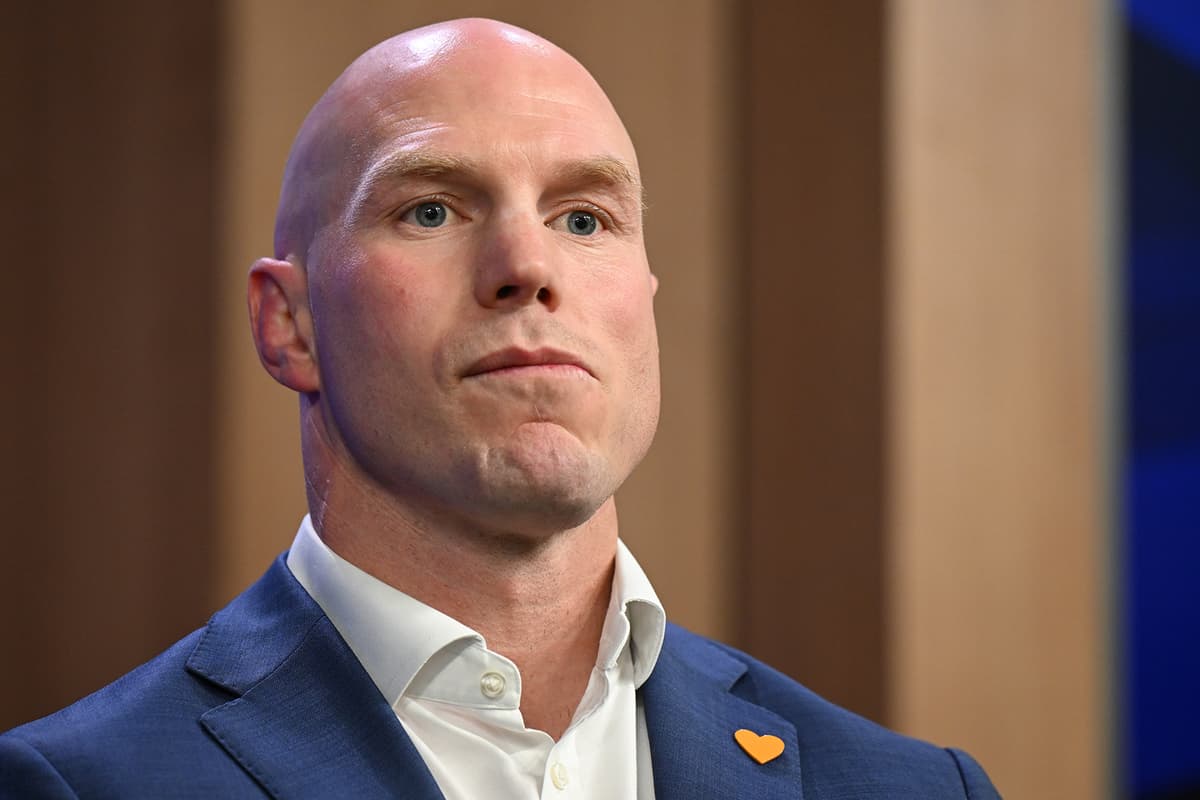
Photo: AAP Image/Lukas Coch


What kind of country are we creating?
That was the question independent senator David Pocock asked his Senate colleagues in a vain attempt to sway the major parties to vote against autocratic and sweeping defence laws he said were “a war against Australians”.
He wasn’t the only one to use that sort of emotive language. Greens leader David Shoebridge said the major party support for the legislation was a “war on democracy”.
Usually that sort of hyperbole comes with eyerolls and a quiet acknowledgement that the theatre is a necessary part of the game.
But not this time. This time, it might be understating it.
But, to the opening question – what kind of country are we creating? It’s always instructive to look at the evidence and what has gone before.
The parliament, and most of the media, will be looking forward – there are only four sitting days left in this calendar year and, come Friday, the summer break officially begins. We won’t find too many answers there.
So let’s take a look at recent history to answer Pocock’s question.
What sort of country are we creating?
One where we think it is “premature” to regulate against AI-driven killer robots, all while increasing the number of killer robots we are purchasing. Defence doesn’t call them that, of course – that would be too emotive. Instead, it calls them armed AI-enabled drones, or autonomous vehicles with integrated weaponry, or autonomous weapons systems.
Officially, the Australian Defence Force has a policy of having some sort of “human in the loop” with its killer robots. But we’re not really sure what that looks like in reality, or how much control that human has in whatever part of the loop it’s landed in. And while other nations push for a ban on AI killer robots in fraught talks in Switzerland, Australia thinks existing regulations and humanitarian laws have us covered, and any sort of ban is premature. While we are buying as many of the things as we can get our hands on. That’s the sort of country we are creating.
At the same time that the government, with the help of all but nine senators, rushed through laws that will give public servants the powers to override state, territory and some Commonwealth laws for defence purposes – which can include weapons testing, waste dumping and data centres, as well as impose draconian penalties on Australians for protesting or even taking photos of defence sites or assets, whether they know it’s a defence site or not, oh, and with no appeal – the Commonwealth Electoral Amendment Bill was also tacked on to the guillotine.
The part that entrenched the power of established political parties – including One Nation – while limiting what independents and new political parties can raise and spend had already been passed. From January 1, there is a $1.5-million donation cap for established parties, while indies have a $50,000 cap. Political parties can also spend more for electoral advertising than independents. And anyone already in the parliament will also receive more public funding than those trying to break in.
Thursday’s guillotined debate was about fiddling with some of the funding mechanisms and declarations, which Pocock called “an uncapped amount of money to flow from their huge investment vehicles into their political accounts, exempt from caps applied to independents and minor parties”.
But they had already made the major funding changes – this was just about ensuring the mechanisms for their own investment vehicles could legally flow to campaigns.
Quality research, analysis, explainers and factchecks from experts you can trust.
You would think that, given all the concern about AI creating deepfakes, the social media algorithm’s impact on elections and the overall concern about declining faith in democracy, the major parties would at least support a truth-in-political advertising push. But no.
Pocock’s amendment for penalties for any authorisation of materially inaccurate or misleading electoral matter, including AI, with a new electoral communications body to adjudicate on the issue, was rejected. Why should Australians have faith in electoral materials? That’s the sort of country we are creating.
Which shouldn’t be surprising – because this is the sort of country we have already created.
Australia is a nation that has to be told to take responsibility “for the rights of Indigenous peoples and ensure national minimum standards”. One that blocks the UN Special Rapporteur from entering youth detention centres, leaving it to conclude that “Indigenous peoples’ rights are unsafe in the hands of Australia’s states and territories”.
It’s a country that shackles people even as they give birth and strip-searches children and goes all “tough on crime” even when we know that not only does it not work, it makes things worse.
Our leaders are so committed to being “tough on crime” to win elections and headlines, they’ll push to reveal the names of alleged perpetrators accused of crimes, even if that means revealing victim-survivors’ identities against their will.
We are the sort of nation who won’t really talk about fossil fuels, but will speak very pretty words about working together, even as Pacific Islands face the very real reality of global warming. We take no responsibility for our exported emissions and don’t plan to. In fact, we want to increase those.
The sort of nation that will protect some, but not all, workers from AI. One where writers and “other artists” can’t expect to get recompense for their work being stolen, and where we have an AI employment body that, so far, hasn’t looked at what jobs people are losing to AI – even as we start hitting record levels of redundancies.
We are the sort of nation that will sacrifice people for the economy. One that will cut funding for the NDIS and call it rational, while claiming cutting fossil fuel subsidies for companies making billion-dollar profits on human misery and war is irrational.
Our leaders have created a nation where gambling companies can’t even have their advertising banned, and the government will build houses for US defence personnel but not Australians in need. One where the security state can operate largely unchecked, as long as it just claims “national security”. A nation that hates legitimate protest, that operates at the behest of foreign powers, and one that is sleepwalking towards authoritarianism.
So the other question then arises: What sort of country do we want to create? And is this it?
Amy Remeikis is a contributing editor for The New Daily and chief political analyst for The Australia Institute
This piece was first published in The New Daily. Read the original piece here.
Advertisement