Wed 25 Nov 2026 08.57 AEDT
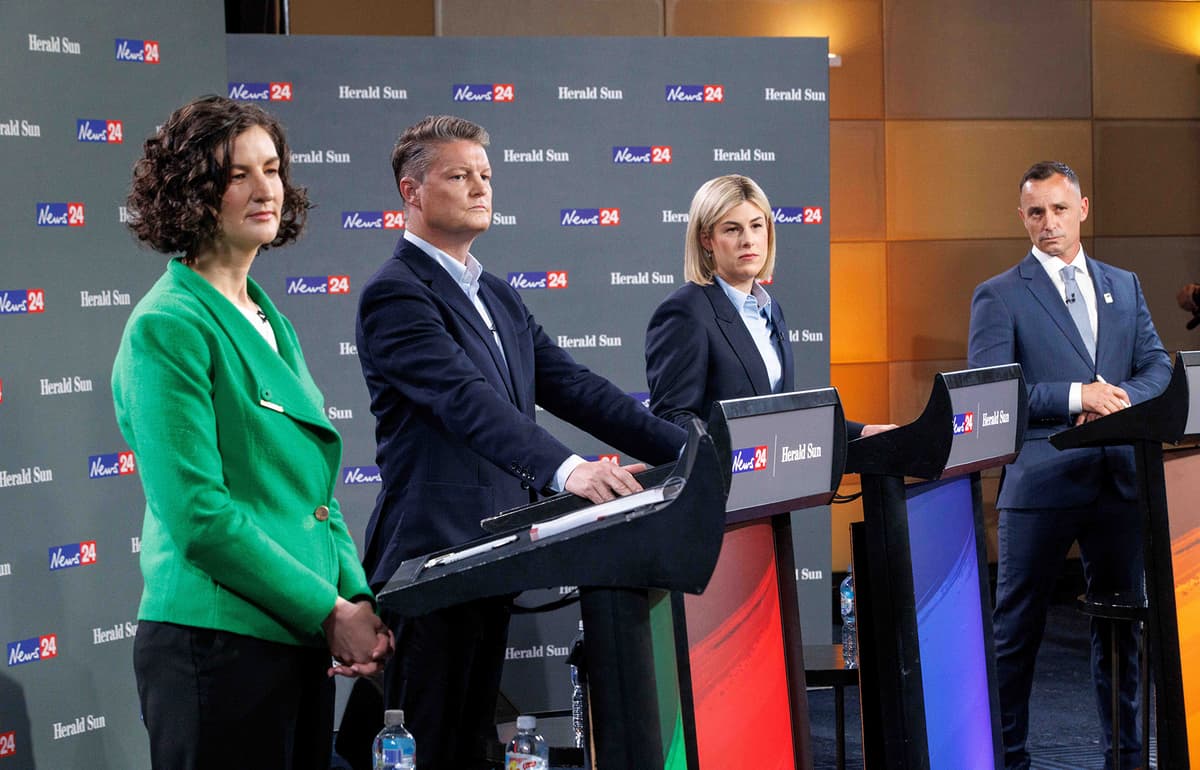
Photo: Victorian Greens leader Ellen Sandell, Premier Ben Carroll, Opposition Leader Jess Wilson and Victorian One Nation president Warren Pickering take part in the People's Forum ahead of the Victorian state election. (AAP Image/David Geraghty)


With just days remaining until Victorians hit the polls, the cost of living is a centerpiece to almost every political party’s election campaign.
It’s clear just how many people are being crushed, struggling to access the everyday essentials they need to simply get by. How each party plans to tackle the cost-of-living crisis will no doubt impact the voting decisions of many Victorians.
But what we’re not seeing so much of in the headlines is how this crisis is impacting the community services who are on the frontlines, those supporting people most in need in areas like family violence, community and mental health, housing and homelessness, education, youth, children and families, justice and disability. And what’s at risk when these services are being crushed too.
With increased demand and rising costs, frontline community services across Victoria are raising their own hand and sounding an economic alarm that cannot be ignored.
If the new Victorian Government doesn’t hear that alarm, a sector that employs upwards of 300,000 people, delivering essential services that prevent harm, save lives and build community wellbeing, will fall victim. And it won’t be the organisations and frontline workers that suffer most. It will be the 1 in 8 Victorians living in poverty and facing entrenched disadvantage that will increasingly lose the support they desperately need to get by and in many cases, to stay alive.
Over the last 10 years, community sector funding levels have fallen around 8 per cent behind real costs.
But it’s not just the overall funding figure that’s hurting the sector. Short term, insecure government funding arrangements, which dominate the makeup of community sector contracts, have made the problem dramatically worse.
In the 23-24 Victorian Budget, 35% of Department of Families Fairness and Housing (DFFH) budget lines were funded for two years or less. In the latest budget, this proportion has more than doubled – 74% of budget lines receive just one or two years of funding.
These contracts carry a level of inadequacy and uncertainty that undermines sector sustainability, resilience, and capability. They contribute to staff burnout, expand waiting lists, and deplete organisational financial reserves. The Victorian Council of Social Service (VCOSS) estimates that the additional staff churn attributable to short-term funding is costing the sector $91 million each year. That’s money that could be, and should be, going to help people doing it tough.
In a tough and turbulent economic climate like we’re currently facing, we need to see increased fiscal responsibility from whoever forms the new government. Longer term arrangements, specifically five-year funding cycles that keep pace with real costs, are a fiscally responsible course of action.
We’ve seen it happen in New South Wales with the Minns Government implementing five-year-funding contracts across the community sector under the Community Services Funding Framework. Directly funded community services in NSW now default to 5-year funding terms.
Quality research, analysis, explainers and factchecks from experts you can trust.
In October, the Carroll Labor Government also made a commitment to introduce standard four-year funding terms across the sector if re-elected, but we’re yet to see the same from other Victorian parties.
As a society, we have a tendency to focus on quick solutions, especially in moments of crisis. We’ve seen that play into election commitments, because parties know that handing down a commitment that’s focused on rapid change will win votes. But an urgent issue doesn’t always call for a fast solution.
Often these types of commitments are simply band aids, or ambulance at the bottom of the cliff scenarios.
If we’re serious about ending poverty, evidence shows that investing in prevention and early intervention is the strongest lever we have across youth justice, health care, and many other key community issues.
Importantly, five-year funding terms will drastically improve an organisations ability to invest in early intervention. And in turn it will allow organisations to provide long-term savings for the government by diverting demand for more expensive crisis services down the track.
Step 4: Move into implementation without delay
This isn’t a ‘nice to have’ policy. It’s a shift we desperately need to bring a growing population of Victorians, including over 215,000 children, out of poverty. It’s a shift that will save lives. And it’s a clear- cut solution that means communities will get more of what they need, and the government will get what it’s paying for. That includes services that employ skilled, respected workers and leverage carers and volunteers to deliver immense economic and social benefit for Victorians.
The growing reality of living in poverty, which too many Victorians are facing, requires a smart economic solution. And it’s needed now. It’s the family at school who struggles to fill their kid’s lunchbox each day.
It’s your elderly neighbour, who hasn’t been able to keep her house warm in winter. It’s your childhood friend who is a family violence survivor but is now facing homelessness. Our frontline community services are a critical safety net for all of them.
And if the next government doesn’t make the right changes soon, this safety net will hit breaking point.
Juanita Pope is the CEO at the Victorian Council of Social Service (VCOSS).

