It’s 6am and Present Lisa, who was comfortably snuggled up in bed, is furious with Past Lisa for making an early swimming appointment.
It’s a windy 12-degree morning and no matter how hard I try I can’t seem to stop yawning on the bike ride to Nordhavn – a former Copenhagen industrial port turned trendy liveable neighbourhood and architectural wonder, with strong Melbourne Dockland vibes.
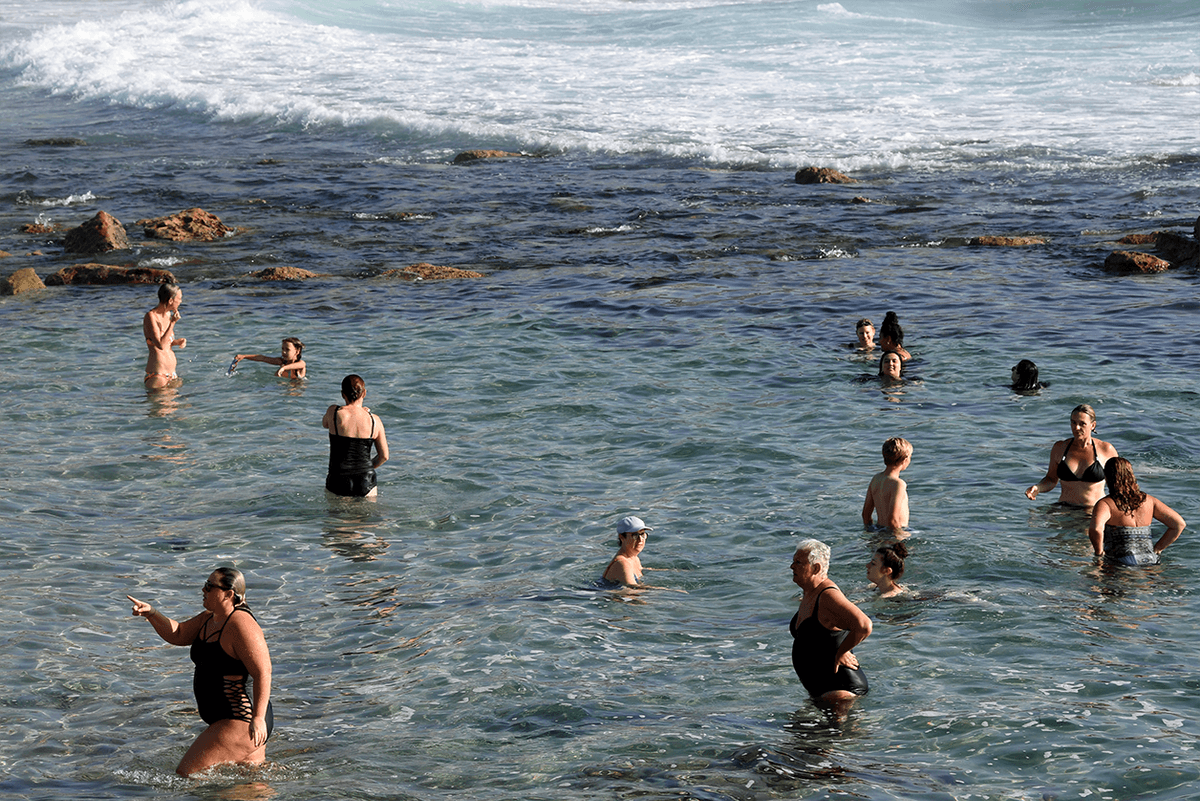
I stupidly googled the water temperature before I left the house – a nippy 17 degrees. YIKES! (It says a lot about the fickleness of Danish summer that the water temperature at Bondi Beach is a whole degree warmer in the middle of the Australian winter.)
After almost three years living in the Danish kingdom, I’ve come to reluctantly tolerate cold water swimming over not swimming at all. But my heart still pines for the 29-degree tropical waters of Phuket from my days as a foreign corro in Thailand.
Half a dozen swimmers were already doing laps and treading water when I arrived at the Sandkaj Harbour seawater baths.
I watched a yoga class salute the sun and a crow steal a swimmer’s breakfast bun wrapped in tin foil.
I told myself that Future Lisa is going to thank me and feel invigorated all day, as I waited for my swim buddy, British-born Denmark-based author Laura Hall.
Hall’s recently released memoir The Year I Lay My Head in Water details her journey healing from work burnout and stress by swimming weekly in chilly Scandinavian and Arctic seas.
“Don’t think about how cold it’s going to be, think about how good you are going to feel when you get out,” is Hall’s advice as we peeled off our clothes.
“It’s not the experience that is good for you. It’s the fact that you have done the experience.”
Hall, a double-towel bringing-pro, busy mum and travel journalist, says cold-water dips are an investment in one’s wellbeing.
Every time she stands on the pier ready to plunge, especially in winter when the water temperature is at single digits, she thinks: “I’m not quite sure I want to be doing this” but does it anyway.
“It’s about bravery for me,” she said.
“It’s about feeling like: ‘God, I can do really hard things.’”
Endorphin rushes aside the social aspect also keeps her coming back for more.
“It feels like community in action and like finding a tribe. I had this light bulb moment; I want to be with people like this. This is lovely,” she said.
While health research on the benefits of cold-water swimming is still limited, the practice has been linked to improving chronic pain, lifting mood, reducing anxiety and improved blood circulation.
It does carry some risks, experts advise people not to swim alone and to chat to their GP about whether it is appropriate for their health situation.
I watched Hall slide into the water gracefully without a moment’s hesitation, while I clung to the ladder and took a hot minute to muster courage.
It was glorious to be transported to the present moment and have life’s irritations melt away while breast-stroking a couple of laps.
“I think anything that brings you back into your body and out of your head is a good thing,” Hall said.
“Especially if you’re someone like me who is prone to being fed up, frustrated and locked into negative thought patterns. It’s very refreshing to go into a space where all you are thinking about is your breathing, your arms and legs and the feeling of the water around you.”
After towelling off, fatigue and grumpiness have disappeared. I’m so energised I could climb a mountain and wrestle a bear.
But that will have to wait, because there’s a Danish pastry with my name on it.
Lisa Martin is an Australian journalist living in Copenhagen