Or how about the right to earn a modest income before the government starts taxing you? PALM workers on nine-month visas are not Australian residents for tax purposes, which means they aren’t eligible for the $18,200 tax-free threshold that other workers get – instead they are charged a flat 15% on all earnings, from the very first dollar. In its first term, the Labor Government introduced the “Same Job, Same Pay” reforms. It’s a fine slogan, but it must ring hollow for our “Pacific family”. These workers do jobs that, as advocates of the program are quick to remind us, most Australians won’t do. Their take-home pay should not be a single cent lower than other workers – wherever they come from – are entitled to, but thanks to the lack of a tax free threshold PALM workers often take home less pay than other workers, and that’s even before they have to pay what their employer takes for accommodation and training.
More than 30,000 people work in Australia as part of the PALM scheme. They are here strictly on a temporary basis – either nine months or four years, depending on the visa. And these PALM visa workers are only allowed to work in so-called “unskilled” jobs. So many work in agriculture and meat processing that it’s hard to imagine how Australia’s food processing industry would function without them. And an increasing number of Pacific guest workers are employed as carers, particularly aged care. This is why the scheme is so often touted as a “win-win”: Australia gets access to a labour force willing to do the jobs most Australians wouldn’t, and people from nine Pacific Island nations and Timor-Leste get the opportunity to earn Australian dollars. That might be OK in principle, but in practice Australia is winning big and a lot of Pacific workers feel they have been let down.
The power imbalance these employment conditions create means that reports of the abuse of PALM workers are well documented. Last year, the United Nations Special Rapporteur on Contemporary Forms of Slavery said he was “seriously concerned” about the treatment of PALM workers in Australia. Likewise a report from the NSW anti-slavery commissioner has led to a NSW Government inquiry.
PALM workers do the dirtiest, hardest, lowest paid jobs in Australia. We’re kidding ourselves if we think this is always a win win. We prefer to rely on PALM workers to pick our fruit and cut up the cattle that become our sausages. We prefer to depend on them to take care of our grandparents. If Australia is the land of the fair go, why aren’t PALM workers allowed to leave their employer, keep the money they earn for themselves, get Medicare or the tax-free threshold?
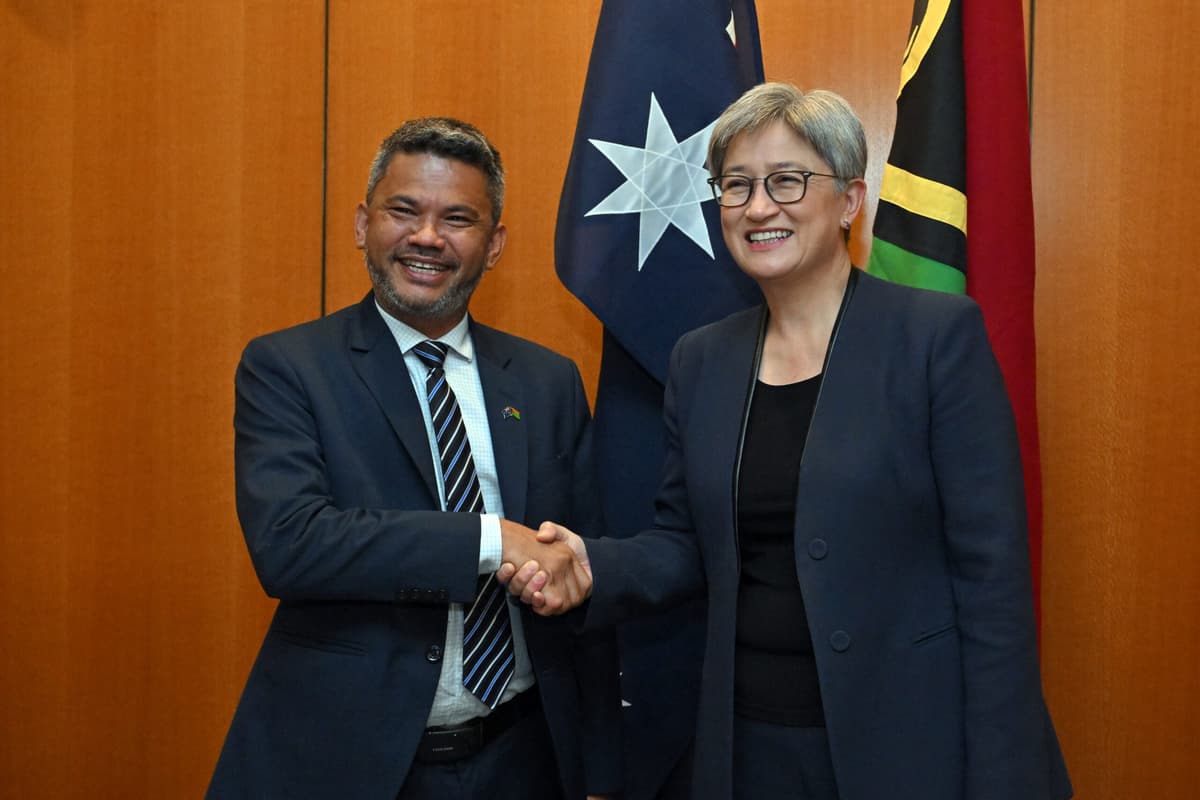
Back at the press conference in Vanuatu, Minister Wong “reaffirmed the deep and enduring partnership between Vanuatu and Australia,” which she called “a relationship built on mutual respect.” But if we are serious about forging good relations with our nearest neighbours, we should treat PALM workers with respect, dignity and maybe even a bit of gratitude.
Morgan Harrington is a research manager at the Australia Institute.