Gender pay gap for full-time workers continues to shrink, ABS figures show
The ABS has released the May average earnings figures, which allows us to look at the gap in pay between men and women. The good news is that the gap is narrowing.

There are lots of people worried that the housing changes in the federal budget are going to hurt renters by reducing the number of rental properties and pushing up prices. But there is no need to worry. These changes will not increase rents.
Tue 18 Aug 2026 11.43 AEST
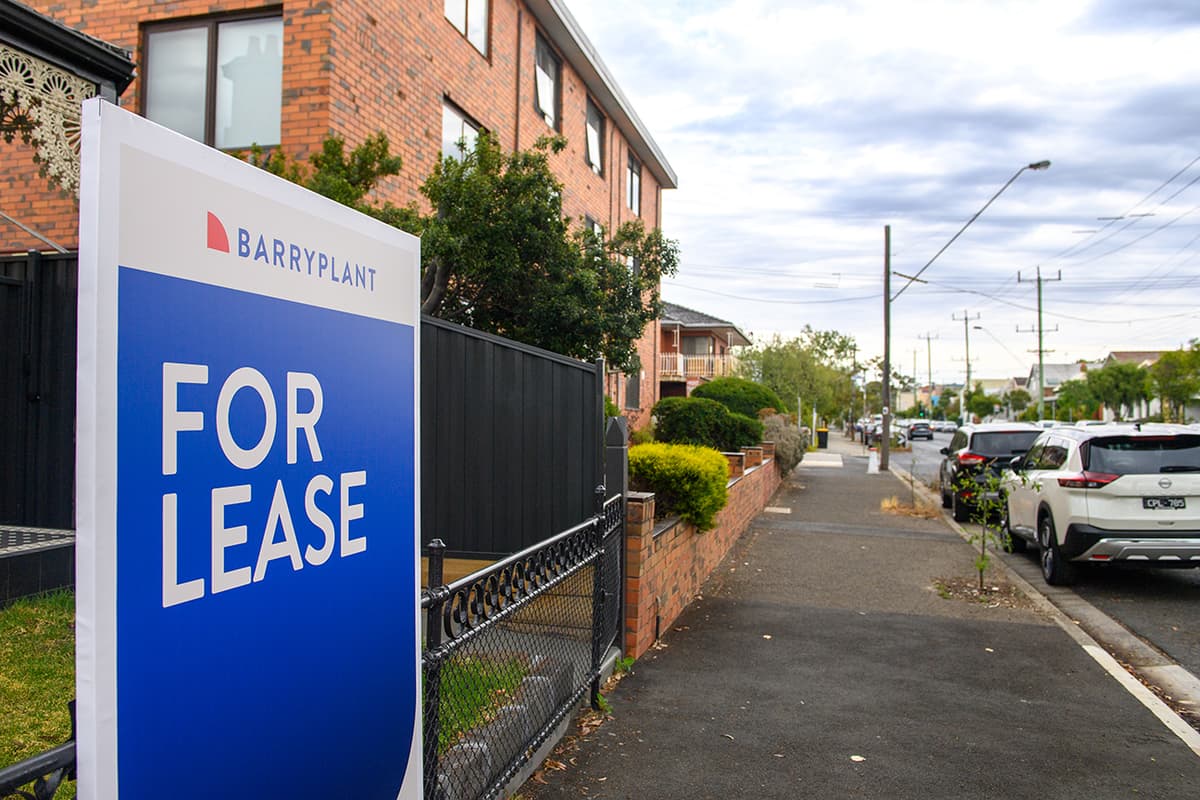
Photo: AAP Image/Michael Currie
There are lots of people worried that the housing changes in the federal budget are going to hurt renters by reducing the number of rental properties and pushing up prices.
But there is no need to worry. These changes will not increase rents.
The latest claim that rents will go up came from the National Australia Bank (NAB). They said rents would have to rise 25 per cent to 30 per cent to compensate investors for changes to negative gearing and capital gains tax.
These changes are going to make housing more affordable by reducing tax loopholes that helped investors buy more houses.
Making it less attractive for investors will give first home buyers an advantage when they buy a home of their own.
But the NAB is wrong. These changes won’t have a big impact on rents. Here’s why.
You might hear the argument that when conditions don’t favour investors, then there will be fewer rental properties. People looking for a place to rent will then be competing for fewer properties, which will push up rents.
The first part of this reasoning is right. The policy change will lead to fewer rental properties. But it makes the false assumption that there will be the same number of renters.
When investors sell up, the property doesn’t disappear. The investor sells it to someone. If they sell it to another investor, then the total number of rental properties doesn’t change, so there’s no impact on rents.
But since the tax changes are encouraging investors to get out of the housing market, then they must be selling to some owner-occupiers. Any increase in owner-occupiers means higher home ownership rates and an increase in first home buyers.
First home buyers are usually renters before they buy. So, if more first home buyers are getting into the market, then there are fewer families that want to rent, as renters become homeowners.
So, while there will be fewer rental properties, there will also be fewer families wanting to rent them. Overall, there will be no impact on rent prices.
Fortunately, we have a great example where a government increased taxes on investors so we can see what happens.
In March 2023, the Victorian Government announced large increases in taxes for those renting out homes. Investors were outraged, and many of them sold up.
We know they sold their properties and that there was an increase in owner-occupiers because we also have data on the number of rental bonds registered in Victoria. A rental bond is when the landlord takes a sum of money at the start of the lease that can be used for any damage or unpaid rent – and the number of registered rental bonds is an indicator of how many properties are being rented at any one time.
The total number of rental bonds went down following the Victorian tax changes, which means that there were fewer rental properties. A fall is very unusual, and it started right after the tax was announced.
In the three years since March 2023, the total number of rental bonds has decreased by more than 20,000.
But the actual decrease in rental properties is larger than that. Usually, the number of rental properties grows over time. If we take the average growth rate of rental bonds and project that forward after the announced tax changes, we can estimate how many rental bonds there would have been if there hadn’t been any tax changes.
As you can see in the figure below, the difference is almost 65,000 fewer rental properties. This is 10% less rental properties compared to March 2023:
If pushing out investors was going to cause higher rents, then a massive 10% drop in the number of rental properties would do it.
Since this change only happened in Victoria, we can compare the change in rents in Melbourne with the change in rents in other capital cities, where investors weren’t pushed out.
If the fall in rental properties by 10% has created a shortage, then rents in Melbourne should have increased much faster than in other capital cities.
The figure below shows the increase in rents by capital city and the average for Australia over the three years since March 2023. It shows Melbourne is slightly below the Australian average:
Melbourne rents have been growing faster than Hobart, Canberra, and Darwin, but slower than all the other capital cities and just below the national average. This confirms that when investors sell up to owner-occupiers, there is little (if any) impact on rents.
This makes sense because there are still the same number of homes. The same number of families are still being housed. It’s just that now more of those houses are owned by people who want to make a home of their own, and fewer are owned by people who want to make money from them.
What has played out in Victoria is likely to play out all over Australia. Fewer renters and more homeowners.
So, if you’re a renter, don’t worry. These changes to investor tax loopholes are not going to push up rents.
And even better, you’ll soon have more of a chance of owning your own home.
Advertisement

The ABS has released the May average earnings figures, which allows us to look at the gap in pay between men and women. The good news is that the gap is narrowing.
The deal to save the Tomago aluminium smelter is no ordinary bail-out. It’s the result of more than year’s negotiations with a return to the taxpayer, the workforce, the shareholders and the planet.