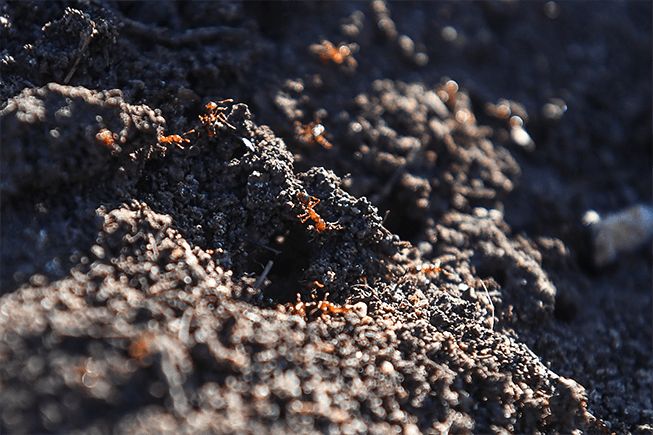
Red Imported Fire Ants (fire ants) were first detected in Australia in 2001, near the Port of Brisbane. Despite more than 20 years of containment efforts, fire ants remain a growing threat.
If allowed to continue their spread across Australia, fire ants could cause significant environmental, social and economic damage – to the tune of more than $22 billion by the 2040s. And every year, they could cost households over $1.08 billion.
What are fire ants?
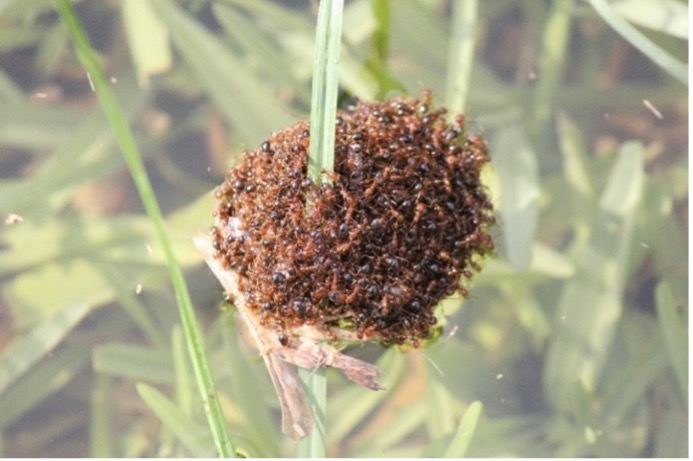
Fire ants are native to South America, but have spread to North America, Australia and parts of Asia. Humans have helped spread these “notorious hitch-hikers”, including on plants, agricultural equipment and packaging. In addition to this human-assisted movement, fire ants can disperse on their own – rafting on flowing water, tunnelling underground, and even flying several kilometres to establish new colonies.
Source: Invasive Species Council
Fire ants are aggressive and territorial, and if their nests are disturbed, they will swarm and repeatedly sting. Those stings are painful – leaving an immediate burning sensation and welts.
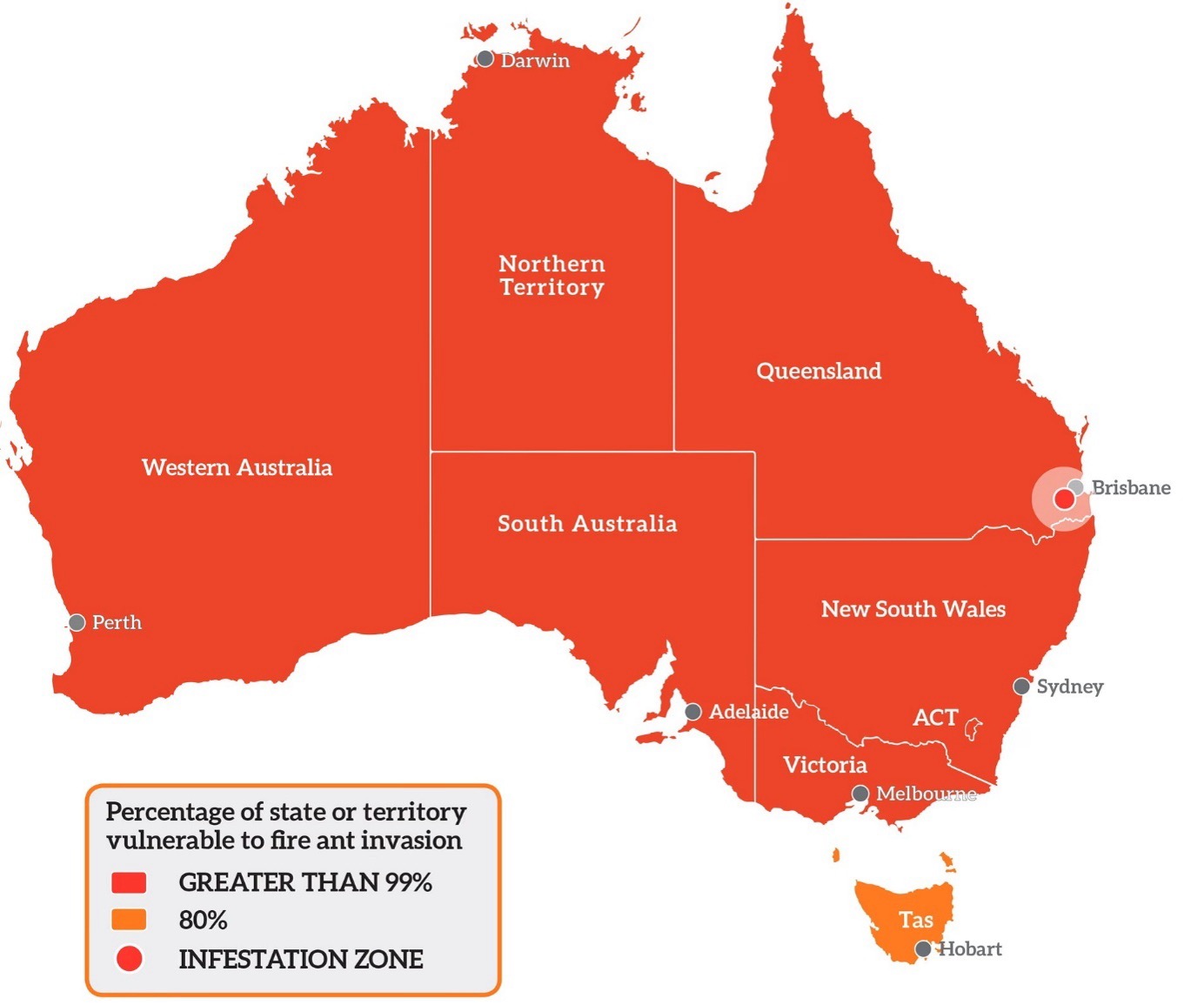
Fire ants are also highly resilient and can survive in most environments, including flood and bushfire-affected areas. For that reason, most of Australia provides suitable habitat for fire ants.
Source: Invasive Species Council
How could fire ants impact Australian households?
Fire ants pose a major risk to humans, pets, native animals and livestock.
New research by The Australia Institute has found that fire ants could cost households $1.08 billion in medical, veterinary and management costs every year. Cumulative costs would be largest in NSW and Victoria; per household, costs would be highest in the Northern Territory.
If fire ants were to spread across Australia, they could sting more than 8.32 million people (30% of the population) and cause 623,693 extra medical visits annually. That could cause 166,318 people to develop anaphylactic reactions and could be responsible for 33 extra deaths every year.
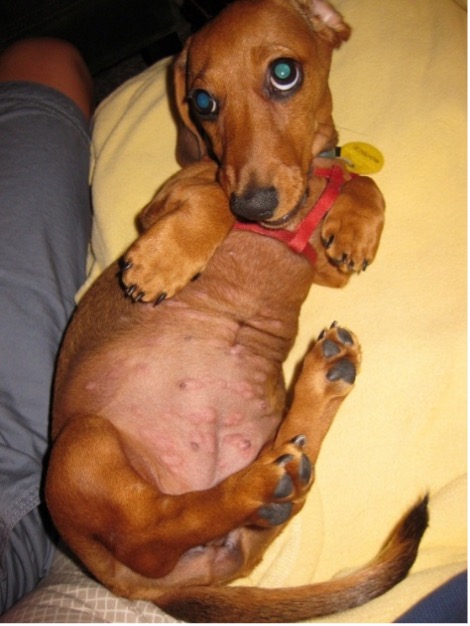
Fire ants also have the potential to kill cats, dogs, horses, and other animals. By the Institute’s calculations, vets could expect to see an additional 2.3 million pet cats and dogs every year for fire ant bites. Those visits could cost households $228 million.
Source: Invasive Species Council
But these household costs are just part of the story: they don’t cover the considerable environmental costs, costs to agriculture, or costs to industry and government that fire ants could cause.
For example, fire ants can kill livestock and other animals that live outdoors. In a study of 123 animals present in South-East Queensland alone, fire ants were predicted to impact 95% of frogs, 69% of reptiles, 45% of birds and 38% of mammals.
In the United States, fire ant infestations have caused dramatic reductions in cropping yield: a 35% reduction in potato crops and 65% in corn harvests in certain states. And according to the Invasive Species Council, fire ants are linked with agricultural output reductions “ranging from 10% for cropping land and 20% for livestock to 40% for beef”.
What’s being done about it?
The National Fire Ant Eradication Program, formed by the Commonwealth, state and territory governments, aims to eradicate fire ants from Australia by 2032. This target coincides with the 2032 Summer Olympic and Paralympic games to be hosted in Brisbane – the epicentre of Australia’s fire ant invasion.
Yet, current funding by federal, state and territory governments is far below what is required to eradicate fire ants in Australia.
This puts all Australians, and their pets, at risk.
Previous research by The Australia Institute found that investing in fire ant eradication is worthwhile, both environmentally and economically.
Australia has a crucial window in which to halt the spread of fire ants and protect Australia’s environment, economy, and communities.
If Australia wants to eradicate fire ants, there needs to be significant investment now.