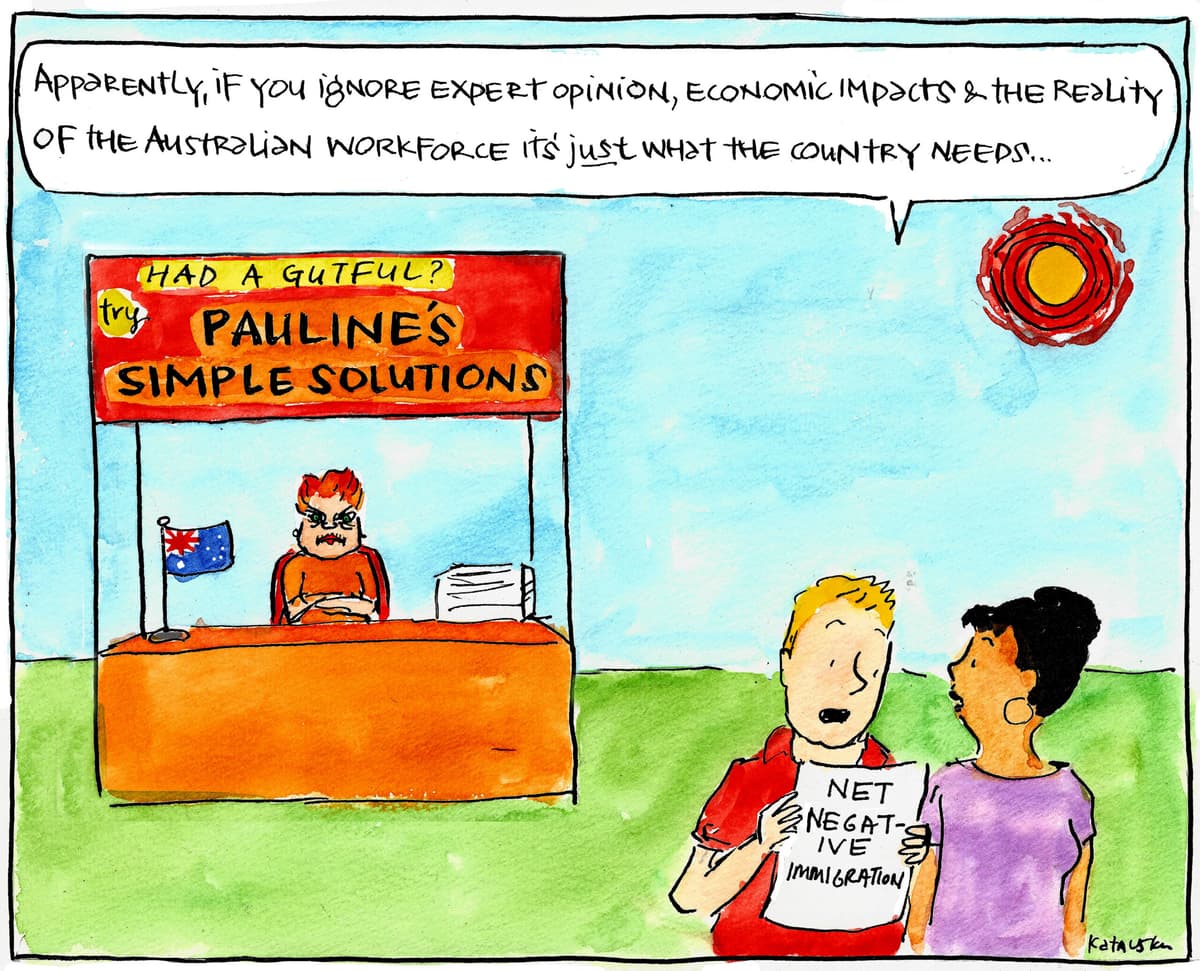
There have been allegations that “foreign actors, foreign powers, [and] criminal gangs” may be behind FOI requests. Is this the case?
Mon 27 Oct 2025 17.10 AEDT
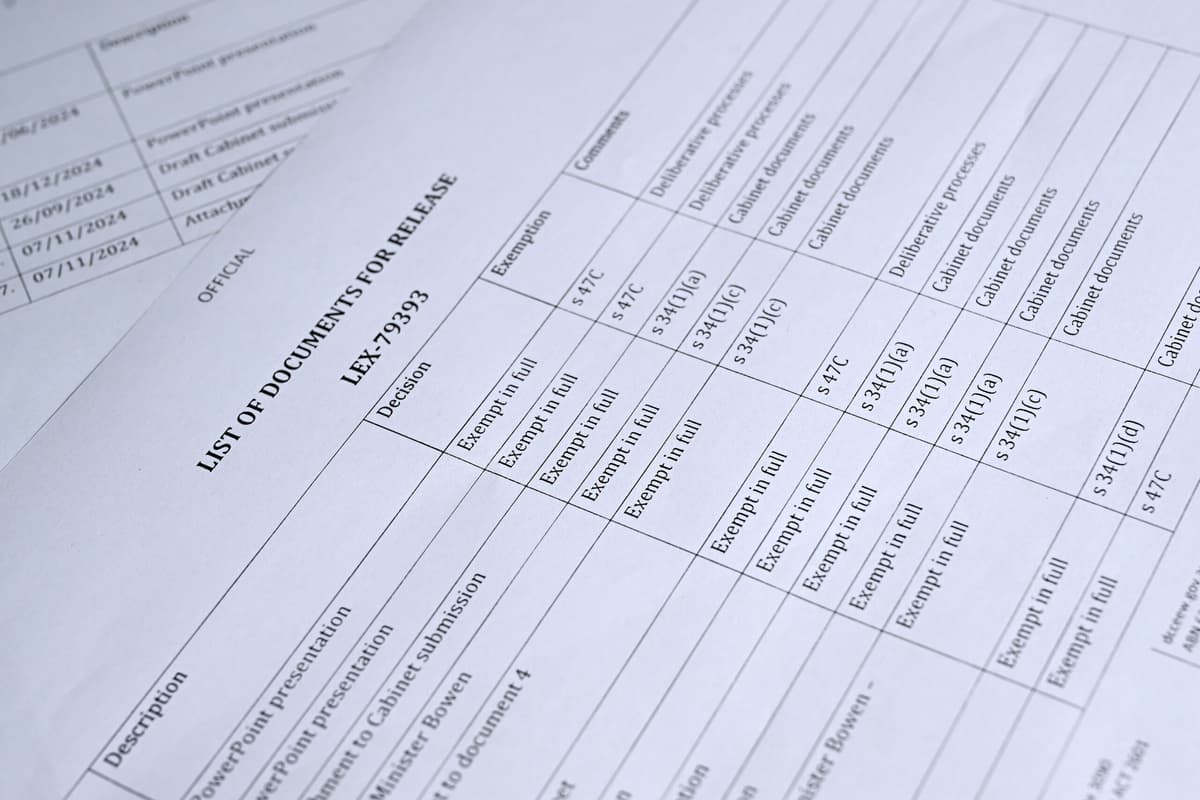
Photo: AAP Image/Lukas Coch


Freedom of Information (FOI) requests allow Australians to access government documents and bring hidden information to light. The Albanese Government plans to make FOIs more limited, and more costly, undermining transparency and good governance.
To make matters worse, the evidence provided to justify these changes is flimsy at best, and non-existent at worst.
When the reforms were announced, cabinet minister Mark Butler said the Government was “being inundated by anonymous requests”, “many of them we’re sure are AI bot generated requests” that “may be linked to foreign actors, foreign powers, criminal gangs”.
So what evidence is there for this? In a word: none.
As a Deputy Secretary of the Attorney General’s Department said in Senate estimates, Mr Butler “referred to requests that may be linked to foreign actors, powers and criminal gangs because we don’t know where they have come from.”
In other words, these requests could be linked to malicious agents of foreign governments and illicit cartels in the same way that a song request on the radio could be made by a criminal mastermind – there’s always a chance it’s true when something’s anonymous.
Even if foreign actors did try to game the FOI system, requests can already be refused on the basis they might damage the security, defence or international relations of Australia. So even if this problem is real, it’s already been solved.
Verdict: Unproven
After announcing the government’s FOI bill Attorney-General Michelle Rowland told ABC radio “we’ve had cases where FOI requests have been generated, sometimes around 600 of them in one instance, going to a small agency, which tied up the services of that agency for over two months.”
One part of this is true: the eSafety Commission received 550 requests over a relatively short time in mid-2024, and another 367 in early 2025.
While the sudden influx of FOI requests may have come as a surprise to the Commission, there is no reason to believe they were particularly burdensome to process. The eSafety Commission didn’t feature on the OAIC’s list of 18 agencies with particularly high processing costs (over $10,000 per request decided), and 550 requests would represent just 2% of all FOIs received by the Government in a given year.
The eSafety Commission has a yearly budget of $43 million. The Commission should be more than capable of dealing with 550 FOI requests, and it did.
The vast majority of requests to eSafety in 2023-24 were withdrawn, and 85% of requests in 2024-25 were refused. Of all the FOI decisions eSafety made in 2024-25, 99% were made on time – signalling that eSafety dealt with them relatively easily.
Verdict: overblown
Mr Butler said that the government was sure many of the anonymous requests they were “being inundated with” were “AI-bot generated requests”. This is dubious.
There’s an important distinction between an auto-generated request submitted by a bot, and a human request made with AI or machine assistance. But the Government has happily ignored this nuance to prosecute the case for its changes.
For example, critics of the eSafety Commission created an online form where people could make FOI requests checking if their social media accounts had been the subject of an “informal notice” where the commission warns a social media company about their posts. This led to a high number of requests in a relatively short time, but it doesn’t mean the requests themselves were invalid. There’s nothing new about FOIs being submitted through an online form, and such tools often improve transparency – the website RightToKnow, which assists with FOI requests and publishes their outcomes, has been around since 2012.
In response to questions from Greens Senator David Shoebridge in Senate estimates, the Attorney-General’s Department’s best evidence for AI-generated FOIs was that Services Australia “has seen an upward trend over the past few years of requests that appear to be from bots.” Expanding on this, they said that Services Australia “thought that 20 per cent of their matters on hand for personal information requests were AI generated and up to 50 per cent of [other requests] were AI generated”.
One explanation for this perceived rise is that FOI requests follow a standard formula, and AI is best at replicating formulaic language, meaning AI-checkers may return false positives when examining FOI requests. Another is that people are using AI to help navigate the sometimes complicated and difficult FOI system – it’s understandable that someone without in-depth knowledge on making FOIs might want a machine’s help to do so.
In any case, using AI to help write an FOI request is a far cry from an AI bot making the FOI request, as the Government implied was happening.
In all, it does not appear that the government has any definitive proof for the claimed spike in AI-generated FOI requests.
Verdict: no evidence
Advertisement
Advertisement
Here’s a question you’ve probably never asked yourself: Why does Nauru Airlines exist? There’s a simple answer – Australia’s offshore detention regime. Australia’s “resettlement” program in Naoero requires air transport, and Nauru Airlines is the only airline that flies to Naoero, so our government needs Nauru Airlines to keep the offshore regime up and running. But Nauru Airlines isn’t viable as a commercial airline.