Advanced search
The Point - home
DonateSubscribe
HomeWhat's NewOpinionOff the ChartsExplainersFactcheckAbout Us
The Point — home
DonateSubscribe
The Point — home
Advanced search
  • Home
  • What's New
  • Opinion
  • Off the Charts
  • Explainers
  • Factcheck
  • About Us
DonateSubscribe
Subscribe
  • Home
  • What's New
  • Opinion
  • Off the Charts
  • Explainers
  • Factcheck
  • About Us
The Point - home
Privacy PolicySitemapComplaints & CorrectionsNewsletter

The Point recognises the ancestral connections and custodianship of Traditional Owners throughout Australia. We pay respect to Aboriginal and Torres Strait Islander cultures and to Elders past and present.

©2025–2026 The Point, an initiative of The Australia Institute

FACTCHECK

Factcheck: No, immigration hasn't 'killed the Australian dream of home ownership'

The numbers don’t support the claim that migration has caused the housing affordability crisis.

By Matt Grudnoff & staff writers

Thu 13 Aug 2026 10.49 AEST

Economy
Not True
Factcheck: No, immigration hasn't 'killed the Australian dream of home ownership'

Photo: AAP Image/Dean Lewins

Republish this article

This article is licensed under Creative Commons — Attribution-NoDerivatives 4.0 International (CC BY-ND 4.0).

Republishing guidelines

  • You must credit the author(s) and The Point.
  • You must link back to the original article.
  • You may not edit or modify the article content.
  • Images may be subject to separate copyright and are not included in this licence.

Yesterday, during Question Time, Nationals MP Alison Penfold asked the Prime Minister:

“By bringing 1.5 million migrants into Australia over the past four years, Labor’s record on migration has killed the Australian dream of home ownership. How many more migrants does the Prime Minister intend to bring into Australia, before his government builds enough homes to house them?”

Claim: Increased migration has driven population growth so high that Australia has failed to build enough homes, making home ownership unaffordable for Australians.

Is this correct?

The COVID pandemic was the biggest disruption to population growth since federation.

After the borders closed, population growth fell off a cliff, even going negative for half of 2020. This is because government COVID support was not available for visa holders. They couldn’t work and they couldn’t get support, so they left the country. Classes also went online and international students no longer had to be in Australia to learn. Most of them left as well.

But after the borders reopened, they came back.

This is the period that people dishonestly cherry pick figures from. The graph below shows the annual population growth rate. You can see it crashes during the pandemic and rebounds after. In the last year, it has resettled at the pre-COVID rate.

As for the claim that Australia hasn’t been building enough homes to keep up with population growth, the numbers tell a different story.

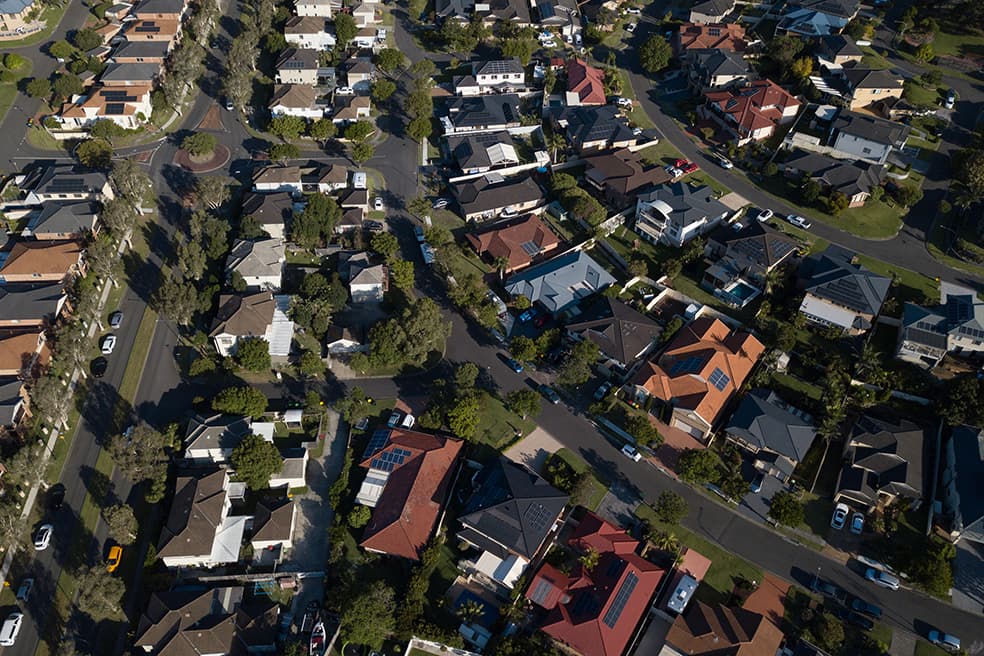
Over the past 10 years, Australia’s population has increased by around 16%, while the number of homes has increased by around 19%. Homes are increasing faster than the population.

Now that the government’s tax changes in the budget are pushing out investors, we’re actually seeing housing becoming more affordable.

Verdict: No, migration hasn’t ‘killed the Australian dream of home ownership’.

Advertisement
Related Articles

OPINION

From pilot to powerhouse: expanding WA’s sustainable bond market

By Brad Hiller & Brad Pettit

Now a staple of global finance, GSS bonds offer a powerful mechanism to fund pressing environmental and social initiatives that lie outside traditional government budgets.

Environment & BiodiversityEconomy
From pilot to powerhouse: expanding WA’s sustainable bond market

OFF THE CHARTS

If the RBA forecasts continue, real wages won’t recover to 2021 levels until 2044

By Greg Jericho

Last week, when the Reserve Bank announced it had raised the cash rate to 4.85%, it also released its latest forecasts for the economy in its Statement on Monetary Policy. For those hoping for a recovery in lost living standards, the news was very grim.

Economy
If the RBA forecasts continue, real wages won’t recover to 2021 levels until 2044

OPINION

Six ways to save the Commonwealth billions, fairly and efficiently

By Matt Grudnoff & Greg Jericho

If the government wants to pursue significant spending cuts, this piece proposes six options that help achieve short term equity and long run efficiency goals. Together, they could save between $14 billion and $62 billion.

Economy
Six ways to save the Commonwealth billions, fairly and efficiently

OPINION

Who gets to decide what a 'realistic' energy transition is?

By Ray Wills & Peter Newman

There is a difference between what Australia should do and what our most influential businesses would prefer we don’t do. Our energy debate too often blurs the two by insisting on being ‘realistic’.

ClimateEconomy
Who gets to decide what a 'realistic' energy transition is?