Last week, when the Reserve Bank announced it had raised the cash rate to 4.85%, it also released its latest forecasts for the economy in its Statement on Monetary Policy. For those hoping for a recovery in lost living standards, the news was very grim.
By Greg Jericho
Mon 9 Nov 2026 14.21 AEDT
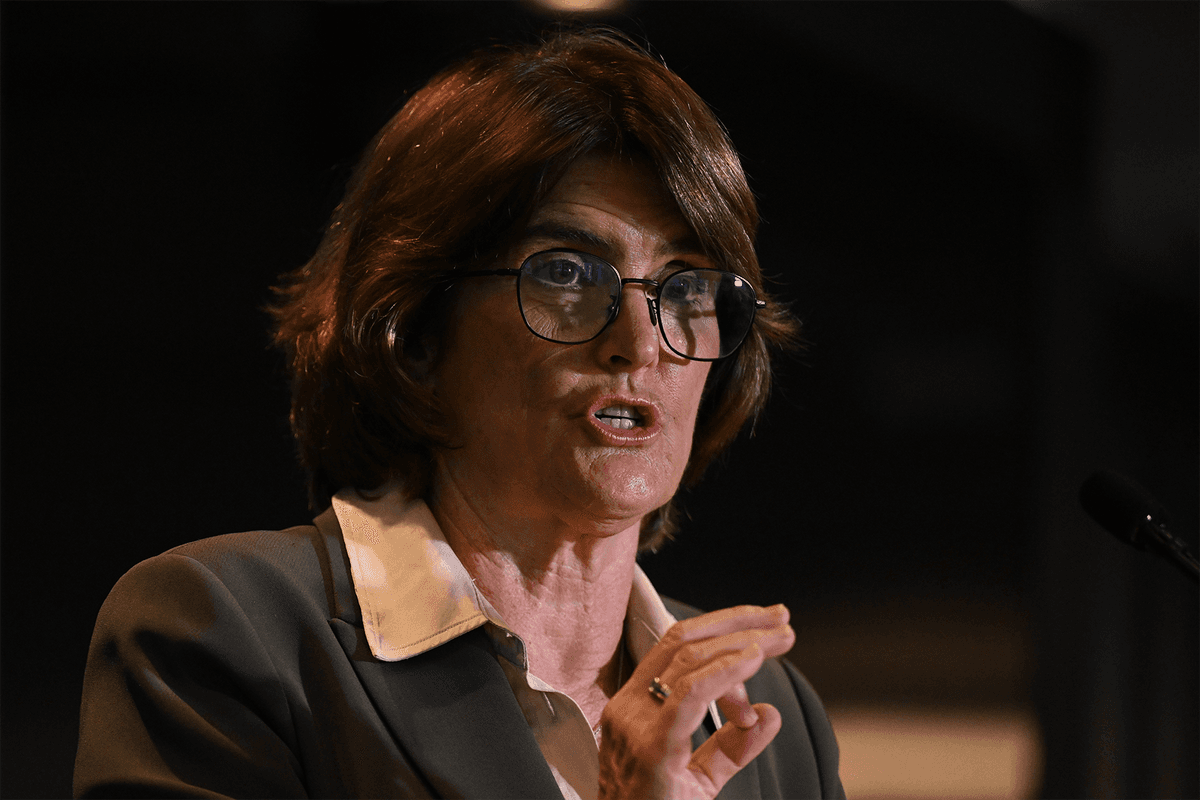
Photo: AAP Image/Dean Lewins


Last week, when the Reserve Bank announced it had raised the cash rate to 4.85%, it also released its latest forecasts for the economy in its Statement on Monetary Policy. For those hoping for a recovery in lost living standards, the news was very grim.
Every three months, the Reserve Bank releases new forecasts for the next two years in its Statement on Monetary Policy. These forecasts provide an excellent snapshot of where the central bank thinks things are heading on a range of factors from investment, to consumer spending to unemployment, to wage growth and inflation.
These last two are especially important because it enables us to forecast real wages over the next two years.
When the August figures were released, I was able to show that after the truly terrible falls in 2021 and 2022, the RBA was not forecasting a particular strong recovery.
In March 2021, the average full-time earnings was a touch over $90,000; had someone earning that amount had wage rises in line with the wage price index, the value of their wages would have fallen by almost $5,000 in just two years.
That is, by March 2023, due to inflation rising faster than wages, that worker – even if they had had wage rises – would in effect have lost the ability to buy $4,948 worth of goods and services.
By June this year, the value of that wage would have recovered to $85,662. And in August, the RBA forecast that by the end of 2028 the value would be up to $86,696.
That is bad enough, but extending the RBA’s forecast for the next two years out over the next decade revealed just how bad thing were.
If wages and inflation kept growing at the rate the RBA forecast they would in August, it would take till the end of 2036 for the value of real wages to get back to where they were in March 2021:
But here’s the thing – that now looks optimistic.
Quality research, analysis, explainers and factchecks from experts you can trust.
In the November Statement on Monetary Policy, the RBA revised up its forecasts for inflation by a large amount, but barely changed its forecasts for wage growth:
This again highlights how wages rarely shift in response to short-term jumps in inflation, and as a result workers are left worse off.
The hit to real wages from these changed forecasts is quite brutal.
By the end of 2028, the RBA now forecasts the value of that real wage of someone on $90,000 in March 2021 will be just $86,032:
Now, yes, that is just 0.8% less than the RBA forecast in August, which doesn’t sound like much. But the trajectory is so very much worse.
If we were to extend the trend rate of the RBA November forecast, we’re not looking at a return to the 2021 level by the end of 2036. No, now we are looking out to 2044:
The best we can hope for is that the next two years are abnormally bad and things perk up afterwards.
Without stronger growth, that will mean someone born this year can expect that, by the time they enter the labour force when they turn 18 in 2044, a worker on the average full-time wage will finally be able to buy as many goods and services with their pay as a worker on that wage could in 2021.
A truly devastating loss of living standards.