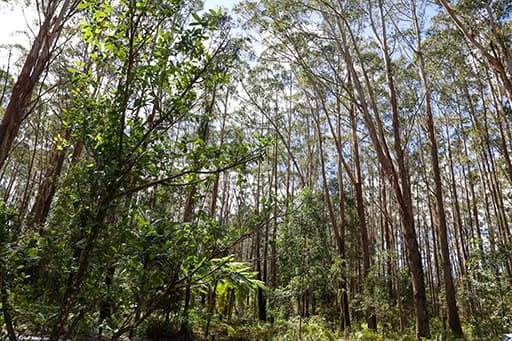
On Tuesday, Bob Brown told ABC’s 730 that the NSW Government’s plan to make the creation of the Great Koala National Park dependent on being able to sell carbon credits “a scam”.
You know Jacob, we’ve got over 600 national parks in Australia, and they’ve all been protected because of their natural values. Now we’re getting Labor introducing a monetary factor, you can’t have a national park unless you pay money to polluters or to somebody else or for some other reason. It’s wrong, it’s not part of our history, and it should be stood up to.
There’s no way we can guarantee that those forests are going to be protected for the next 100 years, let alone the next thousand years, so, they’re a scam. The only way to protect nature is to protect it.
Is that true? Are carbon credits for the Great Koala National Park a scam?
What are carbon credits?
Carbon credits are a kind of token generated by reducing the amount of CO2 polluting the atmosphere – also known as “carbon abatement”. Generally, that’s done either by storing it, such as growing trees, or not creating it in the first place, such as making a coal plant more efficient or not chopping down trees. In Australia, these are aptly named “Australian Carbon Credit Units”, or ACCUs.
In theory, each ACCU represents one tonne of CO2 that would have been released into the atmosphere, but has not been because of a certain project, such as growing trees or using more energy-efficient technology.
Carbon credits are designed to encourage carbon abatement by giving it a dollar value, and to allow highly polluting industries to pay to “offset” their emissions with carbon credits. If they worked perfectly, slowly reducing the number of carbon credits available could simplify reaching Australia’s climate targets.
Unfortunately, they don’t work perfectly – far from it. There are already significant problems with the way carbon credits work in Australia, with many methods of generating them likely representing significantly less than one tonne of abatement per credit because of issues with their integrity.
But the Great Koala National Park has introduced a new problem. The whole point of carbon credits lies in their “additionality”.
Say someone is planning on planting a new grove of trees, enough that they’d reduce CO2 emissions by a tonne. Without carbon credits, that’s exactly what happens. But if they’re given a carbon credit for planting those trees, something they were doing anyway, that credit can be sold to someone else who can use it to “offset” a tonne of CO2 from burning coal – turning those new trees into a licence for extra pollution. That’s why carbon credits are designed to only pay for additional carbon abatement.
What’s happening with the Great Koala National Park?