Advanced search
The Point - home
DonateSubscribe
HomeWhat's NewOpinionOff the ChartsExplainersFactcheckAbout Us
The Point — home
DonateSubscribe
The Point — home
Advanced search
  • Home
  • What's New
  • Opinion
  • Off the Charts
  • Explainers
  • Factcheck
  • About Us
DonateSubscribe
Subscribe
  • Home
  • What's New
  • Opinion
  • Off the Charts
  • Explainers
  • Factcheck
  • About Us
The Point - home
Privacy PolicySitemapComplaints & CorrectionsNewsletter

The Point recognises the ancestral connections and custodianship of Traditional Owners throughout Australia. We pay respect to Aboriginal and Torres Strait Islander cultures and to Elders past and present.

©2025–2026 The Point, an initiative of The Australia Institute

WHAT'S NEW

Insurance premiums driven higher by higher catastrophic risk

A new study has shown the dramatic impact of climate risk on skyrocketing homeowners' insurance prices

By David Richardson

Thu 27 Nov 2025 11.33 AEDT

ClimateEconomy
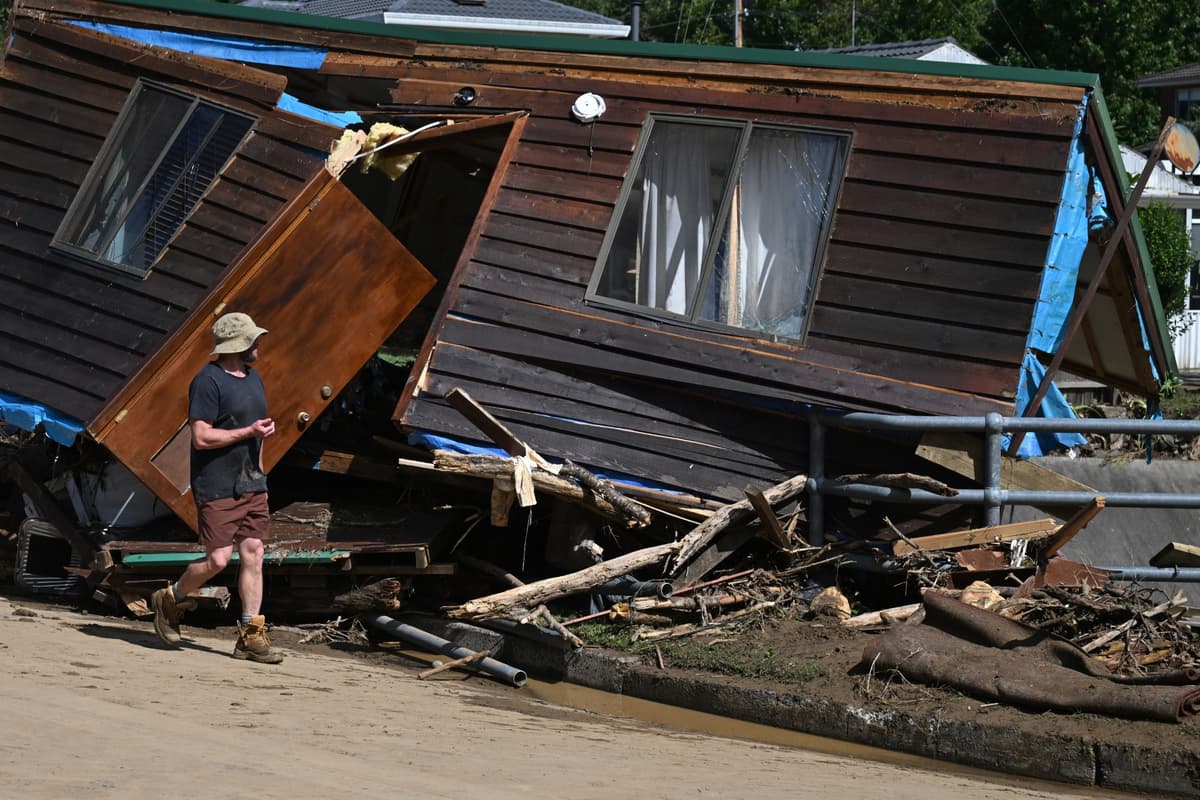
Insurance premiums driven higher by higher catastrophic risk

Photo: AAP Image/Dean Lewins

Republish this article

This article is licensed under Creative Commons — Attribution-NoDerivatives 4.0 International (CC BY-ND 4.0).

Republishing guidelines

  • You must credit the author(s) and The Point.
  • You must link back to the original article.
  • You may not edit or modify the article content.
  • Images may be subject to separate copyright and are not included in this licence.

In a very detailed study, the Brookings Institute in the US has shown that much of the average increase in homeowners’ insurance premiums is driven by higher disaster risk and that the increases were concentrated in highest risk areas. Moreover, the price differentials driven by disaster risk has been increasing over time. In other words if you lived in a high risk area and were paying double the average premium some years ago you might be paying triple the average premium today.

One of the mechanisms involved has been the higher cost of reinsurance for retail insurance companies.

This study shows some of the things the Australia Institute pointed to in our earlier work on the costs to homeowners of climate change. The rapid increases in home insurance costs have been due to the increasing incidence of natural disasters driven in turn by climate change. Apart from price increases, in many parts of Australia, home and business insurance is unavailable or prohibitively expensive.

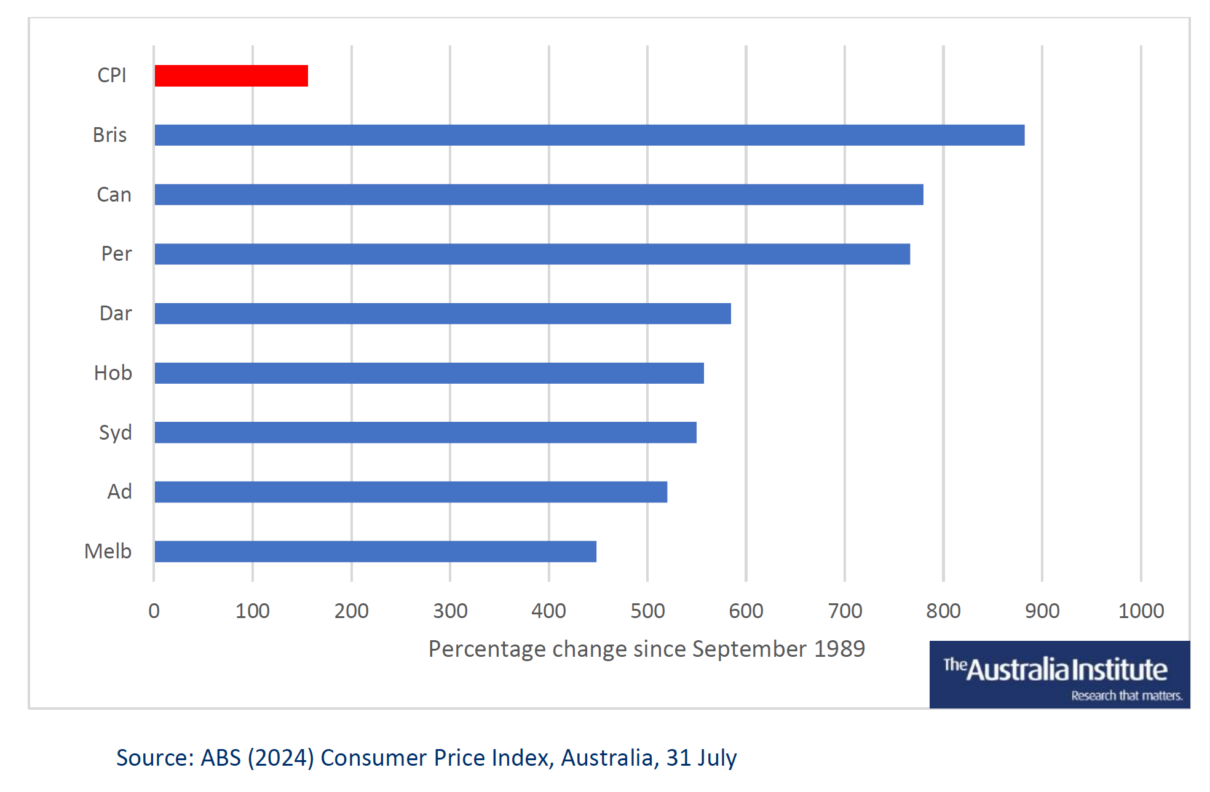
In the capital cities we showed insurance costs outpaced the general price level by more than five to one in Brisbane and almost three to one in Melbourne, the lowest of the cities. The graph below shows how insurance costs in capital cities have exceeded the increase in CPI over the last 35 years.
The Brookings Institute mention of reinsurance reminds us that there are only a few major reinsurers that operate world-wide. The Australia Institute earlier showed what that means; global reinsurers know that disaster risks are correlated throughout the world so events like California’s wildfires drive up prices throughout the world and that includes Australian insurance premiums.

Even climate change deniers would be aware of the increase in their home insurance over recent years.

Related Articles

WHAT'S NEW

UN experts scrutinise Australia’s climate leadership days before COP31

By Tegan George

Australia’s global climate leadership has come under heavy scrutiny just days before COP31, with United Nations human rights experts calling for the country to match its international climate ambitions with stronger action at home.

Climate
UN experts scrutinise Australia’s climate leadership days before COP31

OPINION

Six ways to save the Commonwealth billions, fairly and efficiently

By Matt Grudnoff & Greg Jericho

If the government wants to pursue significant spending cuts, this piece proposes six options that help achieve short term equity and long run efficiency goals. Together, they could save between $14 billion and $62 billion.

Economy
Six ways to save the Commonwealth billions, fairly and efficiently

OPINION

The government has admitted that dodgy offsets hamper climate action

By Ketan Joshi

This is the third piece of seven in an ongoing series examining the remarkable flaws of the Safeguard Mechanism, updating our previous analyses with new data, facts and figures as a review of the scheme kicks into gear.

Climate
The government has admitted that dodgy offsets hamper climate action

OPINION

Who gets to decide what a 'realistic' energy transition is?

By Ray Wills & Peter Newman

There is a difference between what Australia should do and what our most influential businesses would prefer we don’t do. Our energy debate too often blurs the two by insisting on being ‘realistic’.

ClimateEconomy
Who gets to decide what a 'realistic' energy transition is?