The latest housing figures reveal that the in the September quarter the median price for a house in Brisbane surpassed $1million for the first time.
By Greg Jericho
Wed 3 Dec 2025 00.11 AEDT
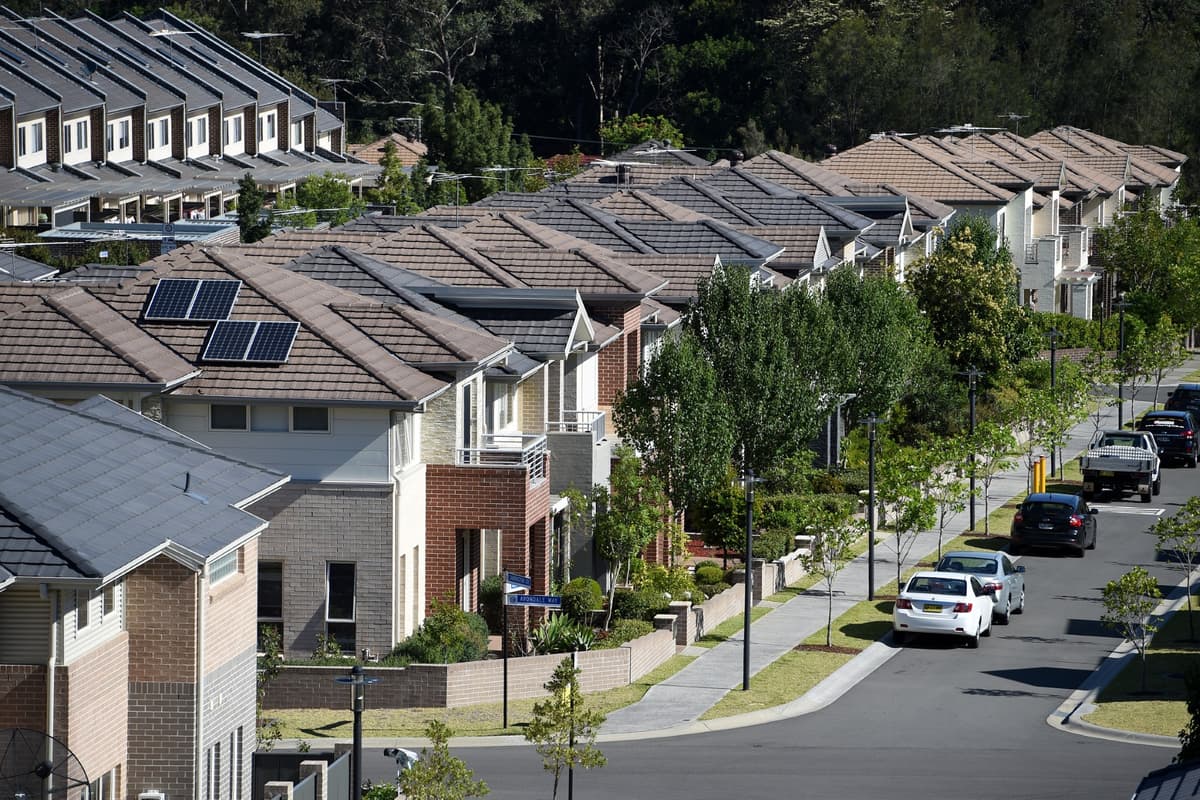
Photo: AAP Image/Dan Himbrechts


The latest housing figures reveal that in the September quarter the median price for a house in Brisbane surpassed $1 million for the first time. But as overall dwelling prices across the nation grew 6.3% over the past year, Melbourne continues to buck the trend and shows the way to better affordability.
In the September quarter, property prices in Australia rose 2.3%, up from the 1.5% increase in the June quarter. This meant that over the past year, property prices have been going up at a faster pace.
This was not unexpected given there has also been an increase in the amount of housing loans being taken out. Generally, when there are more housing loans, house prices go up, and that has certainly been the case this year.
These figures don’t even take into account the increases due to the Australian Government’s 5% deposit guarantee scheme, which will almost certainly have led to an increase in home loans and, in turn, prices.
Across the capital cities, Brisbane now joins Sydney and Canberra in the $1m median house price club:
This was not a shock, because Brisbane house prices have been heading towards $1m a few years now. What is more striking is just how affordable by comparison is Melbourne.
For most of the time up till the past 5 years Melbourne was generally the second most expensive capital city to buy a house. Now it is the sixth. Even for apartments, the median Melbourne price of $620,000 places it behind not just Sydney, but Brisbane, Adelaide and Perth.
The change has occurred over the past 3 years when house prices in most capital cities have soared to new heights. But in Melbourne the median price for a house is now lower than it was in September 2022:
Property prices (which includes both houses and apartments etc) in Victoria over the past 3 years have increased just 1.9% compared to the national average of 17.4% and 51% in Western Australia:
So what is going on?
One reason is supply.
Since 2020 (and even a few years before then) Victoria has been on a bit of a residential building tear. Over the past 5 years, relative to population no other state has seen more houses built and only ACT has had more properties built – and that is due to the apartment building boom in Canberra:
This does not always translate to extra homes – some of these new buildings are built on demolitions of old houses. But the change in total dwellings per 1,000 residents does suggest that Victoria and the ACT (as well as Tasmania) have seen the biggest increase in overall housing stock.
Unsurprisingly, the drop in housing stock per person in WA, SA and Queensland, has led to those states having the biggest increases in property prices in recent years.
But supply is not the only issue.
As Matt Grudnoff has noted, the Victorian Government has also increased taxes on property investors. This, he concluded, “made speculating on residential property less attractive in Victoria”. And what happens when there are fewer investors competing with wannabe homeowners at auctions? The prices don’t rise as much and more first home buyers are able to afford to buy.
This latest data shows that building more homes is a crucial aspect of improving housing affordability. But without government policy also reducing the ability of property speculators to outbid homeowners – such as the 50% capital gains tax discount and negative gearing – the problem will take much longer to solve.

