Gun Control Australia president Tim Quinn has told a snap Senate inquiry he believes the Albanese government’s proposed gun control legislation “would have significantly reduced the chances” of the Bondi massacre occurring.
By Tegan George
Thu 15 Jan 2026 13.33 AEDT
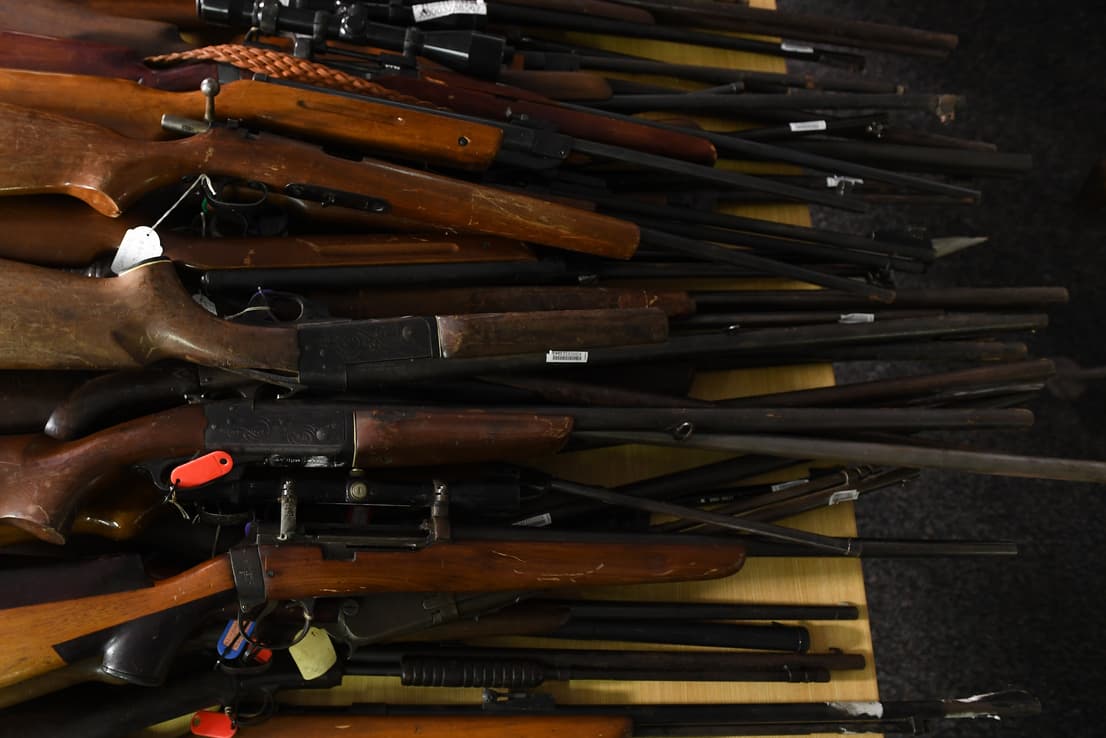
Image: AAP/Dean Lewins


An advocate for tighter gun laws has told a snap Senate inquiry he believes the Albanese government’s proposed gun control legislation “would have significantly reduced the chances” of the Bondi massacre occurring.
The comment was made by Gun Control Australia president Tim Quinn during a hearing of the Joint Committee on Intelligence and Security on Wednesday.
Parliament has been recalled to sit for two days next week to debate and pass the Combatting Antisemitism, Hate and Extremism Bill; Labor’s response to the 14 December attack on a Jewish festival that killed 15 people.
Speaking on the changes to gun ownership made in the wake of the 1996 Port Arthur massacre, Mr Quinn said the laws that saw “Australia proudly became a global benchmark for coordinated, effective gun regulation” are outdated.
“Those reforms are nearly 30 years old,” he pointed out.
“Developments in firearms technologies have meant that firearms capable of inflicting mass casualties are widely available on the market, and regulatory settings across jurisdictions have gradually diverged.”
Research by the Australia Institute shows there are now more guns in the country than there were before the Port Arthur massacre.
The proposed legislation would allow for a national guns buyback scheme to be launched. The buyback would target surplus, newly banned and illegal firearms.
“In 1996 we saw a ban in Australia of semi-automatic rifles and shotguns. Those were the weapons that the perpetrator had at that time, and since they were banned in Australia … we have not had a mass shooting with those prohibited firearms,” Vice President of Gun Control Australia Roland Browne told the inquiry.
However, he pointed out, “we have seen in Bondi, a mass shooting with guns that are lawful and can rapidly be reloaded so there the challenges ahead for the states.”
Gun laws are primarily under the jurisdiction of state and territory governments.
“As a country with open internal borders, our national gun laws are only as strong as those of the weakest state gaps,” Mr Quinn said.
“Gaps have developed across states, and a lack of a national body charged with oversight of our gun laws means that this has gone unnoticed by the Australian public.
“The result is a growing gap between Australia’s gun safety objectives and the regulatory reality on the ground.”
The proposed laws would impose tighter firearm import controls and stricter background checks on those seeking a license.
One of the Bondi shooters had a licence and was legally in possession of six guns.
“They [background checks] are an important safeguard, but they are not sufficient on their own,” noted Mr Quinn.
“Many perpetrators of mass or ideologically motivated violence are lone actors with no prior criminal history that could prevent them from passing a background check.
“For that reason, background checks cannot substitute for limits on the types and quantities of firearms available.”
Under the proposed laws Commonwealth agencies, including the Australian Secret Intelligence Organisation (ASIO) and the Australian Criminal Intelligence Commission (ACIC) would also be able to share intelligence considered relevant to whether a person posed a risk to public safety.
“The preliminary information was that there may not have been adequate sharing of information,” Stephen Bendle from the Australian Gun Safety Alliance told the inquiry.
“We know one of the perpetrators had previously been investigated by ASIO, so that’s a potential opportunity that should be reduced by this particular legislation.”
Gun Control Australia is advocating for the establishment of a national committee.
Mr Browne said an overarching body would help “steer the states in the right direction” and could “properly review and ensure compliance and efficacy” in the propose new laws.
“Because at the moment, I’m afraid we’ve seen a bit of a race to the bottom with the gun lobby trying to get each state government to weaken its laws.”
Advertisement