Advanced search
The Point - home
DonateSubscribe
HomeWhat's NewOpinionOff the ChartsExplainersFactcheckAbout Us
The Point — home
DonateSubscribe
The Point — home
Advanced search
  • Home
  • What's New
  • Opinion
  • Off the Charts
  • Explainers
  • Factcheck
  • About Us
DonateSubscribe
Subscribe
  • Home
  • What's New
  • Opinion
  • Off the Charts
  • Explainers
  • Factcheck
  • About Us
The Point - home
Privacy PolicySitemapComplaints & CorrectionsNewsletter

The Point recognises the ancestral connections and custodianship of Traditional Owners throughout Australia. We pay respect to Aboriginal and Torres Strait Islander cultures and to Elders past and present.

©2025–2026 The Point, an initiative of The Australia Institute

WHAT'S NEW

Petrol prices are soaring in sync: collusion or coincidence?

The oil crisis has not only caused petrol prices to soar, it has revealed just how little competition there is among the big oil companies. A couple weeks ago the ACCC announced that it would be looking into uncompetitive behaviour by petrol companies in the rural areas.

By Greg Jericho

Fri 27 Mar 2026 12.51 AEDT
EconomySociety & Inequality
Petrol prices are soaring in sync: collusion or coincidence?

Photo: AAP Image/Lukas Coch

Republish this article

This article is licensed under Creative Commons — Attribution-NoDerivatives 4.0 International (CC BY-ND 4.0).

Republishing guidelines

  • You must credit the author(s) and The Point.
  • You must link back to the original article.
  • You may not edit or modify the article content.
  • Images may be subject to separate copyright and are not included in this licence.

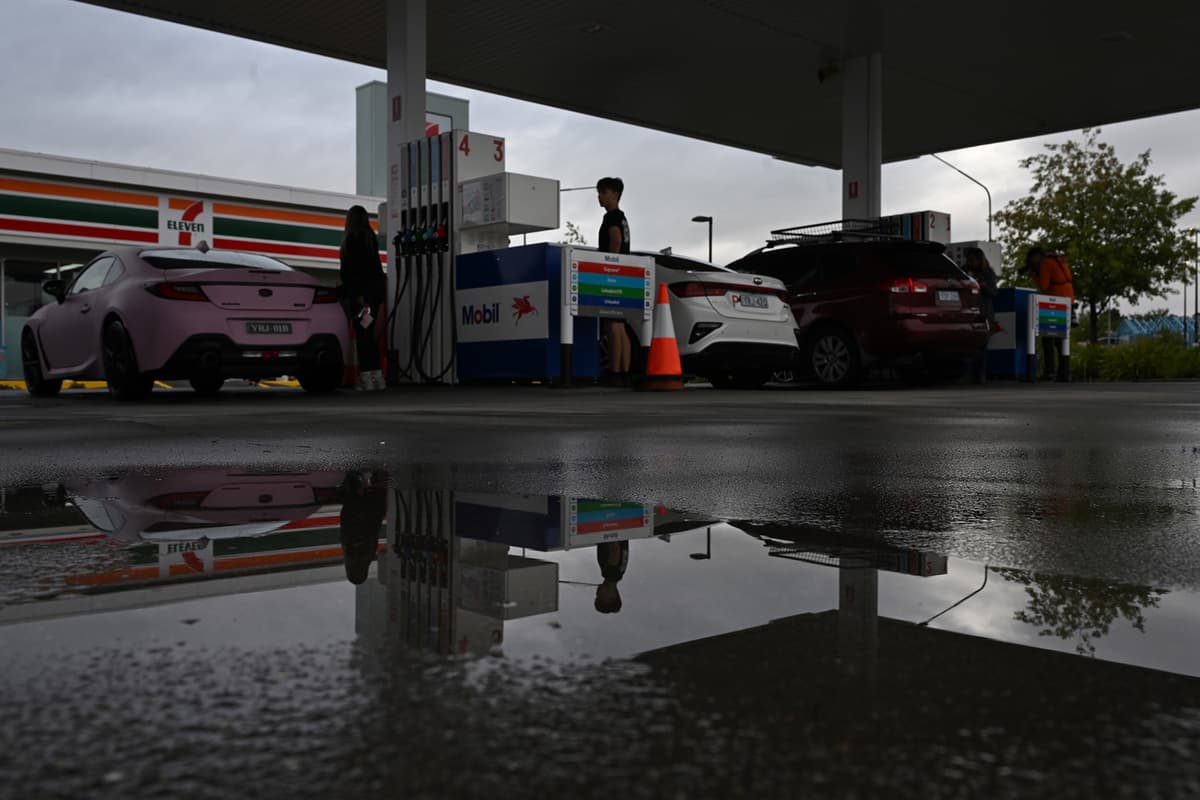
The oil crisis has not only caused petrol prices to soar, it has revealed just how little competition there is among the big oil companies.

A couple weeks ago the ACCC announced that it would be looking into uncompetitive behaviour by petrol companies in the rural areas.

However, as Matt Grudnoff explained on the Dollars & Sense podcast this week, many forms of price gouging remain perfectly legal. And while it is good to know that they have their eyes on illegal behaviour, the ACCC really should not just be limiting it to the rural areas.

Most people who have family members in different parts of Australia or who have done a few road trips will know that petrol prices usually are quite different depending on the state, city, town you are in. It’s always quite weird to cross a border or drive to a different town and see different prices to what was in the town 6 hours down the road.

No more.

Up to yesterday petrol prices had risen on average around 32% across the nation – for an average of 61 cents/litre – since the Iran War began.

But the price rises have been very different across the capital cities.

In Melbourne, prices have gone up around 50 cents a litre, while in Perth they have gone up 95.5 cents. In Adelaide prices are up 82.8 cents while in Sydney it is 61 cents.

What is weird however is that prior to the invasion prices for petrol across the nation varied widely. On 26 Feb, the cheapest petrol was in Perth at $1.62/l while in Melbourne it was $2.02/l – a difference of 39.6 cents or 24%.

Now however the difference between the highest and lowest price is just 7 cents or about 2.9%
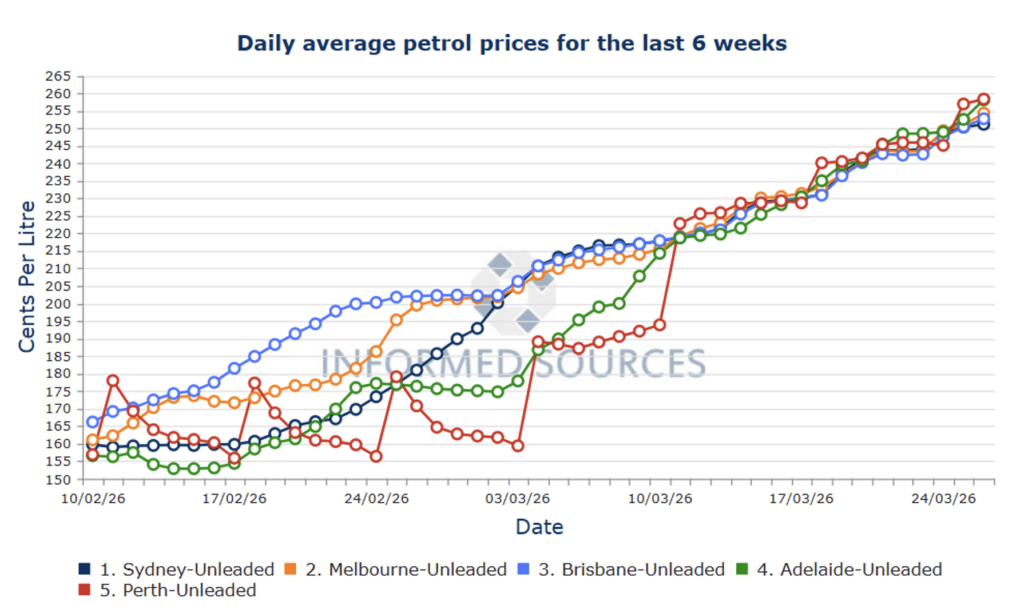
Where once capital cities had widely different prices, and where Perth especially had big shifts during the week with cheap days, now petrol basically costs the same across the country and rises in a steady line.

It’s almost like there really is no competition between the petrol companies and they can use this crisis to increase prices to an amount that suit them.

Advertisement
Related Articles

OPINION

Six ways to save the Commonwealth billions, fairly and efficiently

By Matt Grudnoff & Greg Jericho

If the government wants to pursue significant spending cuts, this piece proposes six options that help achieve short term equity and long run efficiency goals. Together, they could save between $14 billion and $62 billion.

Economy
Six ways to save the Commonwealth billions, fairly and efficiently

OPINION

Who gets to decide what a 'realistic' energy transition is?

By Ray Wills & Peter Newman

There is a difference between what Australia should do and what our most influential businesses would prefer we don’t do. Our energy debate too often blurs the two by insisting on being ‘realistic’.

ClimateEconomy
Who gets to decide what a 'realistic' energy transition is?

OPINION

There's other ways to fight inflation than making mortgage holders pay

By David Shoebridge

You don’t get out of an economic crisis like the one we’re in through austerity. Cutting government services will only result in the people who can least afford it, falling further and further behind.

Economy
There's other ways to fight inflation than making mortgage holders pay

WHAT'S NEW

Essential workers priced out of almost entire Australian rental market, new report finds

By Tegan George

Australians working full-time in essential services are being priced out of almost the entire rental market, with a new Anglicare Australia report revealing just how far housing costs have outstripped wages.

Society & Inequality
Essential workers priced out of almost entire Australian rental market, new report finds

