Medical researchers and advocates have welcomed the government’s commitment to increasing funding for critical research projects, but warn that the sector remains under significant financial pressure. Independent MP Dr Monique Ryan described it as a “really big win” for the sector, which has been campaigning hard for the increased investment.
By Tegan George
Wed 13 May 2026 12.19 AEST
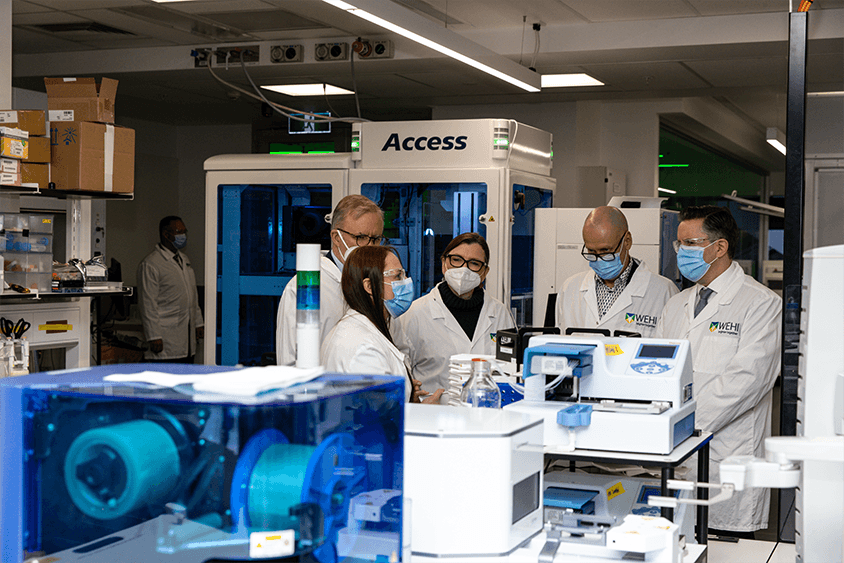
Photo: AAP Image/Diego Fedele


Medical researchers and advocates have welcomed the government’s commitment to increasing funding for critical research projects, but warn that the sector remains under significant financial pressure.
In handing down his fifth budget, Treasurer Jim Chalmers announced the Medical Research Future Fund (MRFF) will receive an additional $508.5 million in funding over four years.
“Any additional investment in medical research is important and welcome,” said Professor Jason Kovacic, President of the Association of Australian Medical Research Institutes (AAMRI).
The MRFF is a government investment fund set up in 2015 that uses interest earnings to provide ongoing funding for Australian medical research.
The funding boost will see disbursements increase each year, from $650 million to $1 billion by 2030–31.
Independent MP Dr Monique Ryan described it as a “really big win” for the sector, which has been campaigning hard for the increased investment.
“The saying goes that if you care about something, you pay for it,” said Dr Ryan.
“The government has recognised that medical research matters. It’s telling our researchers and the Australians who depend on our health care system that they matter.”
The ongoing fund was set up by the Coalition, under then-prime minister Tony Abbott and treasurer Joe Hockey, who pledged to disburse $1 billion a year once it reached maturity at $20 billion.
That milestone ticked over in 2020, but the promise never eventuated.
“Funding has been frozen at $650 million annually since 2018–2019, while research institutes have struggled, and early- and mid-career researchers have left the field permanently,” explained Dr Ryan.
According to the Australian Health and Medical Research Workforce Audit, more than 60 per cent of researchers left active research roles between 2019 and 2024.
“This is meaningful progress and reflects years of advocacy from across the sector. But medical research institutes are dealing with sustainability pressures today, not five years from now,” said Professor Kovacic.
“For some institutes facing immediate sustainability pressures, support delayed may simply come too late.”
The AAMRI said budget papers show disbursements will reach around $745 million by 2029-30, meaning the federal government would still need to significantly increase funding the following year to reach its $1 billion target.
The sector has been calling for the full release of the MRFF annual disbursement.
Analysis commissioned by Dr Ryan’s office found that up to $1.4 billion could be paid out from the fund annually without affecting its closing balance.
“We’ve seen the consequences when governments neglect science and medical research. Australia must strengthen sovereign capability, increase productivity, and back its researchers to ensure their lifesaving work can continue here,” said Dr Ryan.
The AAMRI said the new funding still doesn’t resolve the sector’s “broader sustainability pressures” amid rising indirect research costs.
“Additional MRFF funding is positive, but if the underlying funding model remains unchanged and the funds are not used to support the full costs of research, institutes will continue carrying the growing cost burden of delivering Australian medical research,” said AAMRI Chief Executive Officer Dr Saraid Billiards.
The additional funding is also contingent on the finalisation of the National Health and Medical Research Strategy, which is expected in the coming weeks.
Advertisement