A member of the Reserve Bank of Australia (RBA)’s Monetary Policy Board, which sets key interest rates, says that wages are not a major factor in price increases in Australia. In a speech to the University of Melbourne’s Centre for Employment and Labour Relations Law, Dr Iain Ross AO said there is “no evidence of the emergence of a wage-price spiral” in the Australian economy.
Mon 28 Sep 2026 12.04 AEST
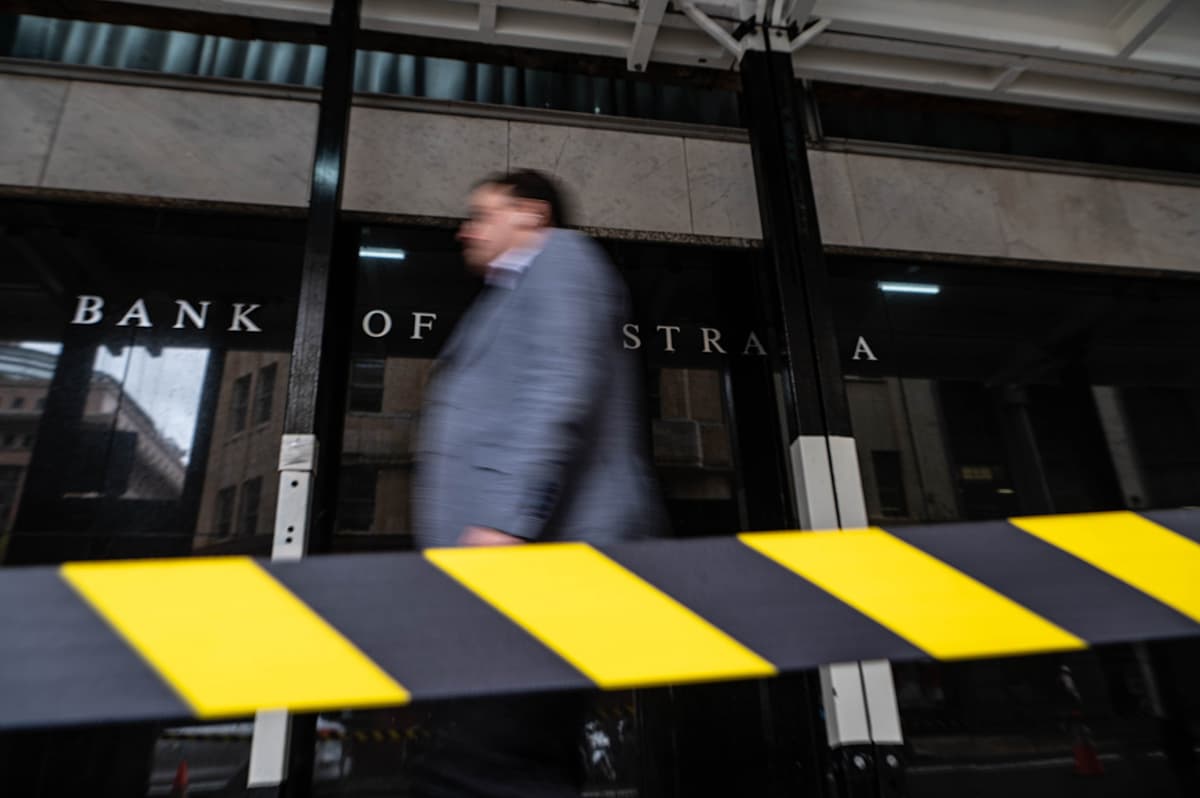
Photo; AAP Image/Flavio Brancaleone


A member of the Reserve Bank of Australia (RBA)’s Monetary Policy Board, which sets key interest rates, says that wages are not a major factor in price increases in Australia.
In a speech to the University of Melbourne’s Centre for Employment and Labour Relations Law, Dr Iain Ross AO said there is “no evidence of the emergence of a wage-price spiral” in the Australian economy.
Dr Ross, a former judge and assistant secretary of the Australian Council of Trade Unions (ACTU) told the audience that “the ‘threat’ of rising wages has been a persistent theme in the financial press since inflation began rising sharply from mid-2021.”
“A number of media commentators have raised the risk of a wage-price spiral – pointing to the 1970s when the oil price shock collided with large pay rises flowing through the economy.
“I take a different view…the labour market framework of today is very different to that of the 1970s and 1980s.
“There is no evidence of the emergence of a wage-price spiral in the present circumstances and recent data suggests such an outcome is unlikely.”
Speaking at the same event, Josh Bornstein, Director of Corporate Regulation at The Australia Institute, went further.
Bornstein criticised the RBA for ignoring both surging corporate profits and what former Governor Phillip Lowe described as “low wage crisis”, and instead focusing on a non-existent wage-price spiral.
“Institutions that fail to address real economic crises while responding to fake crises shed credibility and respect,” said Mr Bornstein.
Dr Ross’s analysis echoes that of former RBA Governor, Bernie Fraser.
Dr Fraser said that he found it “hard to understand the thinking of the present reserve bank board”, when giving The Australia Institute’s inaugural Bernie Fraser Oration last year.
“The reserve bank has to give equal weight to…the employment side of things and the inflation side.
“The bank did that for nearly 30 years from the early 1990s and did a pretty good job.
“But now I find it hard to know how the bank is weighing up those two things, inflation on the one hand and employment and unemployment on the other.
Quality research, analysis, explainers and factchecks from experts you can trust.
“For much of the last 12 months, the Reserve Bank has been reluctant to reduce interest rates because the board seemed to be saying ‘ah, employment is too strong, there could be increases in wages that could flow over into inflation.’
“Of course that didn’t happen. This view was a throwback to the 1970s.
Things were different in the 1970s, explained Fraser. “Labour unions aren’t as powerful as they were back in the mid-70s, so all this concern on the part of the current Reserve Bank Board about a strong labour market leading to inflationary prices – it’s just unreal.”
The RBA chair Michele Bullock was “misreading” the labour market situation, Dr Fraser said, noting that “there’s an attachment in a lot of central banks, including Australia…an emphasis on knocking inflation down and not such an emphasis on providing jobs and decent wages, which is the mainstay of most of the Australian working population.”
Greg Jericho, Chief Economist at The Australia Institute, welcomed the comments by Dr Ross.
“It’s good that RBA board members are recognising the reality of the current economic situation,” said Mr Jericho.
“There’s no sign of wages taking off, in fact, the opposite.
“All this talk from the Reserve Bank about a ‘tight’ labour market – we’re just not seeing that. We’re not seeing employers having to offer higher wages to attract new staff.
According to Mr Jericho, the Reserve Bank needs to look more closely at how corporate profits are affecting inflation.
“The big mining companies and the big banks have just reported profit increases of 10% or more, far bigger increases than wages or prices.
“Wage growth for every industry in Australia has been below inflation. This is the problem that the RBA should be worried about.
“Real wages are going backwards. Note to RBA – stop worrying about wages and start worrying about profits!
“It’s bizarre that the RBA can always find a way to worry about wages ‘breaking out’ or ‘exploding’, but there is never a concern about a profit ‘explosion’.

