Australia’s welding industry has accused the Reserve Bank of making it harder for manufacturers to lift productivity, arguing higher interest rates are strangling investment in the technology and training needed to improve it.
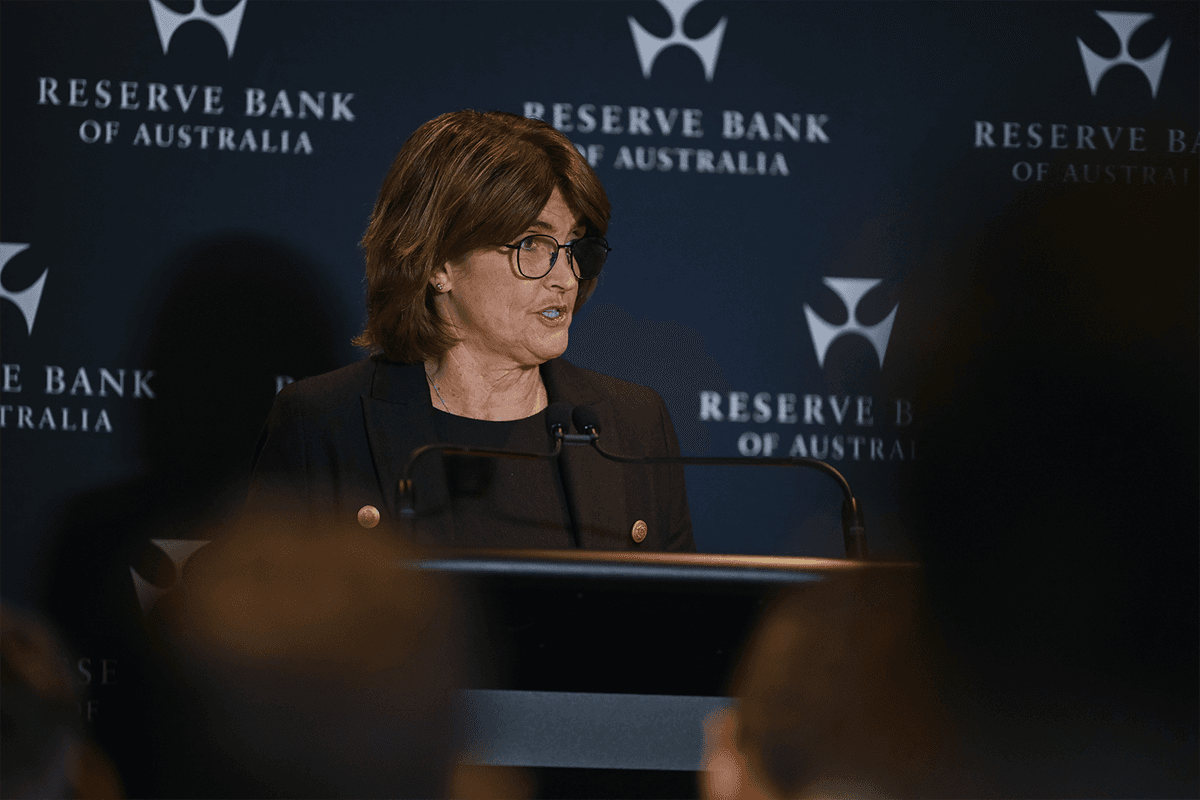
Weld Australia CEO Geoff Crittenden has hit back at Reserve Bank of Australia (RBA) Governor Michele Bullock’s claim that Australian businesses had become “less dynamic” and needed to do more to boost productivity.
“You cannot demand that businesses step up to the plate while you’re taking the bat out of their hands,” he said.
The RBA’s fourth rate rise this year, announced at the end of last month, took the cash rate to 4.6 per cent – the country’s highest level in 15 years.
The central bank is trying to slow inflation by making borrowing more expensive, encouraging households and businesses to spend less and easing demand.
However, weaker demand can then force businesses to cut staff or reduce hiring, pushing unemployment higher.
The unemployment rate rose to 4.6 per cent in August.
Speaking after the rate rise, Governor Michele Bullock said the labour market was “still a bit tight”.
“A rise in the unemployment rate does not necessarily mean job losses,” she said.
“What it often means is that people might be taking longer to find a job.”
Annual inflation rose from 3.5 per cent to 4 per cent in August, with higher fuel prices contributing to the increase, according to the Australian Bureau of Statistics (ABS).
“Look at what is actually driving inflation: petrol and construction costs,” said Mr Crittenden.
“Neither of those is caused by a welding workshop in Western Sydney or a fabricator in regional Queensland.
“Yet it is those businesses — and their owners and their workers with mortgages — who are being punished with every hike.
“Higher interest rates will not produce one extra litre of petrol or build one extra house. What they will do is strangle the investment in technology, training and capacity that actually lifts productivity.”
The Australia Institute’s chief economist Greg Jericho also argued there was no data to justify the latest 0.25 percentage point increase.
Get our newsletter
Quality research, analysis, explainers and factchecks from experts you can trust.
“The RBA argues this is about inflation, but that has absolutely nothing to do with Australians earning too much, spending too much or an overheating economy,” he said.
“In August, households spent less on food, clothing, household goods and health care, as they cut back to make up for the surge in petrol prices.”
The Australian Council of Social Service (ACOSS) warned that creating “unemployment by design” could have devastating consequences.
“An increase towards or above 5 per cent would cause a human disaster, locking people out of jobs for years and forcing them to rely on grossly inadequate income support payments,” said ACOSS CEO Dr Cassandra Goldie.
Mr Crittenden also blamed the government’s purchasing decisions for holding back manufacturers’ productivity.
“State governments have sent billions of dollars of fabrication work offshore in pursuit of the cheapest upfront price,” he said.
“The multinational primes and head contractors clip the ticket either way. And the hardworking Australian tradespeople at the bottom of the chain get consistently screwed over, no matter who they vote for.”
He said the “bitter irony” was that welders were spending more time repairing imported steelwork that didn’t meet Australian standards, taking away from new manufacturing work.
“If a project should take 1,000 labour hours but consumes 5,000 because imported product fails to meet Australian Standards, that is recorded as economic activity, but it adds no value,” he said.
“It is inefficiency forced onto compliant Australian businesses, and it is dragging down the very productivity numbers the Governor is lecturing us about.”
He also argued manufacturers were facing more barriers to investing in research and development.
“Every hike makes the business case for a new robot, a new laser cutter or a new apprentice harder to stack up,” he said.
“At the same time, the R&D tax incentive settings that are supposed to encourage innovation have been wound back and tangled in complexity.”
Weld Australia has called on the RBA and Australian government to make it easier for manufacturers to invest in new technology, automation and skills.
“Australian manufacturers are among the most resilient, inventive and hardworking businesses in this country. They have survived energy price shocks, skills shortages, a flood of cheap imports and now the sharpest rate-hiking cycle in a generation,” he said.
“They do not need a lecture from Martin Place. They need cheaper capital, fair procurement, enforced standards and a government that buys what they make.”