Australia’s growing divide over gun reform has drawn criticism from public health experts, who say the country’s patchwork of laws is putting communities at risk. It comes as New South Wales begins its biggest firearms buyback in three decades.
By Tegan George
Wed 4 Nov 2026 12.09 AEDT
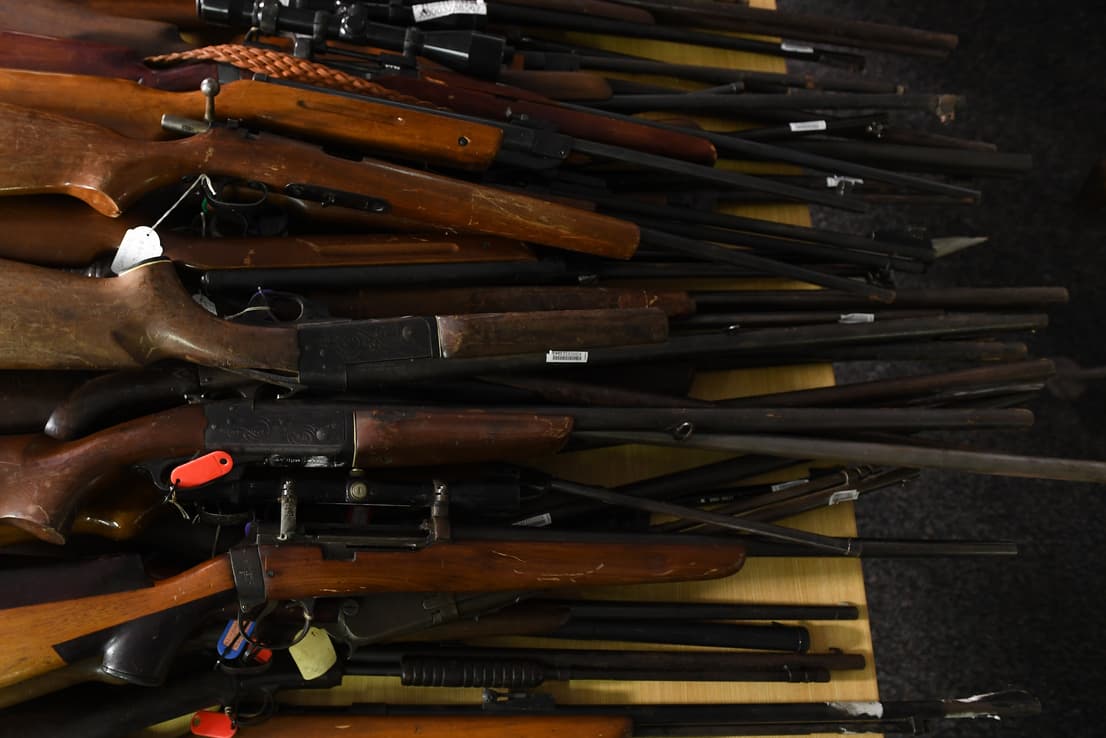
Image: AAP/Dean Lewins


Australia’s growing divide over gun reform has drawn criticism from public health experts, who say the country’s patchwork of laws is putting communities at risk.
It comes as New South Wales begins its biggest firearms buyback in three decades, following last December’s Bondi terror attack, which killed 15 people.
The NSW Government said 331 appointments had already been booked to surrender 2,430 firearms, and 194 ammunition items weighing at least one kilogram, before the scheme had officially opened.
“As we saw following the tragedies at Port Arthur in 1996 and in Bondi last December, people support efforts by their governments to keep them safe from preventable gun violence,” said Public Health Association of Australia CEO Adjunct Professor Terry Slevin.
Thirty years on from the deadliest massacre in modern Australian history, there are now more guns in Australia than at the time of the Port Arthur tragedy.
The Department of Home Affairs confirmed earlier this year that there were a record four million firearms in Australia, with more than 1.1 million each in NSW and Queensland.
But while NSW and the ACT have signed on to the national buyback scheme, several other jurisdictions have refused.
Queensland was the first to say no in January, with Premier David Crisafulli citing excessive costs and a need to focus on antisemitism laws.
His position has not changed, even after a recent drive-by shooting in Logan, which killed a 19-year-old woman and injured three men.
Victoria, South Australia and the Northern Territory have also declined to participate, while WA conducted its own buyback in 2024 and Tasmania has pursued a separate scheme.
“We appreciate the efforts of the federal, WA, NSW, and ACT governments, and are disappointed the governments of the other jurisdictions are refusing to keep their communities safe,” said Mr Slevin.
Quality research, analysis, explainers and factchecks from experts you can trust.
“Australians don’t want to replicate the United States with its misery and violence so many families experience because it refuses to address its guns problem.”
Mr Slevin accused the firearms industry of working to dilute the effectiveness of gun control protections.
“To pretend that illegal guns are the problem ignores the reality that most guns start as legal, and through theft and other pathways become illegal, or are used to cause harm, regardless of legal status,” he said.
“The fewer guns in circulation means a lower chance people will get shot, and that’s particularly pronounced for people living in the bush.”
“Australia Institute research has shown the greatest single new source of firearms for the black market is stolen licenced firearms,” said Research Manager Alice Grundy.
She said more than 2,000 guns are stolen every year, which equates to one every four hours.
“This all shows that gun control is not a done deal in Australia. It is not something that was permanently dealt with by John Howard in the 1990s,” she said.
Gun control needs to be considered a work in progress by state and federal governments. The buyback was a recommendation made by the Royal Commission into Antisemitism and Social Cohesion’s interim report and provides compensation for eligible firearms affected by new laws.
Nationals senator Bridget MacKenzie labelled the scheme “unfair” while party leader Senator Matt Canavan has criticised it for targeting law-abiding firearm owners rather than criminals and illegal firearms.
This week NSW Opposition Leader Kellie Sloane also described it as a “PR exercise” while speaking to Ben Fordham on 2GB.
However, polling by the Australia Institute in 2025 found three in four Australians supported limits on the number of firearms an individual can possess.

