Private health care is supposed to take pressure off public hospitals. Sometimes it can do the opposite. When scarce clinical resources are used where they’re least needed, public patients wait longer.

Wed 4 Nov 2026 11.59 AEDT
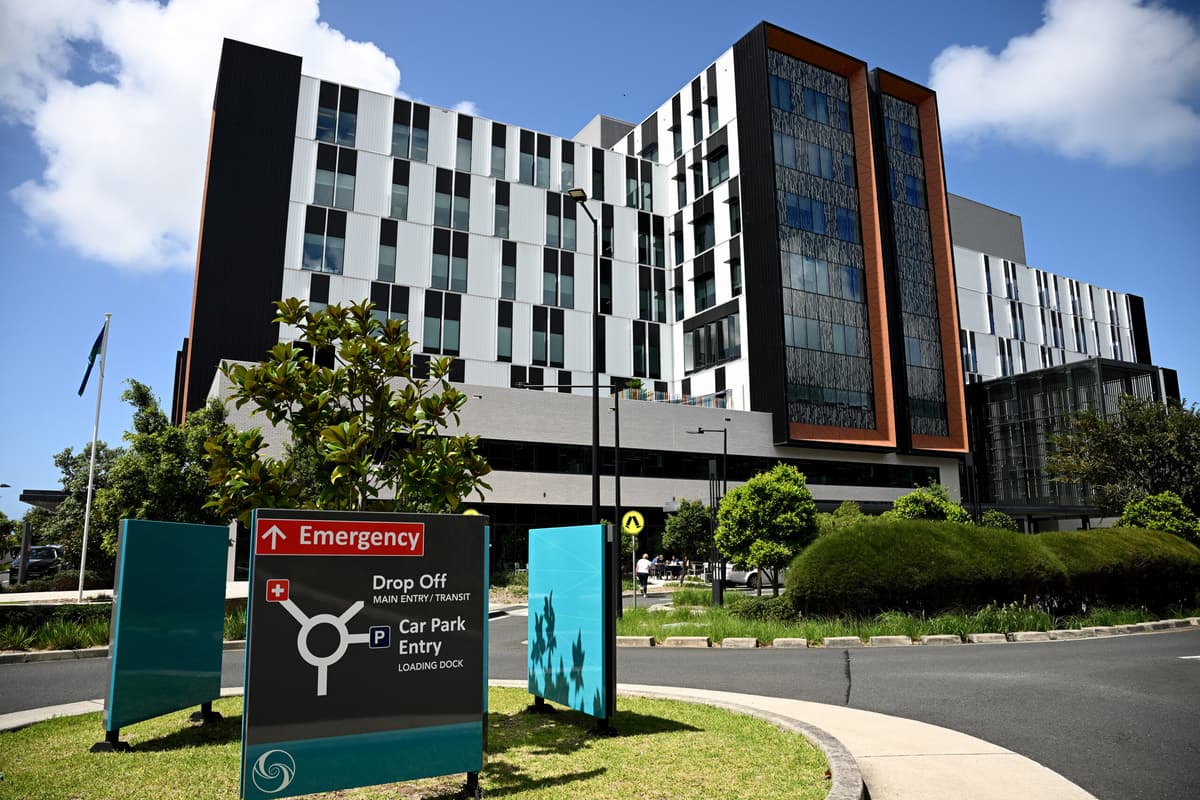
Photo: AAP Image/Dan Himbrechts


When his government introduced the private health insurance rebate, John Howard said:
The name of the game is to get volume, to get large numbers of people taking out health insurance to take the load off the public hospital system.
But this doesn’t work when people with the least need receive the most health care, while those with the greatest need are made to wait.
This medical segregation is called the ‘inverse care law’.
The inverse care law is very evident in Australia. This challenges not only our egalitarian self-image but also the claim that private care supports public hospitals.
Colonoscopies – where a flexible tube is used to examine the bowel, take biopsies and remove abnormalities like cancer if needed – illustrate how the current system misallocates scarce resources.
Our most affluent communities appear to receive more privately-funded colonoscopies than everyone else. After adjusting for age, a person living in Sydney’s Eastern Suburbs North – an area that includes suburbs like Vaucluse and Double Bay – is 39 times more likely to get a colonoscopy than someone in Katherine, NT.
These data exclude most public hospital patients (except those who are funded privately – roughly 10%), but the entire clinical pathway points in the same direction.
According to the Australian Institute of Health and Welfare (AIHW), Australia’s poorest communities are less likely to participate in bowel cancer screening (36% versus 47%), more likely to receive a positive result (6.9% v 4.7%), less likely to undergo the subsequent diagnostic assessment (80.8% v 89.1%), and more likely to wait longer for it (71 days v 50 days).
AIHW data also show that around three-quarters of same-day colonoscopies occur in private hospitals.
Meanwhile, NSW Health estimates that about 20,000 public endoscopy procedures – most of which are colonoscopies – may be overdue.
But the most telling statistic is bowel cancer mortality – which is about 50% higher among Australia’s poorest communities compared to the most affluent, according to the latest available data.
Repeat colonoscopies (performed within three years of a prior one) reveal the same pattern. Clinical guidelines recommend these be performed on a small number of high-risk patients.
There’s little reason to think the clinical need for early repeat colonoscopy is concentrated among affluent Australians. Disadvantaged communities have higher rates of positive screening results and bowel-cancer mortality. Yet they receive fewer repeat procedures.
Quality research, analysis, explainers and factchecks from experts you can trust.
Colonoscopy shows how private activity can lengthen public waiting lists. Both sectors draw on the same limited pool of gastroenterologists. When these specialists perform unnecessary or premature procedures, they cannot use that time for higher-risk patients waiting elsewhere.
The imbalance is considerable. If rates in high-use affluent areas fell towards the national average, and rates in disadvantaged areas rose by the same total amount, about 11,700 repeat and 57,600 initial colonoscopies could shift each year without increasing overall activity.
This calculation merely serves to illustrate the scale of the unevenness. Clinical need and guidelines would still determine access. Reductions would come only from unnecessary or premature procedures, so affluent patients who do need a colonoscopy would not miss out.
Knee arthroscopies are another example of the inverse care law at work in the Australian health system.
While arthroscopy can be appropriate for some injuries and other specific conditions, using it to treat osteoarthritis and degenerative knee disease is a well-established example of low-value care because it generally provides little benefit over non-surgical treatment and carries risks of harm.
According to the AIHW, private hospitals recorded 38,747 arthroscopic knee procedures in 2024–25, compared with 7,269 in public hospitals. Private hospitals therefore performed about 84% of these procedures, despite accounting for about 67% of elective surgery overall. The private rate appears to be 2.65 times the public rate – which is striking for a procedure with a long history of overuse.
A similar mismatch is evident in cardiology.
A 2016 study that examined geographic variation in coronary angiography – an invasive test used to identify narrowing or blockages in the blood vessels supplying the heart – found that rates varied more than five-fold. Even though socioeconomic disadvantage and remoteness were associated with higher rates of heart disease and death, higher income areas had higher angiography rates. The strongest predictor of an area’s angiography rate was private hospital activity.
And guess which income quintile uses private hospitals (and private health insurance) the most?
A health system that gives lower-risk, affluent patients procedures they may not need while higher-risk public patients wait is both inequitable and inefficient.
It means each dollar we spend buys less health than it could.
The private health insurance rebate costs $8 billion a year, and about $12 billion if indirect costs are included. At a time when the government is seeking $9.3 billion in budget savings, this generous subsidy deserves closer scrutiny.
John Howard said the rebate’s purpose was to “take the load off the public hospital system”. When subsidised private care consumes scarce resources on low-value procedures while higher-risk public patients wait, the policy is doing the opposite.
Luke Slawomirski is Senior Postdoctoral Research Fellow at The Australia Institute.