Advanced search
The Point - home
DonateSubscribe
HomeWhat's NewOpinionOff the ChartsExplainersFactcheckAbout Us
The Point — home
DonateSubscribe
The Point — home
Advanced search
  • Home
  • What's New
  • Opinion
  • Off the Charts
  • Explainers
  • Factcheck
  • About Us
DonateSubscribe
Subscribe
  • Home
  • What's New
  • Opinion
  • Off the Charts
  • Explainers
  • Factcheck
  • About Us
The Point - home
Privacy PolicySitemapComplaints & CorrectionsNewsletter

The Point recognises the ancestral connections and custodianship of Traditional Owners throughout Australia. We pay respect to Aboriginal and Torres Strait Islander cultures and to Elders past and present.

©2025–2026 The Point, an initiative of The Australia Institute

WHAT'S NEW

In Australia we tax work relentlessly and transparently, while we let wealth quietly compound

Two decades ago, the total household wealth of all Australian was equal to 5.7 times household income. Today it’s 8.8. That jump isn’t because workers got lazy.

By David Richardson

Mon 29 Sep 2025 14.08 AEST

Economy
In Australia we tax work relentlessly and transparently, while we let wealth quietly compound

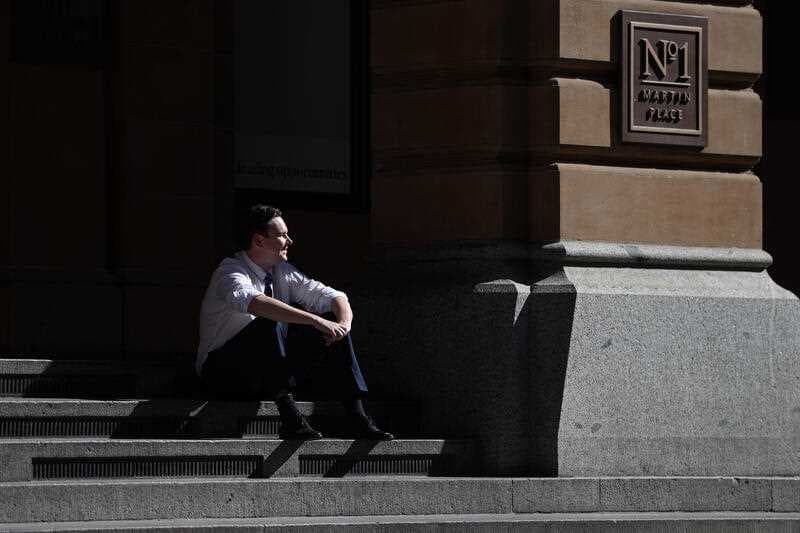
Photo: AAP Image/Jane Dempster

Republish this article

This article is licensed under Creative Commons — Attribution-NoDerivatives 4.0 International (CC BY-ND 4.0).

Republishing guidelines

  • You must credit the author(s) and The Point.
  • You must link back to the original article.
  • You may not edit or modify the article content.
  • Images may be subject to separate copyright and are not included in this licence.

Australia’s household wealth rose by $1,238 billion last year, reaching $17,765 billion. It’s a big number to wrap your head around, but if we shared it equally, every Australian would have about $660,000 — enough to buy a decent apartment in most cities. But that’s not how wealth works, and it’s certainly not how it’s distributed.

Politicians often speak as if wealth comes from saving, spending less than we earn each week and putting the remainder in our bank account. But of that $1,238 billion increase in the wealth held by Australians last year, just $65 billion came from actual savings. The rest, a staggering $1,173 billion, came from ‘capital gains’. To be clear, capital gain means ‘increase in the price of assets like houses and shares.’

Put simply, last year those who already owned houses, shares and gold bars watched as their assets rise in value while they didn’t lift a finger. Meanwhile, all of the wages and salaries earned by the millions of Australians who actually worked last year totaled just $1,190 billion. Think about that: the windfall gains of those with the most were nearly identical to all of the incomes of all of the people who get up and go to work each week.

It didn’t used to be this bad.

Advertisement

Two decades ago, the total household wealth of all Australian was equal to 5.7 times household income. Today it’s 8.8. That jump isn’t because workers got lazy. It’s because capital gains are the engine of inequality. Wealth produces capital gains, capital gains produce more wealth, and those with the least slip further and further behind.

The top 1% own 24% of all of Australia’s household wealth, while the top 10% hold 58%. We’re not quite at American levels, where the top 1% own 35% and the top 10% 70%, but we’re on the same road and picking up speed.

Sadly our tax system which could be helping make things better is  actually making things worse. If you earn a wage, your tax is paid even before your money hits your bank account. But if your income comes from capital gains, not only do you pay far less tax thank to the ‘50% capital gains tax discount’, but you pay your tax a lost more slowly. And the longer the wealthy delay paying their tax, the more assets they have compounding away for them.

In Australia we tax work relentlessly and transparently, while we let wealth quietly compound. Millions of Australians get up every day to earn their living. A much smaller number wake up richer without lifting a finger, and without paying the same rate of tax.

Inequality isn’t an accident. It’s the predictable result of a tax system that rewards wealth. The good news is that because our system has been designed by previous governments,  it can be redesigned by this one. If they want to.

Advertisement

Related Articles

WHAT'S NEW

New research reveals Australians are putting in $300 worth of unpaid overtime every fortnight

By Tegan George

New research from the Centre for Future Work reveals the average employee is putting in almost three and a quarter hours of unpaid overtime each week, equivalent to 4.4 full-time working weeks a year. Across the country, its report estimates the value of unpaid overtime at $97.93 billion annually.

Economy
New research reveals Australians are putting in $300 worth of unpaid overtime every fortnight

OPINION

Australia’s gender pay gap falls below 20% for the first time

By Gemma Killen

Australia's gender pay gap has fallen to a record low. This year, the pay gap is 19.7%, which means that for every dollar men earn, women earn just over 80 cents. Over a year, this adds up to an average difference of $27,467.

Society & InequalityEconomy
Australia’s gender pay gap falls below 20% for the first time

OPINION

Productivity, New Technologies, Working Time

By Greg Jericho

This is an edited version of a speech delivered by Greg Jericho (Chief Economist at The Australia Institute) at the Academy for Social Science in Australia Annual Symposium. 

Economy
Productivity, New Technologies, Working Time

FACTCHECK

Factcheck: No, a gas export tax would not drive up gas prices for Australians

By Greg Jericho

This morning, Minister for Industry Senator Tim Ayres argued that a gas exports tax would mean higher prices for Australians. Except this is not true. A gas tax would actually lead to lower prices for Australians.

Economy
Not true
Factcheck: No, a gas export tax would not drive up gas prices for Australians