The Federal Government has released its long-awaited National Climate Risk Assessment – and it makes for grim reading.
Mon 15 Sep 2025 16.10 AEST
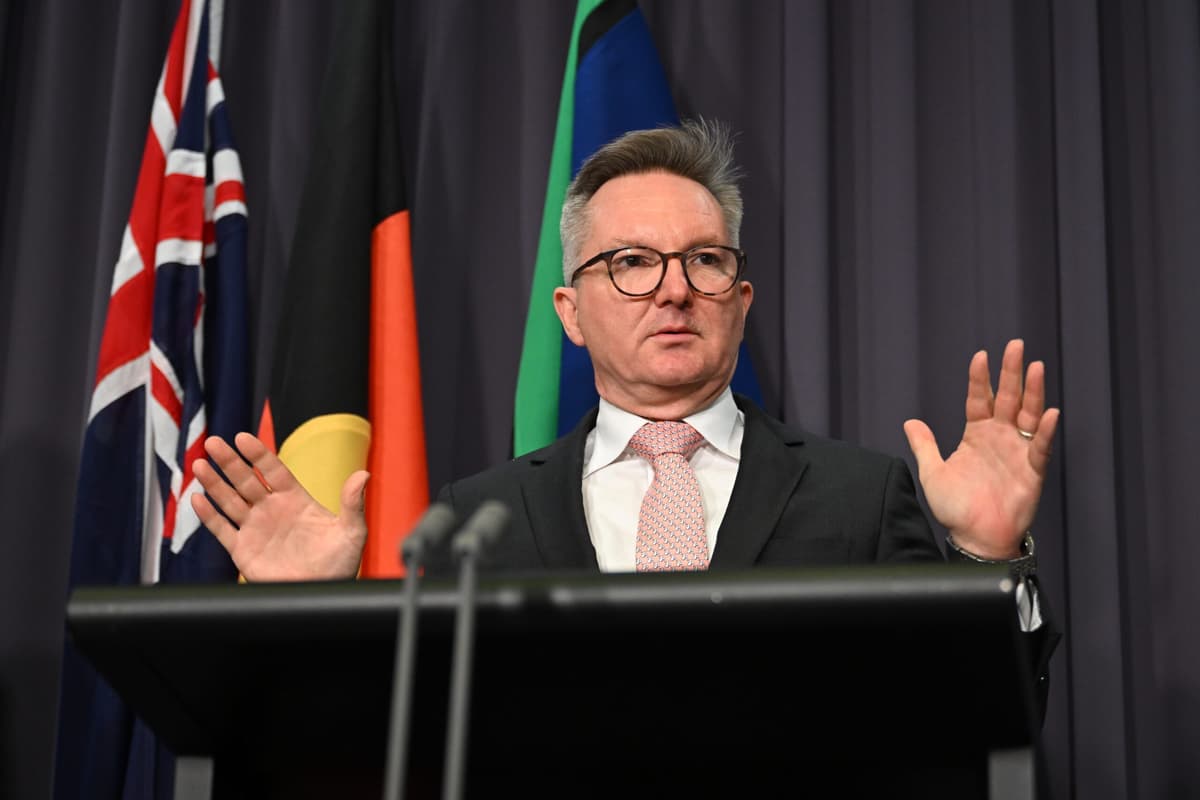
Photo: AAP Image/Lukas Coch


The Federal Government has released its long-awaited National Climate Risk Assessment – and it makes for grim reading.
The report says the homes of 1.5 million Australians living near the coast are under threat.
It predicts a surge of more than 400% in deaths related to heatwaves in some of our most populous cities.
And it nominates 63 “nationally significant” climate risks.
Experts say it’s further proof that Australia should scrap its policy of exporting enormous volumes of fossil fuels.
Ironically, the release of the risk assessment, which the government sat on for months, was released just three days after the federal government gave its final approval for the 45-year expansion of the North West Shelf gas export project.
It also comes less than a week after Prime Minister Anthony Albanese embraced Pacific leaders and promised meaningful action on climate change at this year’s Pacific Islands Forum in the Solomon Islands.
“Approving new fossil fuel exports is destroying the future. It isn’t just a betrayal of our Pacific neighbours, it is a betrayal of all Australians, putting the profits of foreign-owned fossil fuel corporations ahead of our wellbeing, security and prosperity,” said Dr Richard Denniss, Executive Director of The Australia Institute.
“The enormous emissions from the Australian government’s approval of new fuel export projects make a mockery of the government’s incremental climate policies and expose the Prime Minister’s promise to our Pacific neighbours to take urgent action as empty platitudes.”
Australia is the second largest fossil fuel exporter and fifth largest fossil fuel producer in the world, with emissions from exports measuring around 1.15 billion tonnes CO2e annually, greater than the emissions of all countries except China, the United States, India and Russia.
Advertisement

Nearly a fifth of Australia’s domestic emissions now come from sending fossil fuels to be burned overseas.
The 45-year extension of Woodside’s North West Shelf gas export terminal, approved by the Australian Government last Friday, will add around 90 million tonnes of emissions to the atmosphere, equivalent to opening 12 new coal power stations.
“Coal and gas exports from Australia are playing a major role in destroying the world’s climate, with devastating consequences for all the systems underpinning the security, wellbeing and prosperity of Australians,” said Dr Denniss.
“Climate change is making fires, floods and heatwaves more frequent and extreme. This isn’t just devastating in itself; it is driving our insurance premiums through the roof and making many homes uninsurable.”
“Almost a fifth of Australia’s domestic emissions are from fossil fuel exports. The Australian government can’t pretend to be meeting our climate commitments while it keeps approving new fossil fuel export projects.”
The President of the Australian Medical Association, Dr Danielle McMullen, said doctors had been warning about the health impacts of climate change for many years.
“The information in this assessment — including that heat-related deaths would surge 450 per cent (in Sydney alone) if global heating surpasses 3C — is terrifying, but it can’t be ignored.
“Every year we see heatwaves around the globe and increasingly record-breaking temperatures, and with those heatwaves, we sadly see people dying — many of them from vulnerable populations without access to cooling mechanisms.”
The Australian CEO of the World Wide Fund for Nature, Dermot O’Gorman, said “this is a warning bell that Australia must change course and get on track to hold warming to safer levels.”
Advertisement

