The soaring cost of repairing roads, drains, parks and other public facilities after floods, fires and storms is drifting out of reach of local councils, according to new research.
Wed 10 Sep 2025 14.53 AEST
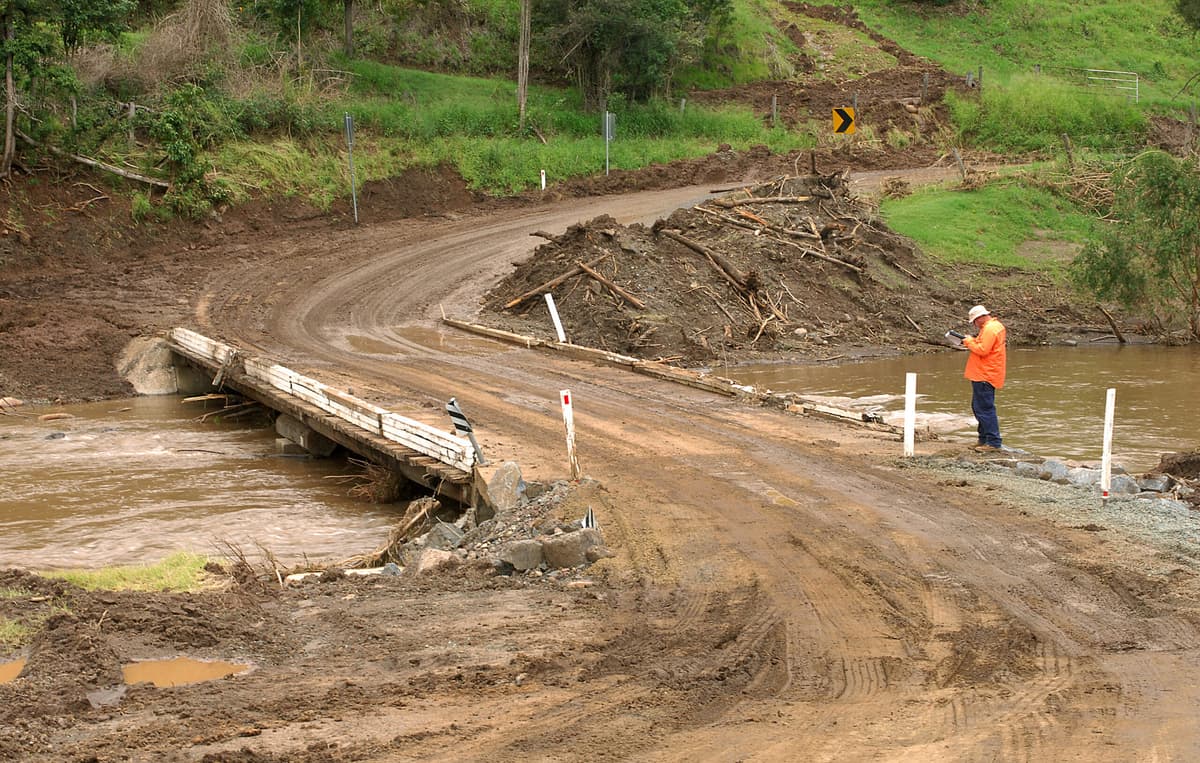
Photo: AAP Image/Dave Hunt


The soaring cost of repairing roads, drains, parks and other public facilities after floods, fires and storms is drifting out of reach of local councils, according to new research.
With climate change increasing the frequency and severity of natural disasters, the burden on local government is growing significantly faster than its ability to pay for it.
But there is hope.
According to the new analysis by Australia Institute Research Director Rod Campbell, a National Climate Disaster Fund would raise tens of billions of dollars a year to help prepare for – and clean up after – a natural disaster.
The fund would be levied on fossil fuel extractors, based on their carbon emissions, which would deliver the double benefit of creating an incentive to reduce emissions.
The analysis – Costs of Climate-driven Disasters and Local Government Revenue – compared the insured costs of climate change-related disasters with the growth in local government revenue.
It found that costs related to climate change are now 12 times higher than they were 20 years ago, while local government revenue is only three times higher.
“If a town or suburb is battered by a storm or a bridge is washed away in a flood, the local council is often left to pick up the tab,” said Rod Campbell.
Advertisement

“This damage is caused by fossil fuel companies, and ratepayers shouldn’t be expected to pay for the damage caused by coal, gas and oil companies.”
Mr Campbell said the new research highlighted the need for a National Climate Disaster Fund.
“This would help pay for the costs of natural disaster response and recovery for Australian households, businesses and local governments,” he said.
“This could be funded by a levy per tonne of carbon pollution.”
“If this levy was set at $30 per tonne, it would raise $44 billion in this year alone.”
He said the fund could have been used to help towns impacted by the algal bloom, which continues to devastate the South Australian coastline and kill huge numbers of fish.
Between them, the state and federal governments pledged $28 million to respond to the bloom, which is caused by increasing ocean temperatures.
Just this week, health authorities warned asthmatics to carry medication if they plan to visit beaches impacted by the algal bloom.
“Imagine if we’d had billions of dollars sitting in a fund and could have jumped on this straight away,” said Rod Campbell.
“We now see a scramble for more funding for better ocean monitoring, responding to the health impacts and seeking advice from international experts.”
Earlier this year, Australia Institute research found that many Australians were ditching home insurance due to the skyrocketing cost of premiums. Many now risk losing everything if their property is impacted by a natural disaster.
“Australian families are facing an almost impossible choice when it comes to home and contents insurance,” said Australia Institute Senior Economist Matt Grudnoff.
“They either find the money to pay ridiculous premiums or risk losing everything they own.”
“Australians have been abandoned by greedy insurance companies. It’s not fair. It’s not right.”
Rod Campbell said adopting a “polluter pays” principle made sense on many levels but, more importantly, was the right thing to do to help those who cannot afford to pay for a problem they didn’t cause.
“It is clear that home owners and local governments cannot afford the cost of climate change. We need to find a better way. A National Climate Disaster Fund would be a good starting point.”
“These huge, multinational companies that extract and export Australian resources are in a far better position to pay for climate impacts than local councils.
“Gas and coal corporations have made huge profits recently, many pay little or no tax, and then leave Australians high and dry with the costs of disasters.
“Big gas, coal and oil companies make a killing from climate change, and it’s time they started.”
Advertisement

