However, Tuvaluans argue that is not good enough and Australia must phase out exports of coal and gas that feed the fossil fuel cycle.
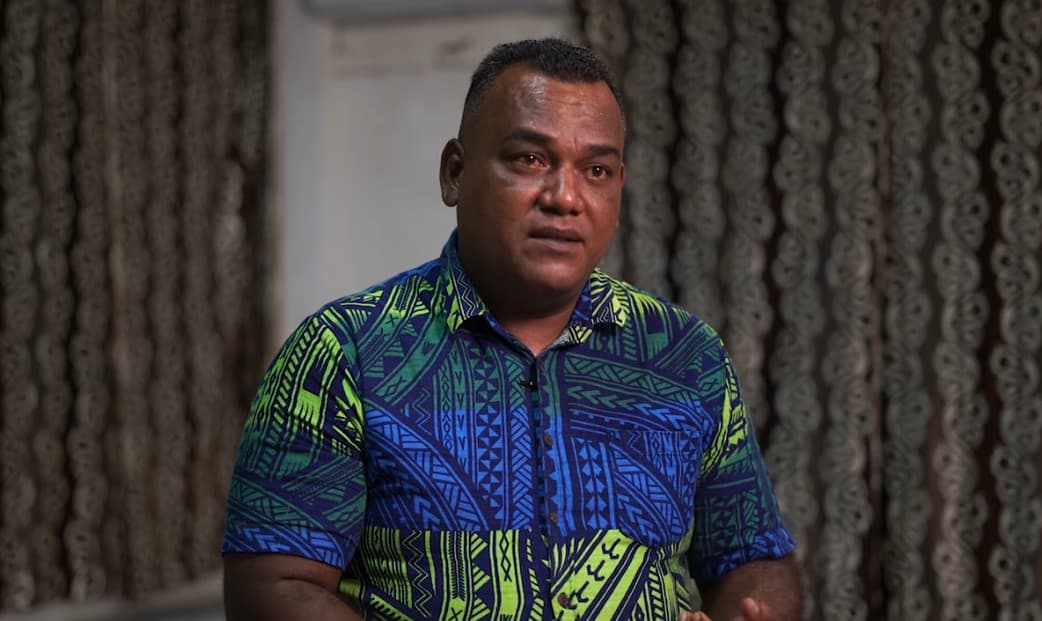
“How would you feel if a country that is meant to help to protect is slowly destroying you, little by little? We feel devastated, of course, because this is our home, and this is the reality that we are facing,” she said.
Tuvaluans are not the only ones who have expressed concern about Australia’s climate rhetoric.
The former president of the Republic of Kiribati, Anote Tong, recently added his voice to the growing chorus of criticism of the Federal Government’s decision to extend Woodside’s highly polluting North West Shelf project in Western Australia.
The North West Shelf gas export terminal is equivalent to building 12 new coal power stations, adding around 90 million tonnes of emissions to the atmosphere each year.
Anote Tong, Kiribati’s former president, has labelled the Albanese government’s decision as “disappointing”.
“It is disappointing that at such a critical time for the health of the planet, the Australian Government decided to extend the highly polluting North West Shelf gas project,” he said.
“This is not consistent with Australia’s rhetoric on climate change.”
That decision came after a recent decision by the International Court of Justice (ICJ), which confirmed that states have binding legal obligations under international law to prevent climate harm.
It also came after Prime Minister Anthony Albanese attended the Pacific Islands Forum, looking to strengthen Australia’s relationship with its pacific neighbours.
“Australia cannot have it both ways — claiming leadership in international forums while undermining it in others,” said Director of the Climate & Energy Program at the Australia Institute, Polly Hemming.
“We have legal obligations — not just moral ones — to stop fuelling the climate crisis.”