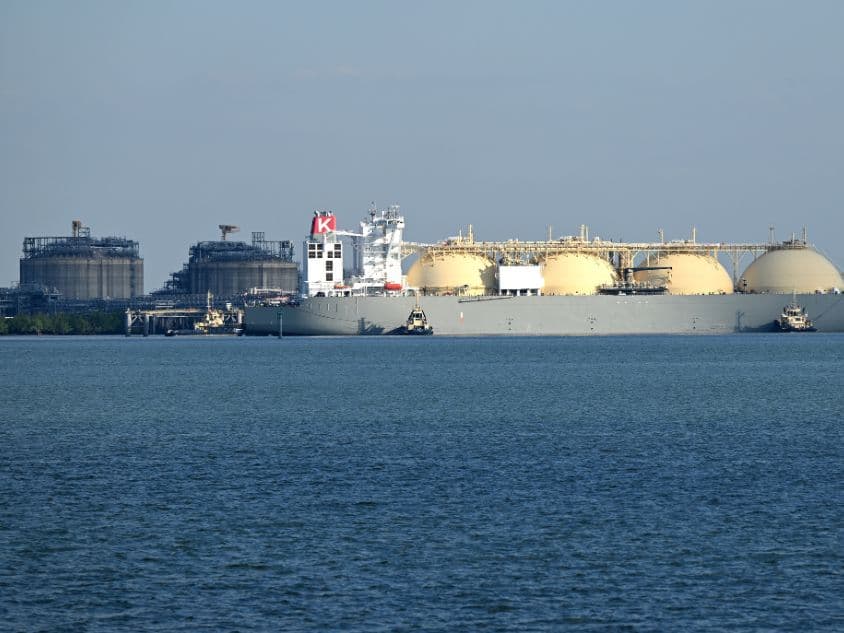

For all the focus on inflation, interest rates and cost-of-living pressures this year, the nation quietly passed a shameful milestone in 2025, ensuring a bleak Christmas for more Australian families than ever.
Fri 12 Dec 2025 01.00
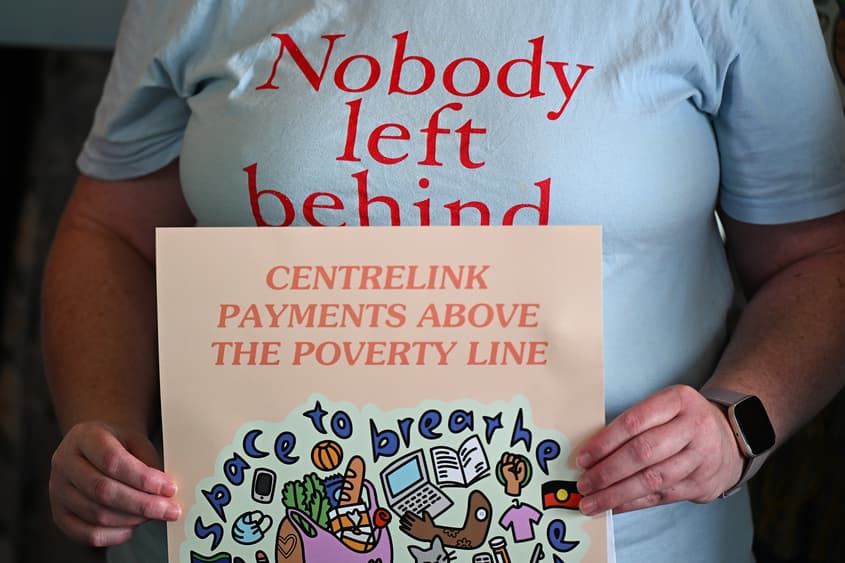
Photo: AAP Image/Lukas Coch


For all the focus on inflation, interest rates and cost-of-living pressures this year, the nation quietly passed a shameful milestone in 2025, ensuring a bleak Christmas for more Australian families than ever.
While there is no official measure of poverty in Australia, research reveals that in the second half of this year, the number of Australian children living in poverty passed one million.
One million. In a first world, resource rich democracy with one of the highest per-capita GDPs in the world.
According to research by the End Child Poverty campaign, almost a quarter of those kids were plunged into poverty in just the past four years.
The reality for tens of thousands of Australian families is that Christmas is not so much a time of joy, but a time of financial hardship, sadness and embarrassment.
It means children go without. Parents go into debt. Families endure or survive the so-called festive season, rather than love it.
But it doesn’t need to be this way.
Former federal Treasurer Josh Frydenberg famously defended spending hundreds of billions of taxpayer dollars on AUKUS, by saying “everything is affordable if it is a priority”.
For the record, the official AUKUS price tag is $368 billion. That’s more than $13,000 for every woman, man and child in the country for a handful of submarines which may never be delivered.
If the government decided ending poverty was a higher priority than nuclear-powered submarines, it could make it happen.
“Poverty is a policy choice made by governments,” said Greg Jericho, chief economist at the Australia Institute.
When the federal government introduced a temporary $550-per-fortnight “coronavirus supplement” for welfare recipients in 2020, 470,000 Australians were lifted out of poverty with a stroke of a pen.
“Raising the rate of unemployment benefits to 90 percent of the age pension would cost less than $5 billion a year,” said Greg Jericho.
“Australia can easily afford to do that.”
“It could be fully funding by simply scrapping the fuel tax credit scheme under which taxpayers pay for the diesel used by the giant, multi-nation mining companies.”
“Budgets are about choices and about deciding what are the things that matter to the nation.”
“Is providing a tax credit to mining companies more important than lifting hundreds of thousands out of poverty? That’s up to our politicians.”
Advertisement
The idea that there’s only so much money to go around makes a bastard kind of sense to the poor. If impossible decisions abound in their lives, it must be true of governments, too. Certainly, that’s how federal budgets are framed. But beyond impressionism, we know the household budget is not analogous to state budgets in any meaningful way.

AI deepfakes used in online fraud are a global problem. In Australia, Hong Kong, Taiwan, the United States, the EU, and Southeast Asia, scammers often use deepfake images of public figures to trick people into handing over money. But Australia has been at the forefront of many of the regulation discussions.

Economists are warning the Albanese Government must act immediately to end “Australia’s enormous gas giveaway” as households begin to see – and feel – the economic fallout of war in the Middle East.