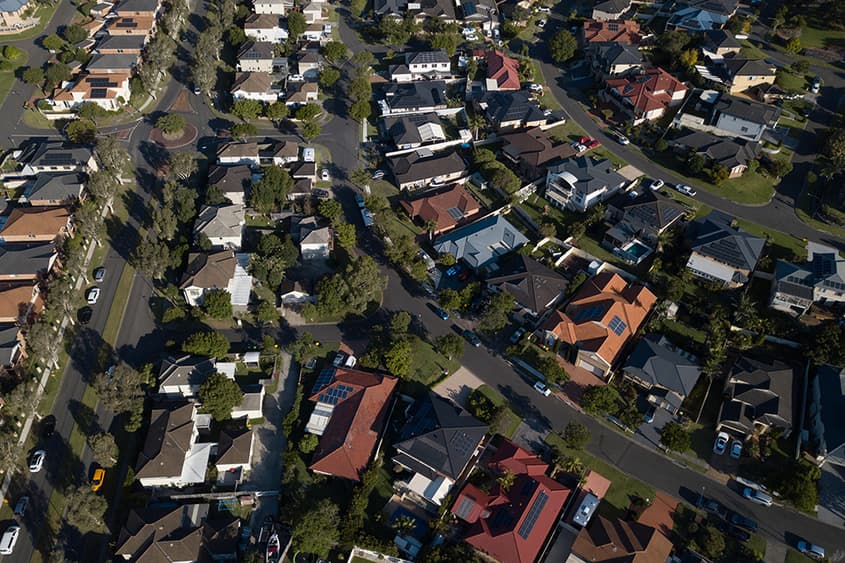
Economists are warning the Albanese Government must act immediately to end “Australia’s enormous gas giveaway” as households begin to see – and feel – the economic fallout of war in the Middle East.
Thu 12 Mar 2026 00.00
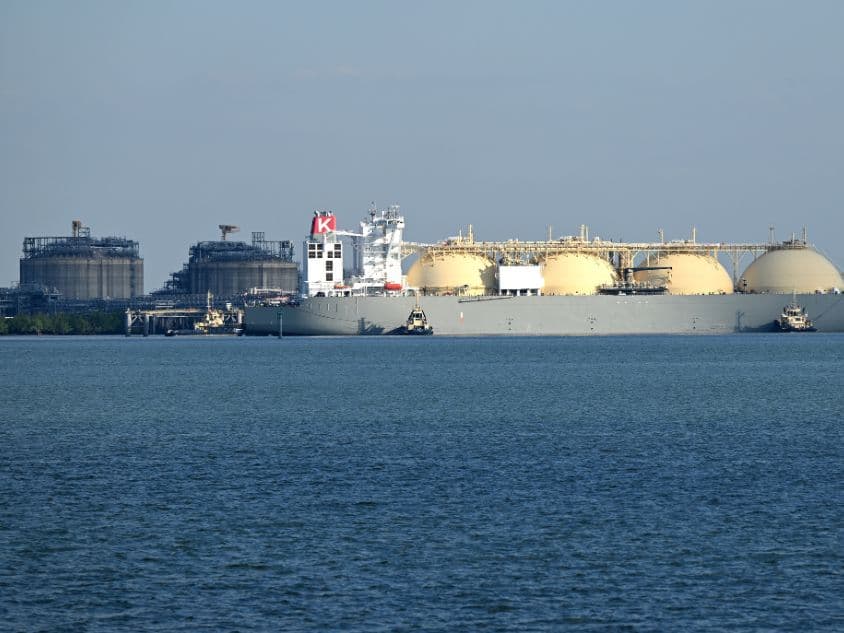
Photo: AAP Image/Darren England


Economists are warning the Albanese Government must act immediately to end “Australia’s enormous gas giveaway” as households begin to see – and feel – the economic fallout of war in the Middle East.
It comes as new research by the Australia Institute shows the conflict will “all-but-certainly” push up gas, electricity and petrol prices, placing pressure on already stretched budgets.
“Like all wars, what’s unfolding in the Middle East is a humanitarian disaster,” said Richard Denniss, co-CEO of the Australia Institute. “It is also an economic disaster, which will impact Australian households.”
The war on Iran by the USA and Israel has already sparked panic-buying of petrol, with service stations accused of exploiting motorists’ fears by raising fuel prices.
“Australians could and should be shielded from the worst consequences of this war,” said Dr Denniss.
The conflict has already spread beyond Iran across the Middle East, effectively closing the Strait of Hormuz, through which about a fifth of global crude oil trade passes.
The Australia Institute forecasts the reduction in supply and rising costs will mirror the global energy price surge that followed Russia’s invasion of Ukraine in 2022.
Australian coal and gas (LNG) export prices increased rapidly during the war.
Research shows that across 2021-22, coal prices tripled and LNG prices more than doubled – the biggest annual increases in gas and coal prices since the data was first collected in 1990.
For many energy-exporting countries, the price spike was good news, delivering significant increases in public revenue while leaving domestic prices largely unaffected.
Dr Denniss says this is not the case in Australia.
“While the largely foreign-owned gas companies exporting Australian gas will make billions, Australian families will suffer,” he pointed out.
He said Moscow’s invasion allowed gas companies operating in Australia to capitalise on the global instability and sell to the highest bidder.
“Whenever the world price of gas increased, the companies insisted that Australian customers pay the world price or miss out,” the research noted.
“It means Australian consumers end up paying surging world prices for the country’s own resources.”
Research shows LNG export volumes from Australia remained steady.
However, revenues leapt from $36 billion in 2020 to over $90 billion in 2022 and remained at close to record highs for the next two years.
In the four years since (2022–2025), exporters made a combined $112 billion in windfall profits.
However, Australia has seen little of the financial benefit.
While the nation is the second biggest liquefied natural gas exporter in the world, unlike other energy superpowers, it doesn’t receive a significant tax or royalty benefit when prices rise.
“Australian nurses pay more tax than gas exporters,” Mr Denniss said.
“Australian beer drinkers pay more than gas exporters. Australian students pay more in HECS repayments than the gas industry super-profits tax raises. If ever there was a time to stop Australia’s enormous gas giveaway, it is now.”
The Australia Institute is calling on the Albanese Government to implement a 25 per cent export tax on all gas exports, as proposed by the ACTU.
It’s also recommending Canberra divert ‘uncontracted’ gas away from the export market and towards Australian domestic use.
Dr Denniss says now is the time for Prime Minister Anthony Albanese to stand up for Australians and use the country’s influence as a “middle power”.
“Australia has significant diplomatic and economic power and a close relationship to the US. For decades, Australia has played a role in creating and upholding the international rules-based order.
“Rather than meekly supporting the US and Israel’s military action in the Middle East, Australia could use its influence to help bring peace.”
Advertisement
In recent weeks, economists have argued that a certain level unemployment is a necessary condition for the economy to function. They have argued that the Reserve Bank of Australia may need to raise interest rates higher, to increase unemployment, which is currently too low, in order to bring inflation under control.


As you enjoy the fruits of Australia’s autumn harvest, spare a thought for the hands that likely picked it. Thousands of workers from across the Pacific are currently here under the Pacific Australia Labour Mobility (PALM) Scheme, working hard to earn an honest living and provide a better future for their families back home.
Over the past 10 years, the number of new homes has been growing faster than the population. Read that sentence again if you need to, but doing so won’t change the facts.