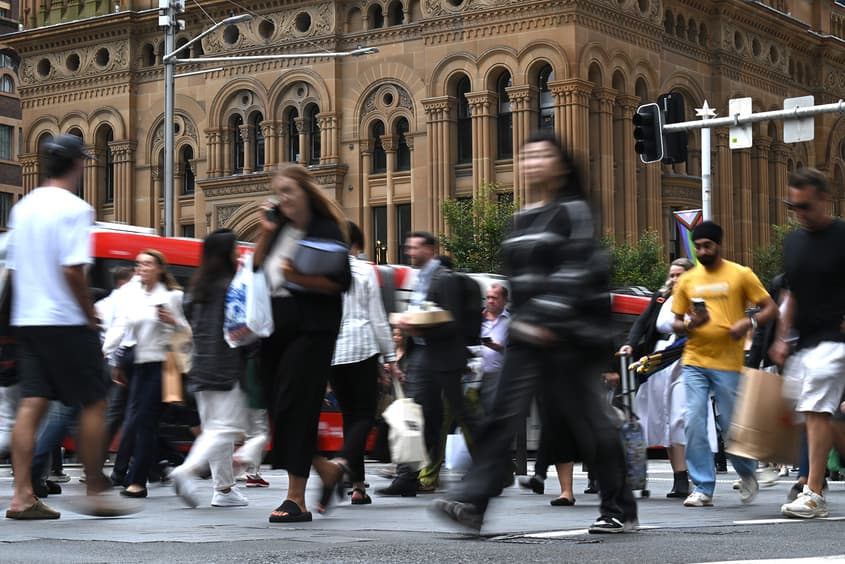
Photo: AAP Image/Dean Lewins


The Bureau of Statistics has estimated that unemployment in December fell to 4.1% off the back of a very strong increase in full-time work for men. The figures were a shock to economists who were predicting a slight rise from the 4.3% rate in November. Instead, December saw the second biggest fall in unemployment in the past 3 and half years, and the biggest fall since February 2024.
Because everything to do with economics in Australia always defaults to talk about interest rates, we live in a bizarre situation where good news on unemployment is immediately projected as meaning interest rates will be likely to rise.
So, let’s first just underline this for everyone – more people working is good, fewer people unemployed is also good:
The even better news is that not only did unemployment fall, but so too did underemployment. The underemployment rate fell from 6.2% to 5.7% – one of the biggest one months falls of record.
This means that it was not a case of people getting a bit of work – but that not only were the new jobs ones with good hours, but those who already had work were also able to pick up more hours.
A big cause of that fall was a large drop in young people looking for work – around 23,900 people aged 15-19 left the labour force. But this did not mean the drop is just a mirage. The underemployment of prime-aged workers (aged 25-64) also fell from 4.6% to 4.1%.
All up it means the underutilisation rate – which is the measure of those wanting work and also wanting more hours – for prime-aged workers dropped quite dramatically:
So, who was getting all the work?
The big driver was male full-time jobs. Of the 65,170 new people employed in December, the vast majority of them were male full-time:
That the jobs came in full-time work rather than part-time suggests a buoyant economy. And with that comes the worries about inflation and the need for higher rates.
We need to remember that the RBA raises interest rates not to lower inflation but to cause unemployment to rise. The RBA worries that if too many people have a job that will mean too much money is being spent in shops and also because employers might find it harder to get people to work for them, they need to raise wages to attract and retain staff.
That combination, they worry, will lead to prices going up.
The worry for us is that the RBA will decide lower unemployment means they better raise rates just to be sure – even if there is no evidence of lower unemployment leading to higher inflation.
There will be a lot of predictions about what the RBA will do with interest rates on 3 February, but next Wednesday the December inflation figures come out. That will be the key.
Given the RBA’s penchant for raising rates, if the inflation figures show anything but slowing price growth, a February rates rise is fully back on the cards.
Advertisement