

There have been recent reports that an American company, Energy Fuels, is bidding to takeover Australian Strategic Materials (ASM). The takeover bid is subject to a number of conditions, including government approvals following Foreign Investment Review Board considerations.
Tue 27 Jan 2026 01.00
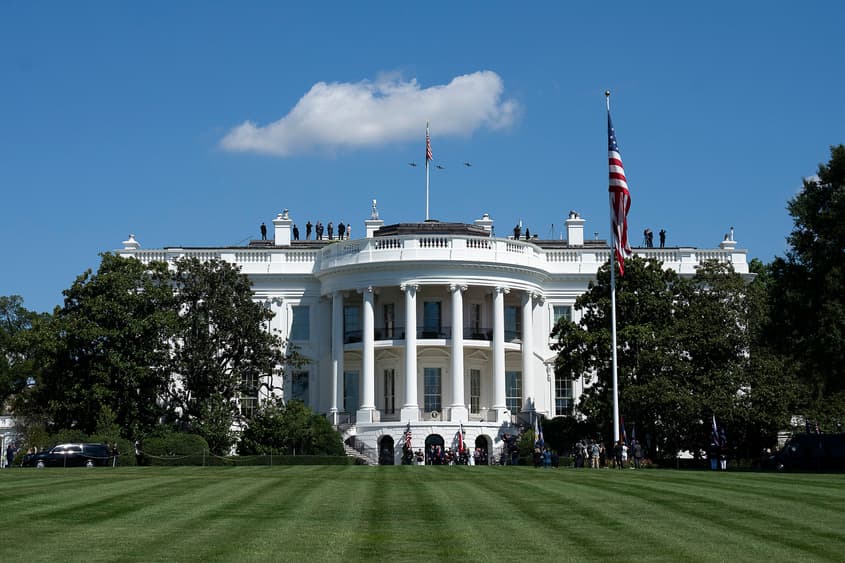
Photo: Official White House Photo/Juliana Luz


There have been recent reports that an American company, Energy Fuels, is bidding to takeover Australian Strategic Materials (ASM). The offer of $1.60 a share is a premium of $0.87 a share, 121% above its closing price on 20 January 2025 just before the announcement. The takeover bid is subject to a number of conditions, including government approvals following Foreign Investment Review Board considerations.
CMC Invest describes the ASM business in the following terms:
[ASM] is an integrated materials business and emerging mine to manufacturer producer of critical metals like rare earths, zirconium, niobium, and hafnium. The mine to metals strategy is to extract, refine and manufacture metals, alloys and powders, supplying direct to global manufacturers in clean energies, electric vehicles, aerospace, electronics and communications.
ASM sees itself as “an increasingly vital player in the transition toward secure, sustainable critical material production”. Critical minerals have strategic significance for the world economy in terms of the tension between the US and China. Critical minerals are presently dominated by China and are necessary inputs into high tech manufacturing with applications in military hardware as well as renewable energy investments and other strategic industries in which the US and China vie for dominance. Hence the American interest in gaining more control over critical minerals.
While ASM has been producing small amounts of minerals, planned further development of its Dubbo and Korean facilities suggest the company has a significant future in the Australian critical minerals sector.
This week, the Financial Review suggested Energy Fuels may want to avoid the costs of building a refinery at Dubbo and instead send Dubbo ore to its plant in Utah. Indeed, Energy Fuels may even delay mining at the Dubbo site.
This raises serious questions about how the takeover impacts the government’s critical minerals strategy which includes “build[ing] sovereign capability in critical minerals processing”.
On the face of it, the Energy Fuels bid should be rejected on national interest grounds. That would be consistent with the rejection of Shell’s attempted takeover of Woodside in 2001 and the likely rejection of the attempted takeover of Santos by the Abu Dhabi National Oil Company if the bid had been put formally. The Shell/Woodside rejection in particular reflected the government’s view that it would not be possible to make binding agreements requiring Shell to operate in Australia’s interest and not in the interest of Shell’s global considerations. The government was anticipating Shell potentially idling Australian production and/or exports of liquid natural gas in the event of global oversupply or investing in new plants overseas rather than boosting Australian production facilities. As mentioned above, Energy Fuels may already have in mind a strategy of going slow on the Australian development plans and instead boosting its American facilities. This would directly cut across the government’s plans of not only mining critical minerals but also building critical minerals refining and manufacturing facilities in Australia as well as stockpiling final products.
The present international environment makes it even more urgent to retain Australian sovereignty over Australian critical minerals. President Trump cites the importance of critical minerals as one of the arguments for occupying Greenland. Trump’s concern for critical industries and his tendency to bully American companies raises concerns about giving Australian resources to American companies. For example, at some stage in the future, there might be pressure to move concentration and manufacturing facilities to the US at the expense of Australia, just as companies like Apple have been pressured to increase manufacturing in America.
It isn’t always easy to keep up with what’s happening in the US. “Shorter America” is a series where Dr Emma Shortis loops you in on what’s going on in America and shares news and analysis that you can trust.
While the initial Israeli and US air strikes on Iran are legally very dubious, the pace with which the war has escalated will result in those significant legal issues being set aside – for the time being at least.
Former Greek finance minister and economist Yanis Varoufakis has warned that fascism is re-surging in global politics, with extremist ideas gaining influence even in countries where the far-right is not in power.
Australia’s AUKUS agreement has dragged the country into the Trump administration’s war on Iran with Prime Minister Anthony Albanese accused of obfuscating the country’s involvement.
