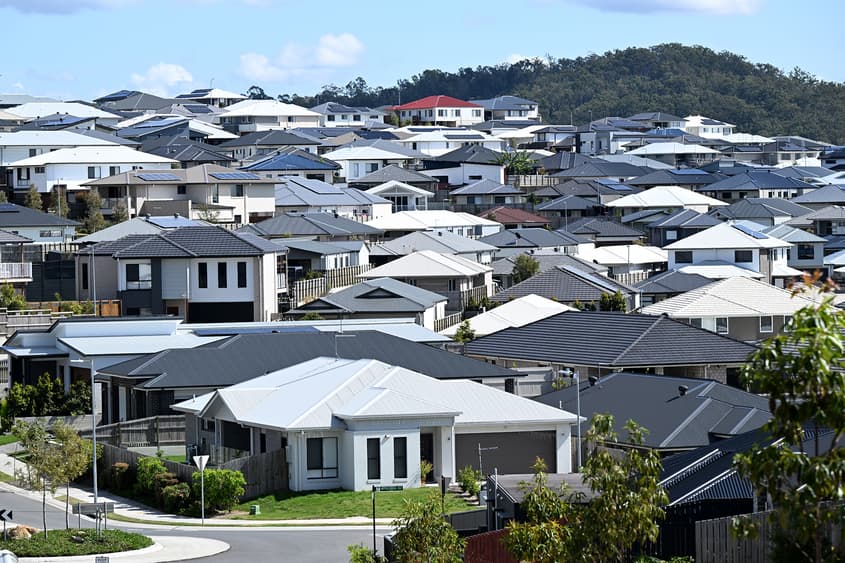
Australian high schools have topped an unenviable global ranking, with new research showing they’re the most expensive in the developed world.
Tue 10 Feb 2026 01.00
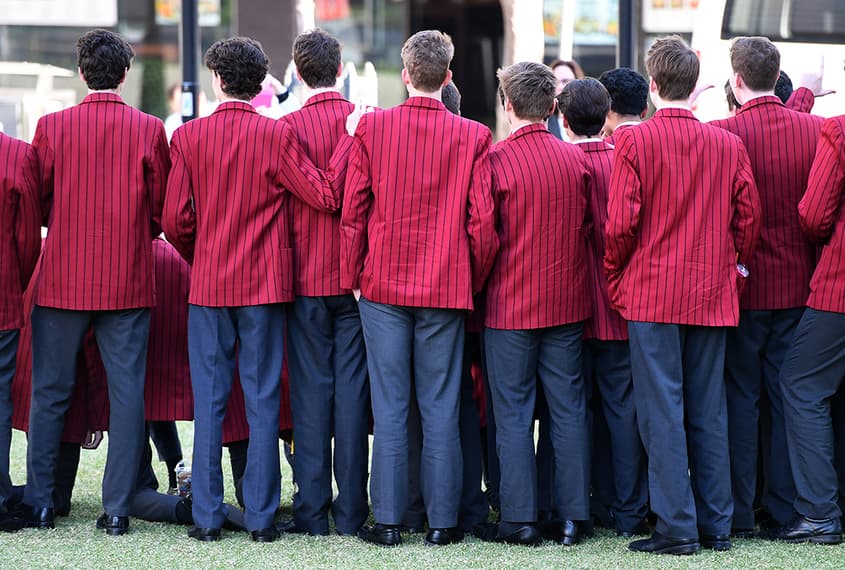
Photo: AAP Image/Dan Peled


Australian high schools have topped an unenviable global ranking, with new research showing they’re the most expensive in the developed world.
A report released by the Australia Institute shows families in the “lucky country” are spending $4,967 per year to send a child to high school, almost four times the OECD average.
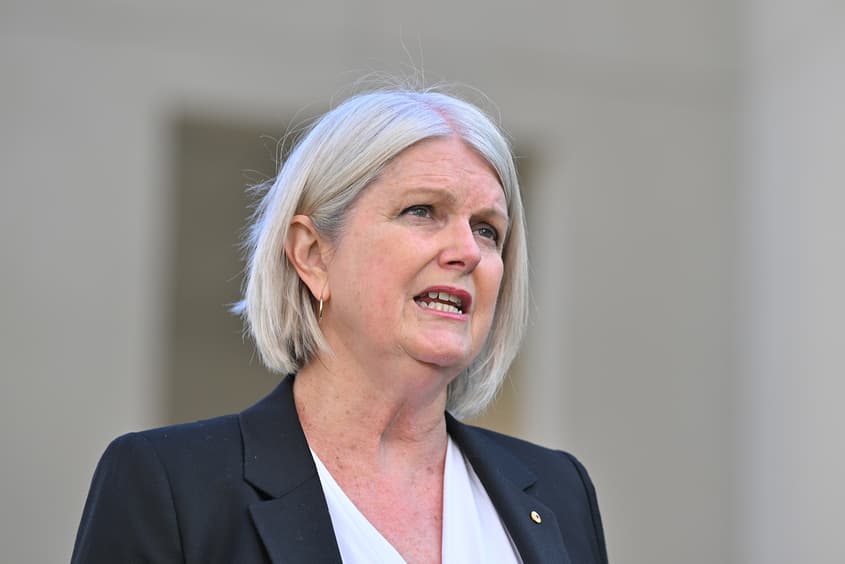
Greg Jericho, chief economist at the Australia Institute, said the soaring cost was partly due to more students being enrolled in private schools.
“Private schooling, at a certain level, has become a bit like luxury goods, like handbags,” explained Greg Jericho, chief economist at the Australia Institute.
“Louis Vuitton doesn’t charge a tonne for their handbags because they cost a lot to make … [they want it] to be exclusive.”
More than 40 per cent of Australian high schoolers now attend a private school – the second highest rate in the developed world.
In the US, only 9% of children attend high schools that charge fees, and only 8% do so in the UK.
And while some families in Australia are forking out up to $55,000 per child each year, it’s not necessarily for the school’s amenities.
“It’s more, ‘we want to keep out the people who we don’t really like’,” said Mr Jericho.
“The results that are being delivered are negligible.”
“It doesn’t deliver cost benefits, and it actually doesn’t even deliver good services or better benefits for society.”
As more children are sent to private schools, he noted the gap between public and private school results is actually shrinking.
And yet, the Australian Government continues to provide substantial funding to private schools.
“In this current financial year, the federal government spent $12.2 billion on government schools,” pointed out Mr Jericho.
“They’re spending $20 billion on non-government schools.”
Mr Jericho told the Australia Institute’s Dollars & Sense podcast that ultimately, a child’s success comes down to socioeconomic factors.
“We know that the real determinant of education outcomes isn’t whether it’s private or public, but actually the postcode.
“Independent schools’ performance is on average, declining because of the socioeconomic factors, not because our independent schools are becoming worse. It’s just that. That’s the overriding factor.”
The report states Australian public schools face a funding shortfall of over $4 billion each year.
Mr Jericho said he could see “no benefit” from the government continuing to provide funding for private schools.
“What service are they providing that their students would not be getting if we [the Australian Government] didn’t fund it?
“They’re going to King’s College anyway for reasons that have got nothing to do with education outcomes.”
The report states that in most OECD countries, private schools that receive public funding are not allowed to charge fees.
Since June 2000, the price of high school education in Australia has grown by nearly three times the rate of overall inflation.
Subscribe to Dollars & Sense on Apple Podcasts, Spotify, Pocket Casts or wherever you get your favourite podcasts.
The oil crisis has not only caused petrol prices to soar, it has revealed just how little competition there is among the big oil companies. A couple weeks ago the ACCC announced that it would be looking into uncompetitive behaviour by petrol companies in the rural areas.
Advertisement
Australia’s shrinking local media landscape has fuelled growth in independent news outlets, with publishers gathering in rural South Australia to discuss the challenges facing community journalism. The Local and Independent News Association (LINA) summit in Murray Bridge comes amid growing concerns about the sustainability of regional news.
Combined with the 50 basis points rise in February and March in less than 2 months households are paying the equivalent of a 90 basis point rise in interest rates.