More often than not, Australia’s relationship with the United States highlights and reinforces the worst in our politics, and the worst in theirs.
Here at home, the week began with some shamefully racist politicking by federal parliamentarians. A “hardline” Liberal Party immigration proposal was “leaked” to the Australian media. Straight from the Trump playbook, the proposal mooted banning immigrants from 37 regions, deporting 100,000 asylum seekers and visa holders, and even vetting the social media of aspiring migrants. To followers of American politics, that might sound very familiar.
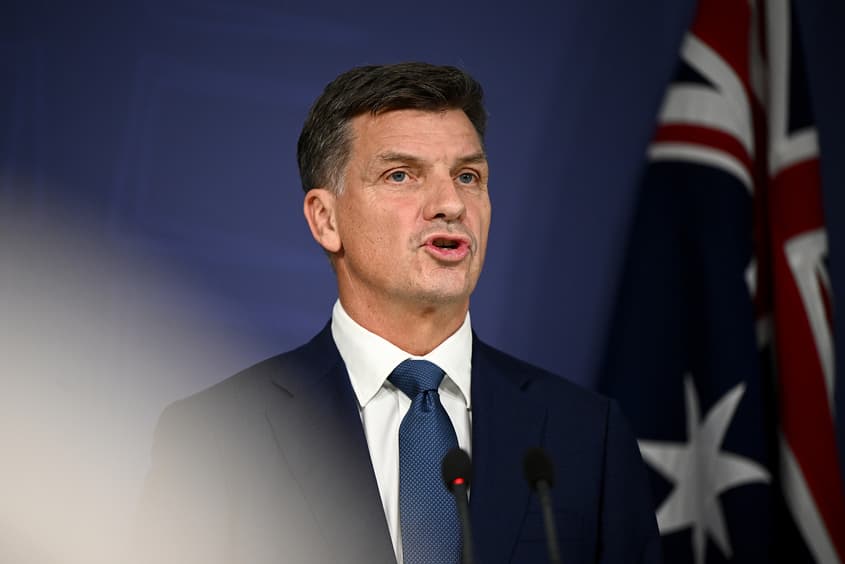
Newly minted Opposition Leader Angus Taylor has distanced himself from the proposal, but it would appear that’s only because it was developed in the office of his predecessor, Sussan Ley. Taylor has made it clear he wants to focus on immigration – specifically, “bad immigration”, whatever that means.
Not to be outdone, One Nation leader Pauline Hanson was more explicit on Monday night, making some appallingly racist and Islamophobic comments on Sky News. As the Race Discrimination Commissioner, Giridharan Sivaraman, put it:
“I hesitate to respond to remarks like these because doing so risks giving further oxygen to sentiments that should have no place in our public debate. But comments that single out and diminish any community have real and lasting impacts”.
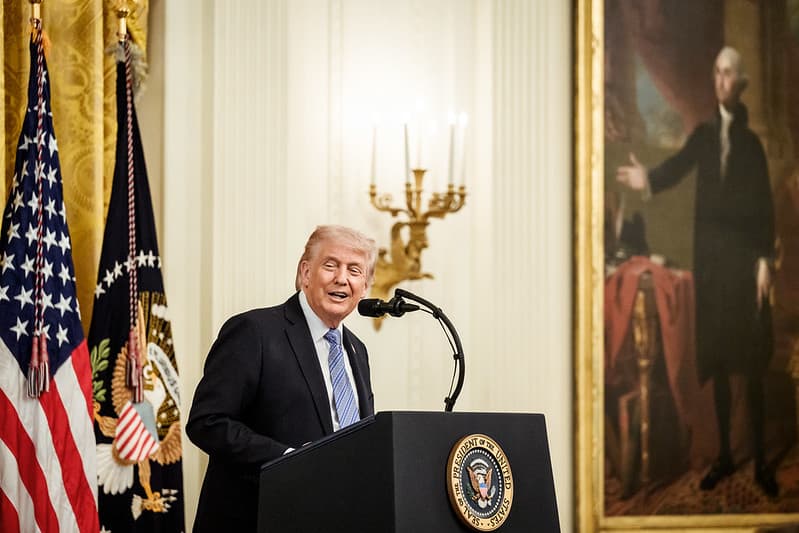
This reinvigoration of early 2000s-style Islamophobia and racism is reinforced through media and cultural networks that span the Pacific Ocean. It also amplifies Antisemitic tropes, by affording a kind of “they’re all doing it” legitimacy to any form of discriminatory language. In a racist doom loop, Australian politicians reflect the brazen white supremacy of an American President who said that immigration “is poisoning the blood of our country”.
Just like senior Democrats in the US, rather than fight back directly against this appalling racism, the Australian Labor government seeks instead to pander to those worst instincts.
Just like in the United States, all that does is make it easier for the far-right to prosecute its arguments and implement its draconian policies. When a purportedly progressive government indicates it might be willing to circumvent the rights of citizens to placate the right-wing – in the Australian case, the right of return of Australian citizens, including small children, marooned in Syria – it undermines the rule of law. That plays directly into the hands of the far-right.
In the United States, the rule of law has been so undermined and political opposition so weak that the Trump administration is now holding people – including children – without charge and without due process, in what are effectively concentration camps. According to Democratic Congressman Joaquin Castro, a two-month old baby being held in one camp in Texas got so sick he was taken to hospital, unresponsive. He was deported with his family the next day.
This is what Australia’s most important security ally is doing. This is the kind of cruelty our current relationship reflects and reinforces.
That’s not new.
Australian governments have often found it very convenient to hide behind the United States – on climate, for example.
Last week, the Trump administration dismantled the legal foundation for US climate regulations. That decision will reverberate around the world. While the science of climate change remains clear, the United States will now increase its carbon emissions and accelerate global heating.
Not that our own government seems particularly concerned about that. As Royce Kurmelovs wrote in The Point this week, last year’s rushed reforms to the Environment Protection and Biodiversity Conservation Act (EPBC Act) were described by a senior public servant as a “net positive for the oil and gas sector”.
When governments consistently fail to act in the interests of the people they were elected to represent, those people notice.
Time and time again, polling has shown falling electoral support for the two “major” parties in Australia. Every time those parties represent the interests of big corporations over those of the electorate, voters don’t just lose faith in Labor and the Coalition – they begin to lose faith in democracy itself.
The consequences of such an erosion in political legitimacy are playing out in America right now.
But rather than giving in to despair, we can choose to grasp the enormous political opportunity that structural change generates – there’s so much political space for brave choices.
Polling research released this week by the Australia Institute indicates just how much politics is shifting. The polling, conducted by RedBridge Group, reveals strong nationwide support for a 25 per cent tax on gas exports. The support cuts across party lines, uniting both One Nation and Greens voters.
Rather than pandering to the base instincts of political opportunists, there’s an opportunity here to unite Australians across the political spectrum in tackling inequality through progressive policies – like a tax on resources that we all own, which could raise $17 billion every year that could be fed back into tackling the more pressing equity and equality problems facing Australia.
Inequality creates insecurity. Genuinely addressing that inequality would make us all safer. And that is entirely within our grasp.