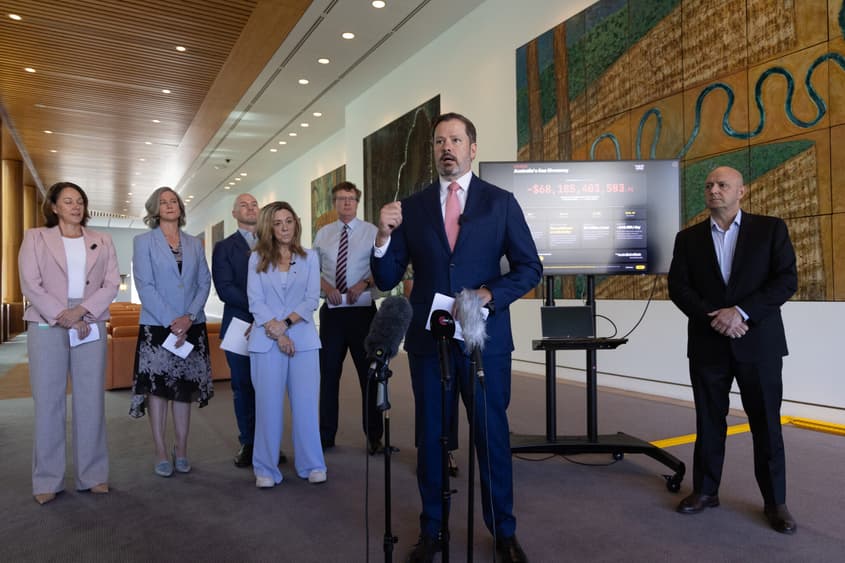
The Albanese Government is being urged to rule out changes to the Electric Car Discount in the May budget, as global fuel volatility intensifies pressure to ease the cost of living.
Thu 2 Apr 2026 01.00
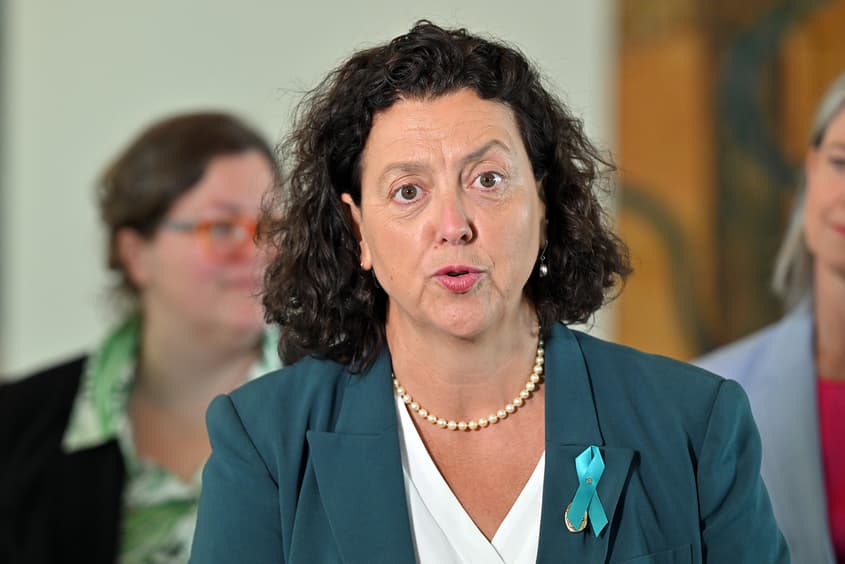
Photo: AAP Image/Mick Tsikas


The Albanese Government is being urged to rule out changes to the Electric Car Discount in the May budget, as global fuel volatility intensifies pressure to ease the cost of living.
Independent MPs Monique Ryan, Kate Chaney, and Nicolette Boele have joined industry and advocacy groups calling on Treasurer Jim Chalmers to retain the electric vehicle (EV) incentives.
“As oil and gas prices surge globally, now is the wrong time to wind back incentives for electric vehicles,” said Dr Ryan.
She told reporters at Parliament House in Canberra that axing the tax break would be a “critical misstep at a time when energy security has never been more important”.
“The families who are the most energy secure right now are those with solar, home batteries, and electric vehicles,” she said.
The widely used EV tax break was introduced in 2022 to speed up Australia’s shift to EVs.
It provided a fringe benefits tax (FBT) exemption for EVs under the luxury car tax threshold of $91,387 (2025–26).
2025 saw record growth in EV sales, rising by 38 per cent compared to 2024.
Overall, Australia’s EV market share has grown from 3.8 per cent in 2022 to 13.1 per cent in 2025.
Electric Vehicle Council CEO Julie Delvecchio said switching to an EV could save households up to $3,000 a year in fuel costs, while strengthening Australia’s fuel security.
However, last year the Productivity Commission chair, Danielle Wood, called the scheme “duplicative and high cost” and urged that it be scrapped.
Now, as Jim Chalmers hunts for major budget savings, the Electric Car Discount is in the firing line, drawing sharp criticism from the Greens.
“Why on earth are the Treasurer and Energy Minister working up a full body slam against the cleanest and cheapest cars to run available to Australian motorists right now?” asked Senator Waters.
“We should be looking at ways to incentivise EV uptake and make them cheaper so more people can afford one, not making them more expensive during a fuel crisis.”
The global fuel crisis – triggered by the US and Israel’s ongoing war with Iran – continues to worsen as the Strait of Hormuz remains effectively closed.
“We are at the beginning of what is going to be a deep and prolonged oil shock,” Greens leader Larissa Waters told Parliament this week.
“Billionaires started an illegal war, oil and gas companies are reaping mega profits, and regular people are paying the price.”
“As global fuel markets remain uncertain, policies like the Electric Car Discount are helping insulate Australians from international price shocks while keeping more money in local economies,” said Julie Delvecchio.
Dr Ryan, the independent member for Kooyong, said the data on the Electric Car Discount underscores the policy’s impact.
“The FBT exemption has driven more than 105,000 additional EV purchases since 2022 and tripled the size of the second-hand EV market,” she pointed out.
“This is the kind of policy success we should be accelerating, not abandoning.”
Indeed, the Climate Change Authority’s 2035 Targets Advice says half of the new light vehicles sold between now and 2035 must be electric to meet the lower end of the government’s target range.
The Australia Institute says the government is targeting the wrong tax break.
For years, it has called on Canberra to scrap subsidies for huge, American-style utes that cost the federal budget $250 million a year.
“The Australian public is subsidising big, dumb utes by hundreds of millions of dollars each year,” said Rod Campbell, Research Director at the Australia Institute.
“These vehicles are damaging roads, reducing safety, and increasing emissions, yet they are given a massive tax break.”
A loophole in Australia’s tax law effectively subsidises large, imported utes, such as Ram and Chevrolet pick-up trucks.
Most large, dual-cab utes on the market are exempt from the Luxury Car Tax because they are “designed mainly for carrying goods and not passengers”.
“Removing the luxury car tax exemption will not affect most ute drivers, particularly tradies,” said Mr Campbell.
“Economics 101 says that governments should tax things they want less of, and subsidise things they want more of, and it is stunning that the Australian Government seems to want more big, dumb utes.”
Economists and other inflation watchers are claiming that the cut in the fuel excise will be inflationary. This is not true, as this claim ignores everything else that is happening in the economy right now.
Advertisement

Midnight Oil, Missy Higgins and around 150 other prominent musicians have added their voices to the growing chorus of Australians calling on the Albanese Government to introduce a 25 per cent tax on gas exports.

Pressure is mounting on the Albanese Government to introduce a 25 per cent gas export tax, with new figures revealing Australia misses out on almost $350 million in revenue every week.