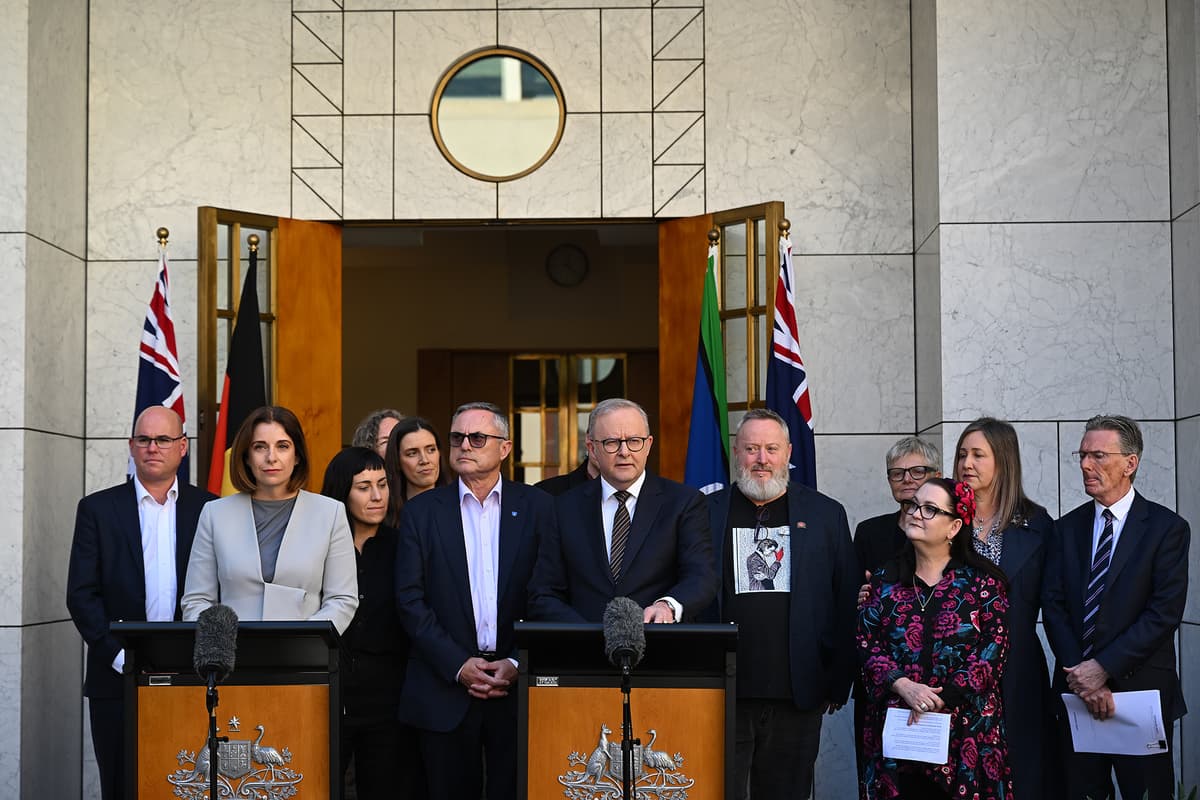
The Albanese government has warned tech giants to strike commercial deals with Australian news outlets or face paying a levy based on a share of their revenue.
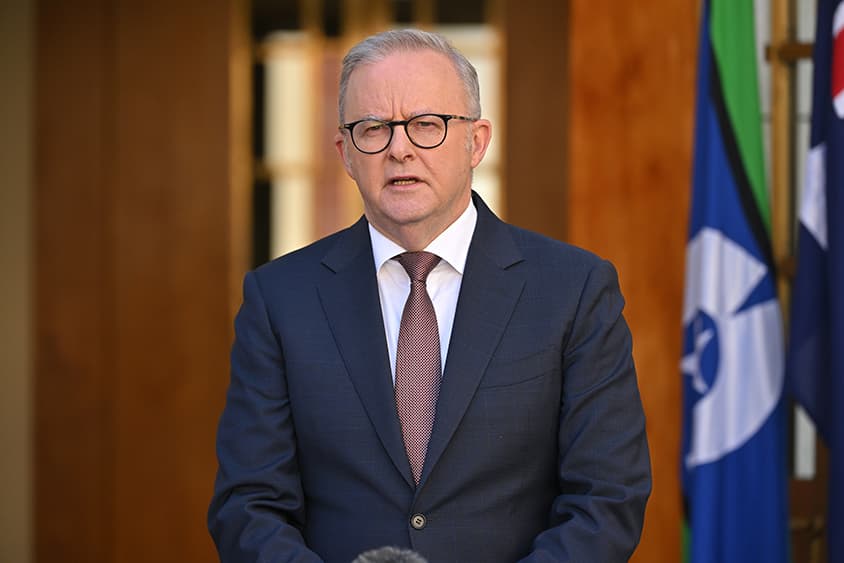
Prime Minister Anthony Albanese has released the draft legislation to establish a News Bargaining Incentive (NBI), which he said will prevent digital platforms from avoiding their “obligations” under the current laws.
“Journalists are the lifeblood of Australia’s media sector, playing a vital role in keeping communities informed about the news that matters to them,” he said.
Mr Albanese argued that big tech firms, such as Google, Meta, and TikTok, should not be allowed to profit from the work of Australian journalists without fair compensation.
Digital platforms that strike deals with Australian media organisations would receive “generous offsets” to reduce their liabilities, while those that don’t could face a levy of up to 2.25 per cent of their local revenue.
Nobel laureate economist Joseph Stiglitz is a strong proponent of the plan and has warned that AI will continue “stealing information” from legacy media with a “real risk of a deterioration of the overall information ecosystem.”
Canberra expects the plan will raise up to $250m annually for Australian journalism.
“People are increasingly getting their news directly from Facebook, from TikTok and from Google,” said Communications Minister Anika Wells.
“We believe it’s only fair that large digital platforms contribute to the hard work of journalism that enriches their feeds and that drives their revenue.”
The White House and tech giants were both quick to push back, dismissing the levy as unnecessary.
The Australian Financial Review reported US administration spokesperson Kush Desai as saying: “President Trump is committed to defending America’s leading technology sector from digital services taxes and other forms of foreign extortion”.
In a statement, a Meta spokesperson said: “A government-mandated transfer of wealth from one industry to another, with no connection to the value exchanged, will not deliver a sustainable or innovative news sector.”
In 2024, Meta announced that it would not renew commercial deals to pay for Australian news content, originally struck under the Morrison Coalition government’s News Media Bargaining Code introduced in 2021.
Agreements with Google and Facebook delivered hundreds of millions of dollars to employ hundreds of journalists, with the code also inspiring similar reform efforts in Canada and New Zealand.
“Facebook thumbed its nose at the media bargaining code, so adding a financial incentive is an important ‘stick’ to bring them back to the negotiating table,” said Bill Browne, the director of Australia Institute’s Democracy and Accountability Program.
Mr Browne said when the bargaining code was first introduced, the Australia Institute found job ads for journalists increased dramatically.
Polling also showed that a majority of Australians wanted social media companies to prioritise journalism from news sites and limit the spread of misinformation.
“Journalism is a public good. Misinformation, polarisation and AI-generated fake content mean the need for bold, nuanced reporting is greater than ever,” said Mr Browne.
Labor’s draft seeks to close a loophole that allowed companies to avoid paying by reducing the visibility of news on their platforms.
“News organisations voluntarily post content on our platforms because they receive value from doing so,” said a Meta spokesperson.
“This proposed legislation, which would apply to platforms regardless of whether news content even appears on our services, is nothing more than a digital services tax.”
Google was equally critical, pointing to the agreements it currently has in place with around 90 news businesses.
“While we are currently reviewing the draft legislation, we have been clear: we reject the need for this tax,” a spokesperson said.
The laws are not expected to include platforms such as Microsoft, Snapchat, and OpenAI.
News outlets have welcomed the proposal, with a joint statement cautioning that “if digital platforms fail to pay for the use of the news content from which they profit, then journalism becomes unsustainable”.
However, the Local and Independent News Association (LINA) said the draft legislation fails to consider small publishers and volunteer-based community media, “further entrenching the status quo”.
“We call on the government to allocate a percentage of funds raised through a levy to grant programs and other measures that enable growth in the news media industry, bringing new and diverse voices into the public dialogue and addressing news deserts,” said LINA Executive Director Claire Stuchbery.
“The news media industry has been through the fire and needs support to regroup and produce news that is helpful to communities.”
Submissions on the draft legislation close on 18 May 2026.