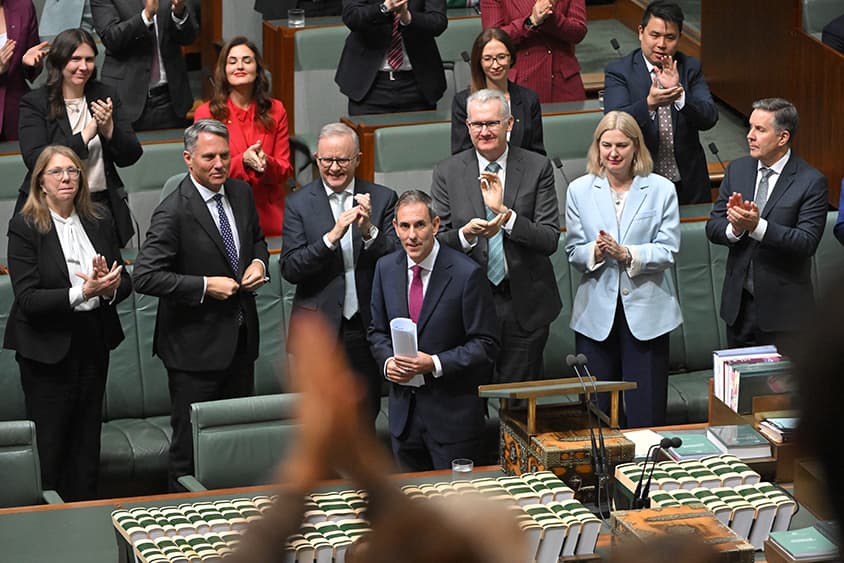
Treasurer Jim Chalmers has announced what he described as “the most significant tax reform package in more than a quarter of a century,” but critics have lambasted the decision not to include a tax on gas exports.
The Greens were quick to condemn Labor’s fifth budget for failing to include a 25 per cent flat levy, despite the proposal gaining significant momentum in the lead up to Tuesday’s budget.
“Labor has chosen corporate profits over people,” said Greens leader Senator Larissa Waters.
“Tinkering around the edges of a broken system and spending billions for corporations and the 1 per cent: that will be the legacy of the Albanese-Labor government,” she said.
The proposal featured heavily during a recent Senate inquiry into Australia’s gas export regime, with energy giants consistently arguing higher taxes would drive investment offshore.
“Jim Chalmers clearly has a different definition of ‘ambitious’ than millions of Australians,” said Senator Nick McKim, the Greens Economic Justice spokesperson.
“This budget betrays the overwhelming majority of Australians. By refusing to impose a gas export tax to fund essential services, Labor will fuel people’s anger at a system that isn’t working for them,” he argued.
Independent MP Sophie Scamps said Australians have been “dudded once again”.
“Australians around the country tonight will be rightly angry that multinational gas companies will continue to make extraordinary profits from our resources while families here are struggling with cost-of-living pressures,” she said.
“Yet again, big multinational corporations have been put ahead of everyday Aussies.”
Polling published by the Australia Institute earlier in the year showed the tax had support across party lines, including among voters often seen at opposite ends of the political spectrum, such as the Greens and One Nation.
The Australia Institute’s senior economist Matt Grudnoff said the government has continued to allow the gas industry’s “free ride”.
“This would have raised more than $17 billion a year and made the savage cuts to disability support unnecessary,” Mr Grudnoff said.
He also pointed out that Canberra will continue to raise more revenue from beer drinkers than from the Petroleum Resource Rent Tax (PRRT), which was designed to make multinational companies pay for the Australian resources they extract and sell.
The budget included a $100 million upward revision in PRRT revenue for 2026-27, however it is projected to fall from $1.9 billion next year to $1.3 billion by the end of the decade.
“The gas industry keeps telling us to wait, insisting PRRT revenue will go up. But the budget papers show it falling by a third by 2029-30,” Mr Grudnoff argued.
“Big gas continues to take the piss, and this government continues to do nothing about it.”
Similarly, taxpayers will continue to subsidise much of the fuel used by large mining companies, with the budget papers showing the fuel tax credit scheme will cost taxpayers $12.8 billion by the end of the decade.
“At a time when we need to be weaning ourselves off fossil fuels, the budget is assuming that our consumption is going to increase,” said Mr Grudnoff.