The Albanese government has unveiled sweeping changes to property taxes, winding back the capital gains tax (CGT) discount and negative gearing in a bid to help about 75,000 Australians “achieve the dream of home ownership”.
From July next year, negative gearing will be restricted to investors buying newly built properties.
Capital gains will once again be taxed based on inflation – the system Australia used before the Howard government introduced the flat 50 per cent discount in 1999.
“This is probably the single best thing in the budget, something that will have a lasting positive effect for so many people,” said the Australia Institute’s senior economist Matt Grudnoff.
“For the first time, I can say that an Australian Government has introduced a housing affordability policy that will actually make housing more affordable.”
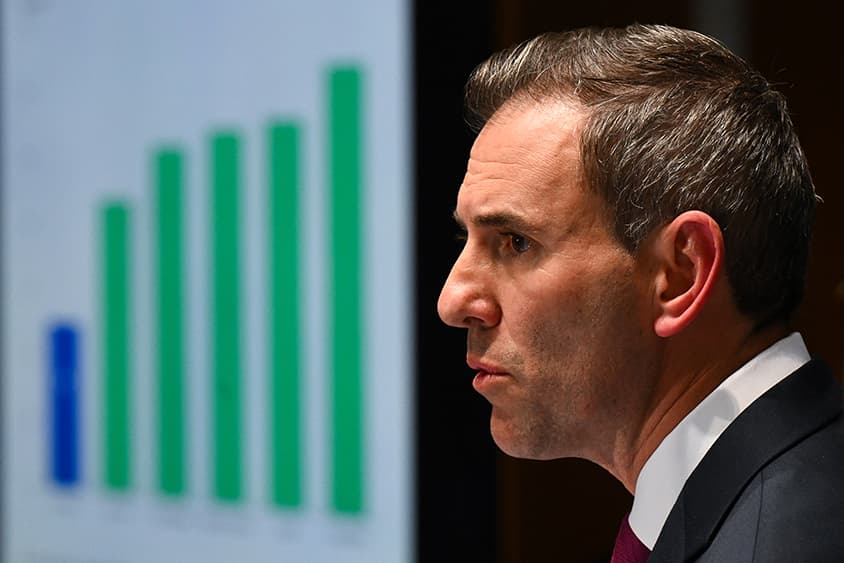
In his budget speech to Parliament, Treasurer Jim Chalmers said it includes “the most significant tax reform package in more than a quarter of a century”.
“This will help rebalance a system which is more generous to assets than it is to labour and help rebalance a system where house prices have decoupled from incomes. Since 1999, house prices have risen over 400 per cent – more than twice as fast as average incomes,” he said.
The Treasurer estimated the tax changes will help about 75,000 Australians “achieve the dream of home ownership”, noting the 50 per cent CGT discount will still be available for people buying new homes.
“These changes reduce the incentive for people to buy investment properties except if they are buying brand new houses.
“This will make a real difference to housing affordability, giving an advantage to first home buyers and increasing home ownership rates,” said Mr Grudnoff.
“One important change is the inclusion of a 30% minimum tax rate on capital gains. This will ensure that all people making a capital gain will have to pay a fair share of that in tax.”
The capital gains tax changes will come into effect from July next year, with existing investors exempt for past gains under grandfathering provisions.
The government will also introduce a minimum 30 per cent tax rate on discretionary trusts to start in 2028-29, a measure expected to generate $4.5 billion per year.
“This is a great reform,” said Mr Grudnoff.
“Discretionary trusts have been increasingly used as a way for the rich to hide assets and avoid paying their fair share of tax.
“The number of discretionary trusts has been growing rapidly as more and more wealthy people have worked out that this was a great way to avoid paying tax.
“This change will help close this tax loophole.”
The Treasurer told parliament the overhaul was aimed at ensuring income derived from some assets was taxed more consistently with wages.
“These changes will level the playing field for workers and first home buyers and support investment in productive assets, including new housing supply, and they will fund our new round of tax relief for more than 13 million Australian workers.”
Treasury does not expect the changes to cause house prices to fall significantly, but rather moderate the pace of further price growth.
“The reforms in this budget will lift our total investment in housing to a record $47 billion. We’re leveling the playing field for first home buyers with 5% deposits and tax reform to help more young Australians into their own home,” the Treasurer told parliament.
The ban on foreign investors buying existing homes will also be extended to take pressure off the market.
The hit on housing investments was welcomed by Independent MP Andrew Wilkie who described it as the “standout reform”.
“It’s heartening to see that a Federal Government is finally having a crack at difficult reform.”
Fellow independent Sophie Scamps also welcomed the measures.
“For too many young Australians, the dream of owning a home has become a pipe dream,” she said.
“This long-overdue housing tax reform is a critical step toward tackling intergenerational inequality and giving the next generation a fair shot at housing and greater hope for the future.”
However, the Greens said the reforms failed to go far enough to address the crippling housing crisis.
“The government’s planned changes to negative gearing and the capital gains tax discount look like little more than tinkering around the edges of a broken system,” said Greens leader Senator Larissa Waters.
“These changes will still give tens of billions of dollars in handouts to wealthy property investors to outbid renters at auctions around the country every weekend.
“This should have been a significant reform, but instead it’s a damp squib.”
She argued the government had “quarantined all of the tax handouts for existing property investments”, accusing it of capitulating to the 1 per cent.
“This budget contains nothing for renters, no new money to build housing except for US and UK troops, and their biggest cost of living measure will add up to $4.81 a week that you’ll see in 2028,” Senator Waters said.