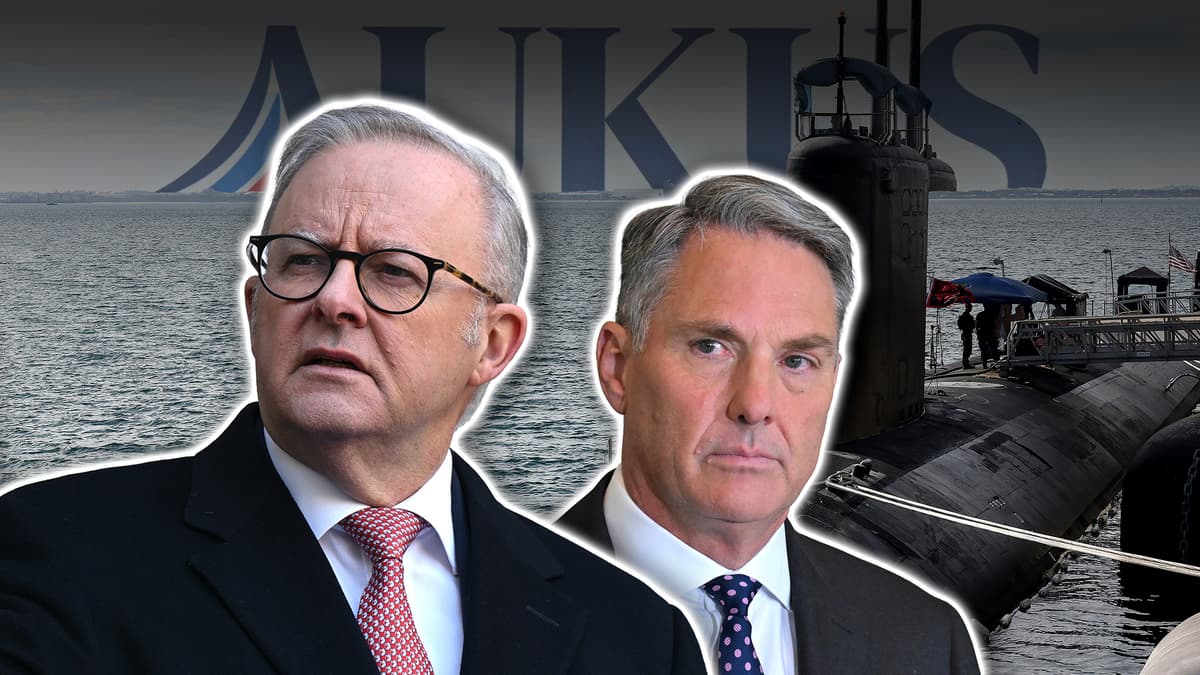
Defence Minister Richard Marles has defended the $368 billion AUKUS submarine pact, telling Parliament that Australia’s acquisition of a second-hand fleet was a “good financial deal”.
Over the weekend, he revealed Australia would receive three used Virginia-class nuclear-powered submarines, rather than the previous arrangement, which involved two second-hand and one new vessel.
“To be frank, this is what we wanted and what is now going to happen is a great outcome for Australia,” Mr Marles said.
The trilateral security deal is facing scrutiny on multiple fronts, with internal Labor divisions surfacing alongside the launch of a public inquiry into the trilateral defence agreement.
Former cabinet minister Ed Husic broke ranks to call for a fresh caucus vote on the deal.
“The reality is this deal has changed,” Mr Husic told Sky News.
“It should be re-thought.
“We have a strong relationship with both partners. It won’t be us pulling the rug on this. It will be about whether or not they can be delivered.”
Marles has urged his Labor colleagues “to just take a deep breath”, insisting “it’s the right thing” for Australia.
Defence Industry Minister Pat Conroy echoed that position, saying Australia had been negotiating for the second hand fleet since late 2022 and expected the vessels to remain in service for more than 25 years.
However, Dr Emma Shortis, director of the Australia Institute’s International and Security Affairs Program, said the shift was “a long time coming” and “an admission of serious primary policy failure”.
“The US submarine building industry is in pretty dire straits,” said Dr Shortis on the Australia Institute’s After America podcast.
“It’s too slow to meet its own requirements, let alone to meet the stated requirements of the AUKUS Optimal Pathway.
“It’s not necessarily even an issue of money. It’s an issue of skills and material reality.”
Marles initially played down the change at a press conference in Singapore with his “good friend” the US Secretary of Defence, Pete Hegseth and the UK Defence Secretary, John Healey.
He told reporters Australia simply wanted to “maximise cost efficiencies” and was putting a “premium on simplicity”.
However, when pressed on the potential savings on Wednesday, Treasurer Jim Chalmers stopped short of providing a figure, only saying it would be “a bit cheaper”.
Australia’s Chief of the Defence Force David Johnston, was also forced to defend the secondhand fleet during his appearance at Senate Estimates.
“These are the best attack submarines in the world, with the first time it has ever been transferred from another nation, the United States, to any other country,” he said.
“These are extraordinarily capable platforms that will come to us with a long life remaining in that submarine fleet, and it would be inaccurate to portray it any other way.”
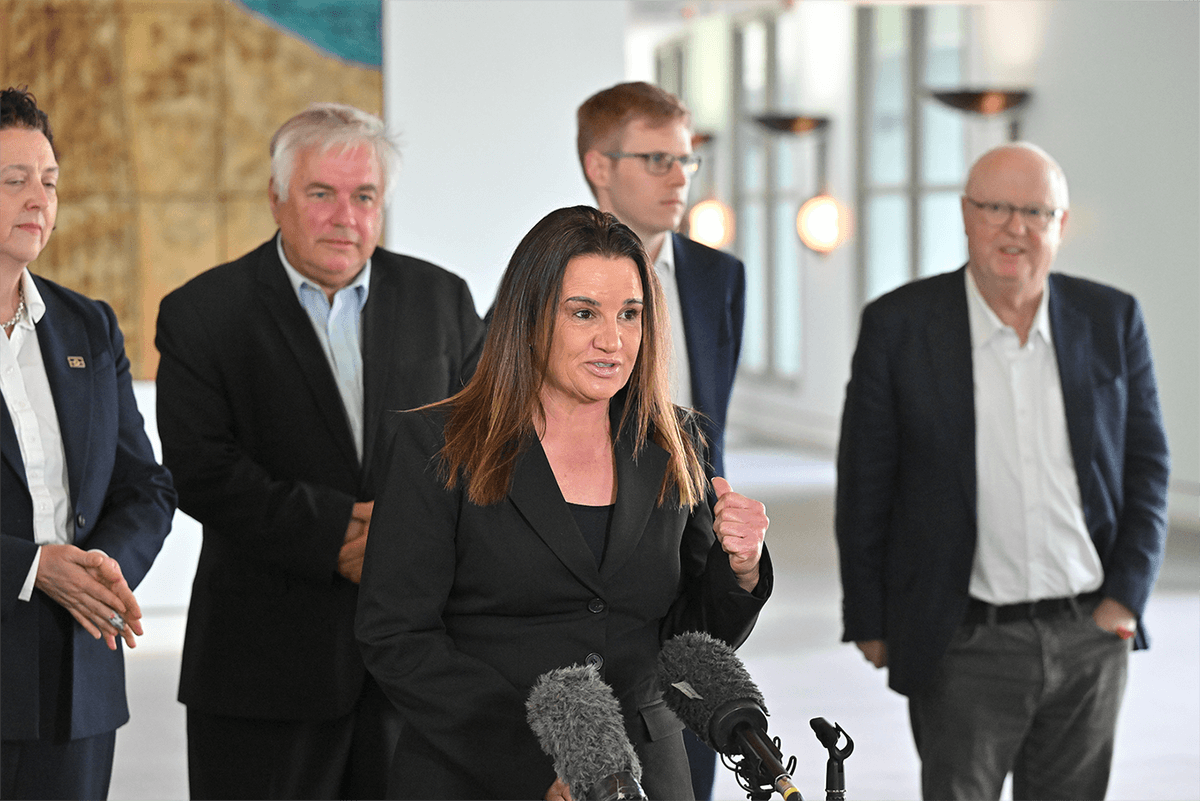
However, as reported by AAP, Senator Jacqui Lambie quipped Australia was now getting “trash”.
“We’re not getting what we wanted,” she said.
“We’re not getting new ones. We’re getting old ones.”
Supported by six other crossbenchers, Allegra Spender moved a “Matter of Public Importance” in Parliament on Tuesday, calling for greater transparency and arguing the government was “reducing Australia’s capability, with no justification that this is in Australia’s interests”.
Journalist Michelle Grattan also pointed to a comment by non-teal independent Dai Le, who said, “If the government can scrutinise disability support down to the dollar, it can scrutinise a $368 billion submarine deal”.
Similar concerns have been raised by the Greens.
Senator David Shoebridge argued the US was offering Australia “three renovated secondhand clunkers”.
“Labor is getting this free ride here largely in parliament, because the Coalition are cheering them on,” he said.
“One Nation is looking for more and more ways to add money to their mate, Donald Trump.
“And meanwhile, Labor’s cutting the worst possible deal you could imagine.”
Outside Parliament, critics have also questioned the bipartisan support behind the agreement.
“The AUKUS agreement is so absurd that it seems laughable one Australian government would sign up to it, but for two governments to be so reckless, strains credulity beyond breaking point. And yet here we are,” said Greg Jericho, chief economist at the Australia Institute.
A public inquiry into the agreement was launched on Tuesday, with Midnight Oil frontman and former environment minister Peter Garrett to lead the five-month investigation.
“AUKUS is by far the most expensive and complex undertaking ever entered into by any Australian Government and yet the opportunity to question, debate and decide has been taken out of the hands of the parliament and the people,” Mr Garrett said.
Former prime minister Malcolm Turnbull, a long-time AUKUS critic, has thrown his support behind the inquiry, which will see five commissioners hold public hearings, receive submissions and deliver a report by the end of October.