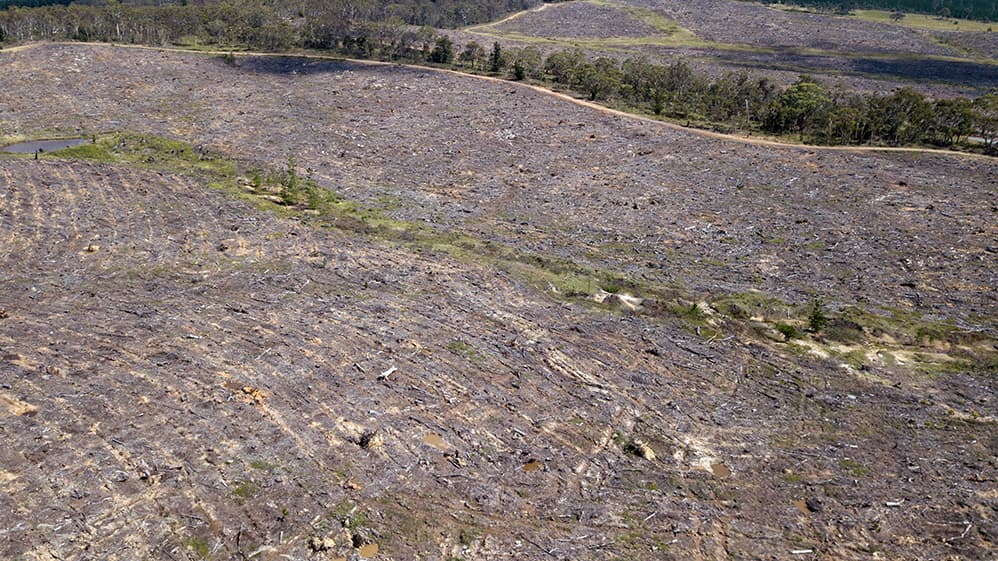
The Conservation Council of WA (CCWA) has called for major environmental reforms, warning Western Australia’s biodiversity is under growing threat as more than 128,000 hectares of native vegetation is subject to clearing applications.
More than 51,000 hectares have already been approved for clearing this year, with environmentalists calling for a ‘fundamental shift in WA Government priorities’ to help ‘pull nature back from the brink’.
“We cannot continue to clear habitat at this rate and scale if we hope to prevent further extinctions in WA,” said CCWA Executive Director Matt Roberts.
“In 2025, the state government approved the clearing of 77,000 hectares of native vegetation, much of which supports species recognised as being on track to extinction, including our iconic black cockatoo.”
According to CCWA’s newly released report, WA has already lost 16 flora species and 23 fauna species to extinction.
With a further 450 plant species and 250 animal species listed as threatened, the organisation argues stronger protections are desperately needed.
“Quite simply, environmental policy is continuing to fail and government ambition on reforms to protect threatened species has been too low for too long,” said Mr Roberts.
“We have seen unprecedented engagement from the community around projects like the Alcoa bauxite mine expansion in the world’s only jarrah forest.”
Plans for the mine’s expansion sparked intense backlash last year, with a record 59,000 public submissions made to the Environmental Protection Authority.
“West Australians are saying enough is enough when it comes to clearing critical habitat for places we love that provide safe havens for threatened species,” said Mr Roberts.
However, despite widespread community opposition, the project has continued to progress.
In February, the US aluminum company, penalised $55 million for illegally destroying native forest in WA to mine bauxite, was given approval to carry out further “limited land clearing” for another 18 months.
The forest is a distinct biodiversity hotspot and provides vital habitat for the critically endangered Baudin’s black cockatoo and the endangered Carnaby’s black cockatoo.
“Ecologists are acutely aware of biodiversity loss and impacts of climate change; the work can be disheartening,” said Professor Rachel Standish, Research and Teaching Academic and Associate Dean Research and Innovation at Murdoch University.
“Significant transformation across society is needed for nature and people, and yet optimism is key to inspiring future generations of environmental stewards,” she said.
CCWA’s Back from the Brink report outlines 36 recommendations, including greater investment in biodiversity restoration and threatened species recovery, designated “no-go” zones for critical habitat, and stronger transparency and accountability measures.
Professor Kingsley Dixon AO, the 2026 WA Senior Australian of the Year, said scientists and community members had united behind a common cause.
“We are a minute to midnight for so much of the extraordinary nature that has survived for tens of millions of years,” he said.
“We are more biodiverse than 98% of other countries, but our nature is unravelling before our eyes.
“This Agenda for Nature is that last-minute call to action.”
Heidi Hardisty, Deputy-Chairperson, Urban Bushland Council, said it was also time to stop urban sprawl in Perth.
“It’s time to protect our threatened native vegetation that is found nowhere else on earth.
“By conserving our remaining banksia woodlands we can bring the endangered Carnaby’s Black Cockatoos back from the brink.”
The conservation group argued WA’s environmental laws and processes need to deliver greater environmental protection.
It urged the WA Government to fully fund and enforce recovery plans for threatened species, strengthen protections for critical habitat and improve monitoring and compliance.
“For too long, our laws have failed to protect nature – in the courtroom, in ministers’ offices, in boardrooms and in the outside world,” said Ruby Hamilton, Special Counsel with the Environmental Defenders Office.
“The community deserves laws that deliver environmental justice, and that requires political will and an appetite for real reform.”
Mr Roberts said CCWA has been encouraged by the Labor government’s initial response to the report but “it has some important choices to make on its environmental legacy”.