Advanced search
The Point - home
DonateSubscribe
HomeWhat's NewOpinionOff the ChartsExplainersFactcheckAbout Us
The Point — home
DonateSubscribe
The Point — home
Advanced search
  • Home
  • What's New
  • Opinion
  • Off the Charts
  • Explainers
  • Factcheck
  • About Us
DonateSubscribe
Subscribe
  • Home
  • What's New
  • Opinion
  • Off the Charts
  • Explainers
  • Factcheck
  • About Us
The Point - home
Privacy PolicySitemapComplaints & CorrectionsNewsletter

The Point recognises the ancestral connections and custodianship of Traditional Owners throughout Australia. We pay respect to Aboriginal and Torres Strait Islander cultures and to Elders past and present.

©2025–2026 The Point, an initiative of The Australia Institute

WHAT'S NEW

Government moves to require specialist fee disclosure

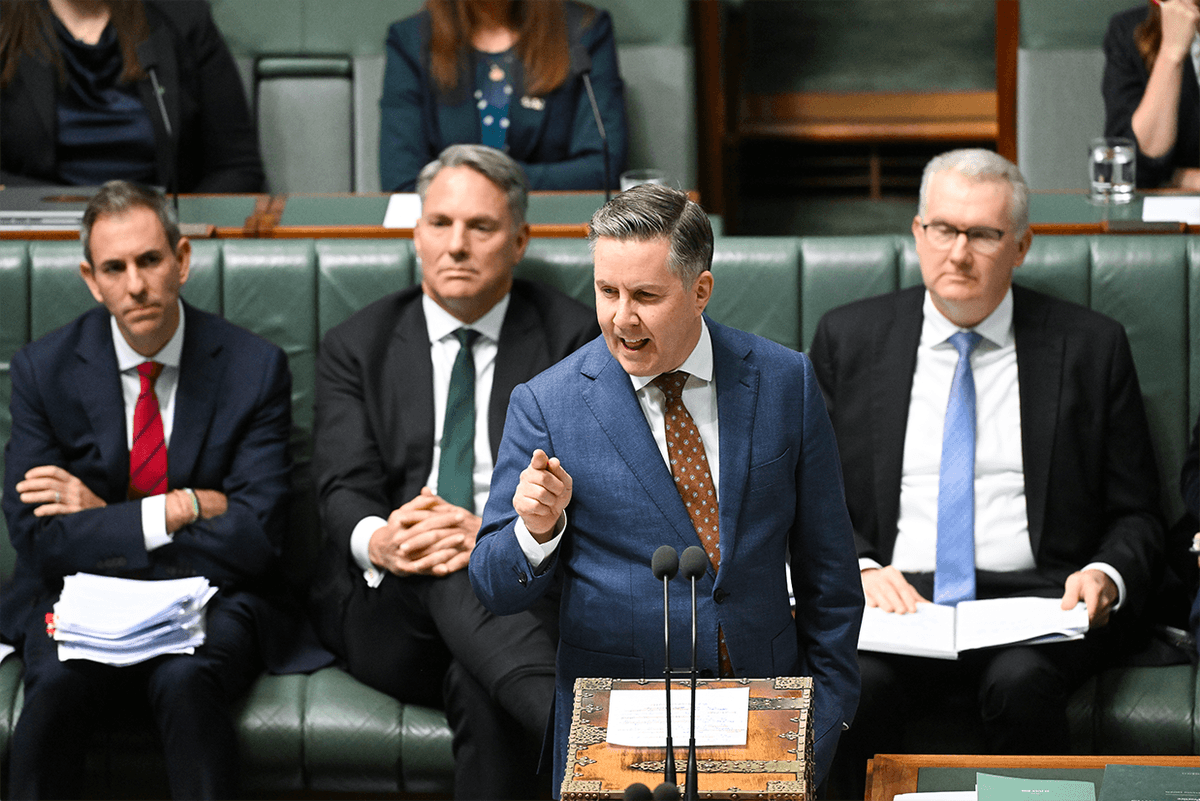
The second reading of the Health Legislation Amendment (Improving Choice and Transparency for Private Health Consumers) Bill 2026 was heard in the House of Representatives yesterday. The Bill would require medical specialists to publish their fees on the Medical Costs Finder (MCF) website, giving patients comparable information about how much procedures like a joint replacement or colonoscopy will cost them in the private sector.

By Luke Slawomirski & staff writers

Fri 26 Jun 2026 11.06 AEST

Health
Government moves to require specialist fee disclosure

Photo: AAP Image/Lukas Coch

Republish this article

This article is licensed under Creative Commons — Attribution-NoDerivatives 4.0 International (CC BY-ND 4.0).

Republishing guidelines

  • You must credit the author(s) and The Point.
  • You must link back to the original article.
  • You may not edit or modify the article content.
  • Images may be subject to separate copyright and are not included in this licence.

The second reading of the Health Legislation Amendment (Improving Choice and Transparency for Private Health Consumers) Bill 2026  was heard in the House of Representatives yesterday.

Following second reading speeches and debate, the Bill was agreed to by the House and has now been transmitted to the Senate.

The Bill would require medical specialists to publish their fees on the Medical Costs Finder (MCF) website, giving patients comparable information about how much procedures like a joint replacement or colonoscopy will cost them in the private sector.

At present, participation in the Medical Costs Finder is voluntary. That approach has failed dismally, with just 88 of more than 6,000 eligible specialists choosing to list their fees.

Current policy settings permit specialists to charge what they want. As this chart suggests, they appear to be charging what their local market will bear:

Because supply is so limited, there are concerns that price transparency may result in the unitended consequence of specialists aligning their fees (at the upper end), thus resulting in higher fees overall.

This is a legitimate concern. Another problem is that, in the absence of other information, price may be interpreted as an indicator of quality. There’s no evidence for such an association (not least because it would imply that ACT specialists are three times better than their South Australian and Tasmanian counterparts).

So, price transparency should be accompanied by additional information and education for patients, and their referring GPs, as well as stronger regulation of fees. Additional information should include outcomes such as complication rates – as proposed by Monique Ryan, Independent member for Kooyong – as well as patient-reported metrics.

The Bill also prohibits the practice of ‘phoenixing’ where private health insurers close a product then release a very similar one at a higher price. A deceptive practice that’s rightly being curtailed.

Advertisement

Related Articles

OPINION

The inverse care law: how private healthcare can increase pressure on public hospitals

By Luke Slawomirski

Private health care is supposed to take pressure off public hospitals. Sometimes it can do the opposite. When scarce clinical resources are used where they’re least needed, public patients wait longer.

Society & InequalityHealth
The inverse care law: how private healthcare can increase pressure on public hospitals

OPINION

The latest debate about private health exposes that our health system is not as universal as we think

By Luke Slawomirski

The Albanese Government’s attempt to have taxpayers stop paying so much for private health insurance sparked all kinds of talk about premiums, pensioners and pressure on public hospitals. But more importantly, it has exposed a much bigger problem with Australian healthcare.

Society & InequalityHealth
The latest debate about private health exposes that our health system is not as universal as we think

WHAT'S NEW

Jacqui Lambie turns One Nation cartoon into call to break stigma around prolapse

By Tegan George

Tasmanian Senator Jacqui Lambie has turned a One Nation cartoon mocking her vaginal prolapse into a renewed call to break the stigma surrounding a common women’s health condition.

Health
Jacqui Lambie turns One Nation cartoon into call to break stigma around prolapse

OPINION

Australia is exhibiting some of the worst traits of the US health system

By Luke Slawomirski

Australia’s health system is exhibiting some of the worst traits of its American counterpart. We spend heavily once people are sick. Over the longer term, spending on hospitals has grown faster than spending on primary care and prevention.

Society & InequalityHealth
Australia is exhibiting some of the worst traits of the US health system