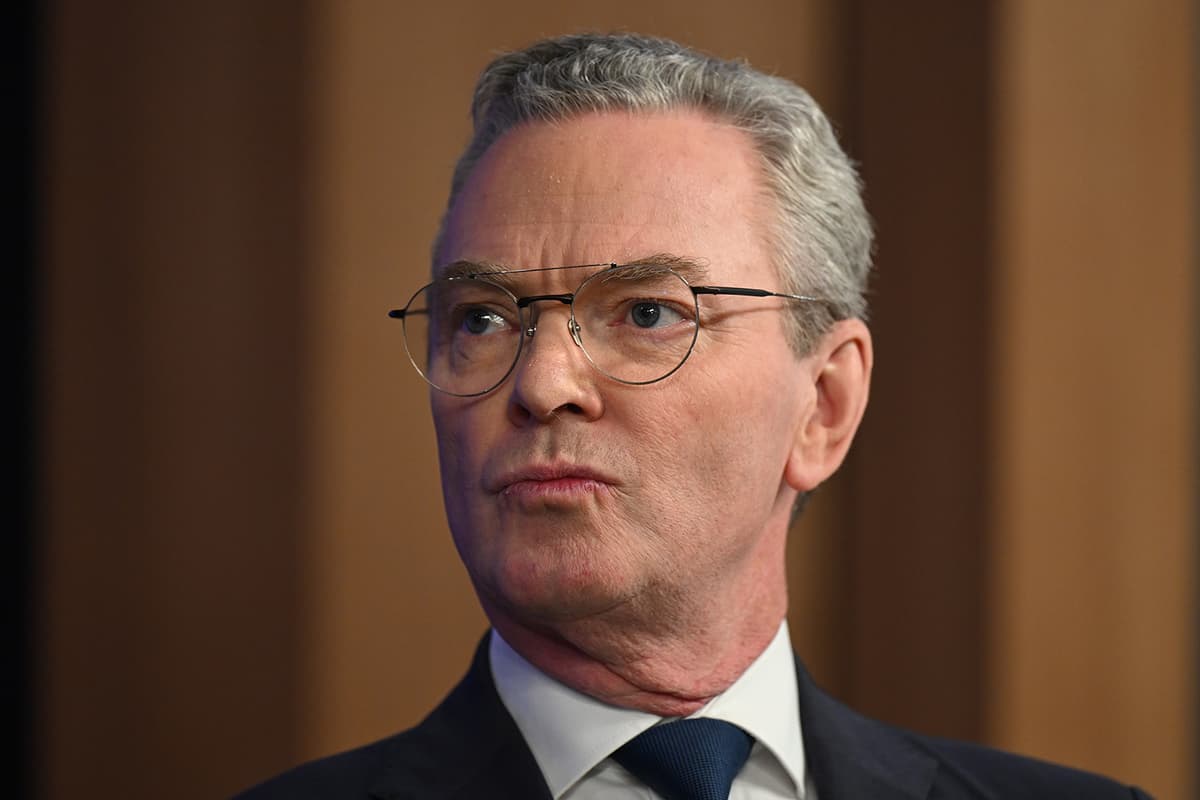
Former defence minister Christopher Pyne has declared the $368 billion AUKUS nuclear-powered submarine program “unstoppable”, telling a public inquiry Parliament should have no role in deciding Australia’s national security arrangements.
Mr Pyne served as Australia’s Minister for Defence from 2018 to 2019 under then-prime minister Scott Morrison, whose government announced the AUKUS agreement in 2021.
Few details of the negotiations have been made public, but Mr Pyne told the Adelaide hearing that decisions of that nature should be left to the National Security Committee of Cabinet and the Prime Minister.
“I don’t believe the Parliament should actually have any kind of right to vote on national security matters at this point,” he said.
“I don’t mind the Parliament debating these matters. Of course, they should. That’s their job. But I don’t believe they should have a veto over it.”
Mr Pyne said he couldn’t recall any government – Labor or Liberal – having “big public discussions” about major shifts in national security policy or significant defence purchases.
He argued the focus should be on ensuring AUKUS succeeds.
“It’s a permanent change. It is bipartisan. It’s unstoppable, and it’s critical to our national security,” he told the commissioners.
The retired South Australian politician likened the US, the UK and Australia to “siblings who all work in the same business”, adding that “we might not always agree with each other … but we are very much from the same root.”
In his submission, Mr Pyne said Australia’s planned purchase of second-hand US Virginia-class nuclear-powered submarines would deepen a longstanding defence relationship built around American military hardware.
“Some people might not think that’s a good thing, but it’s meant that we have the most interoperable military with the United States of any country in the world, more so than even the United Kingdom,” he said.
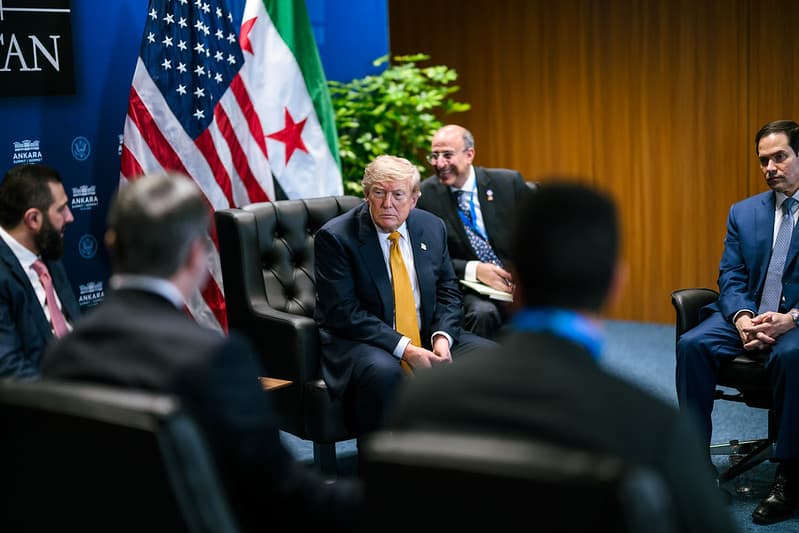
While some critics have argued that Australia’s alliance with the US should be reassessed amid concerns about the Trump administration’s volatility and reliability, Mr Pyne praised the Albanese Government for handling the administration “really well”.
“President Trump is unpredictable and a little garish for Australian tastes. I think that’s an understatement,” he said.
“But his instincts are basically right. His delivery is not always sensational. But he also won’t be President forever.”
He stressed the Washington establishment was “really just going about their business” and from a military perspective, said “the strength between the US, Australia and the UK is really quite unshakable”.
“I’ve seen no diminution of that in the time that Trump has been president,” he said.
“We have very deep and strong relationships with the United States, and they transcend presidents that come and go.”
Mr Pyne said AUKUS was more than buying second-hand nuclear-powered submarines and deepening ties, and was also about making Australia more capable of defending itself.
Under the deal, HMAS Stirling in Perth is undergoing an $8 billion upgrade so it can host UK and US nuclear-powered submarines on a rotational basis.
Mr Pyne said it would be “the most modern, and one of the busiest submarine yards on the globe”, becoming the fourth such facility across the three AUKUS nations.
“That is an enormous increase in capability to build submarines,” he said.
“That is a big and important part of AUKUS, often overlooked.”
It would also give Australia greater capacity to build, repair and maintain submarines and related defence systems at home.
“Which is why the Chinese are very anti-AUKUS,” he said.
“They obviously recognise it as a submarine procurement program, but they see the strategic importance of another yard with MROU (Maintenance, Repair, Overhaul and Upgrade) capability and an Indian Ocean submarine base.”
He argued it was also crucial for Australia to develop its own defence manufacturing in case it could no longer rely on overseas supplies during a conflict.
“If we can’t get them because the Coral Sea is cut off from us, then we have to be able to make them ourselves, and that’s why you’re seeing investments in missiles, vehicles, underwater vessels, and unmanned aerial vessels,” he said.
Mr Pyne said the key advantage of nuclear-powered submarines was their stealth – their quiet operation and ability to remain submerged for extended periods without refuelling – which would give Australia a “blue water navy” and make it “a stronger and more important and useful ally”.
While the full cost of the trilateral security pact has never been publicly detailed, Mr Pyne conceded the project was unlikely to be delivered as planned.
“Do I think they’ll deliver it on time and on budget? No, I don’t,” he said.
“Do I think that’s the most important priority? No, I don’t.
“I think the national security is the most important priority, and I think it will give us a very important capability which will keep the peace in the Indo-Pacific.”