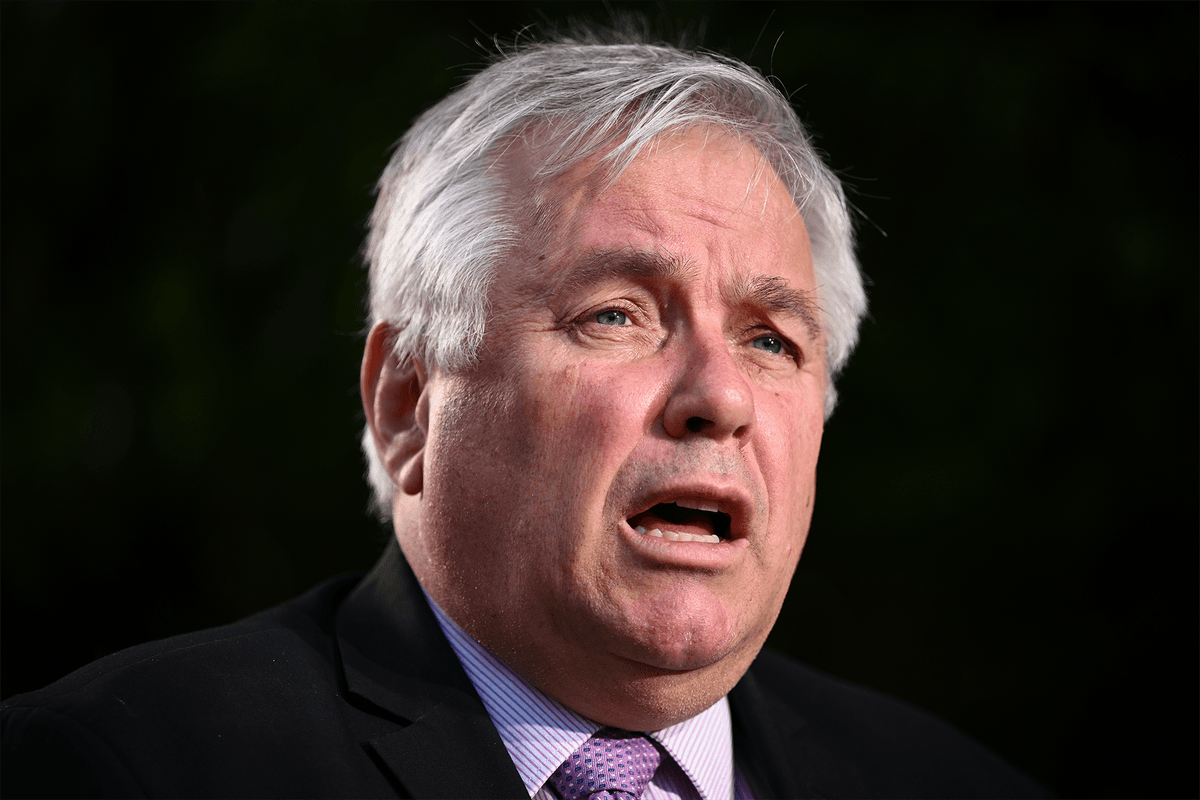
Former South Australian senator Rex Patrick has labelled the $368 billion AUKUS submarine program too expensive, too risky and too secretive about where it plans to dispose of its nuclear waste.
Giving evidence at a public inquiry in Adelaide, Mr Patrick argued Australia was trying to buy a capability usually operated by much larger economies while sacrificing other defence priorities in the process.
“We’re living in the middle-income suburb and seeking to get a capability that you only find in the in the high-income earning suburbs,” he said.
“From an absolute cost perspective, it is unaffordable,” he argued
Mr Patrick, who was an independent senator from 2017 to 2022, said Australia would be better off buying up to 30 conventional submarines for the money allocated to AUKUS.
“The idea … is, in my view, a much more sensible idea,” he told the inquiry.
“There are people who say, ‘what is the best car to buy?’ You might say a Ferrari until you need to go off road, right? And then it’s not the best car.
“So, each of these submarines will have their own particular capability.”
Mr Patrick served for more than a decade as a submariner in the Royal Australian Navy, including on the trials crew of HMAS Collins.
He said the AUKUS project had left Australia facing a widening submarine capability gap.
The Collins-class replacement project was announced in December 2007, but Mr Patrick said no contract has yet been signed for Australia’s future submarine fleet.
“What AUKUS is, it’s like getting a really good football team after the grand final’s being played,” he told the inquiry.
“Defence … have actually led us into a position where we will not have a submarine, on best hope, before 2035, and that does leave us vulnerable.”
“We’ve got aging Collins-class submarines … it’s no different to a car. When an engineering device gets older, it’s harder to maintain, it breaks down more often.”
The Albanese government is spending $11 billion over the next decade to extend the life of the six-sub fleet, bridging the gap until AUKUS vessels begin arriving.
Mr Patrick argued the project was also fraught with political, economic and technical risks.
“We’re taking on a hugely risky program. There are political risks.”
Under US law, a future president must certify the transfer to Australia would not degrade its own fleet.
Mr Patrick said the wording was “Humpty Dumpty style” because it could mean “whatever the president thinks it means at the time”.
He also questioned whether the UK could deliver its commitments under the security pact, pointing to problems with its own submarine fleet.
“It is a cluster fiasco,” he said.
“The UK cannot put any of their Astute-class submarines at sea.
“Defence has a propensity for picking risky projects and then not being able to deliver.”
Mr Patrick also accused the Australian government of being “too secretive” about the long-term management and cost of nuclear waste generated by the submarines.
“The Department of Defence … is required to cost projects from cradle to grave, including not just the capability but all the things that support the capability,” he said.
“And Defence can’t seem to find a costing document.”
He’s currently battling the Commonwealth in the Federal Court over freedom of information (FOI) request seeking details about potential disposal sites.
“I’m not asking for the release of documents that relate to how fast an AUKUS submarine might go, or how many weapons it might have, or what the launch codes might be,” he said.
“I’m asking for information that is incidental to the project, but really important to it, and that is where are you going to put the waste associated with this?”
The Department of Industry, Science and Resources is challenging a ruling allowing him access to the documents and has sought an order requiring Mr Patrick to pay the Commonwealth’s legal costs if he is unsuccessful.
“If you’re dealing with nuclear waste, you have to have social licence, and the way to get social licence is not to engage in secrecy,” said Mr Patrick.