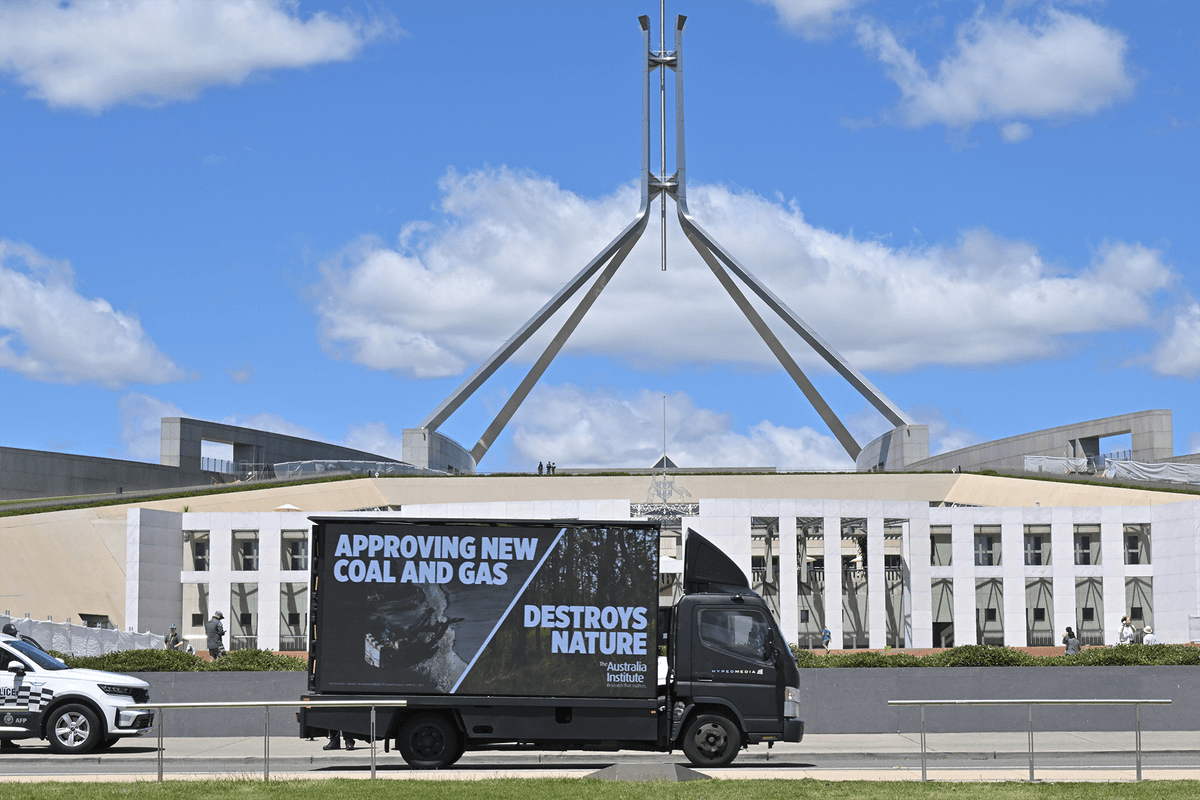
Australia risks being left with billions of dollars in stranded assets if it continues expanding fossil fuel projects while key Asian markets continue shifting towards renewable energy.
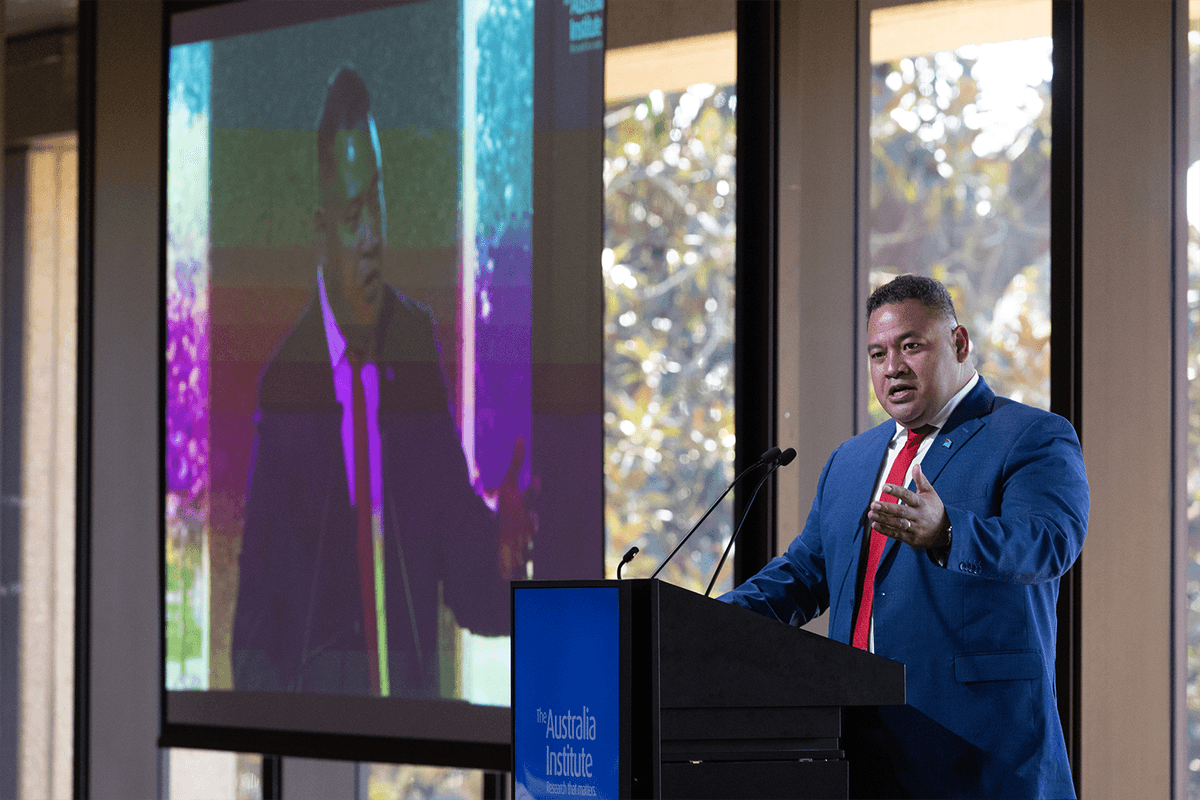
Speaking on the Australia Institute’s Follow the Money podcast, renewable energy entrepreneur Assaad Razzouk said technological advances in solar, batteries and electric vehicles were reshaping global energy markets faster than many governments and businesses realised.
He said that 2025 marked several “fundamental changes” including that “clean power met 100 per cent of all new global electricity demand growth”.
“That’s quite an achievement,” he said.
Artificial intelligence has fuelled a global debate about how energy-hungry data centres will be powered.
The gas industry and some Australian politicians argue natural gas will continue to play an important role in meeting the rising electricity demand.
“We hear a lot from the gas industry saying global demand for electricity is going to go up because of the prevalence of data centres and that only gas will be able to fill that extra consumption,” said podcast host and Australia Institute co-CEO Leanne Minshull.
“Yeah, it’s not going to happen,” Mr Razzouk replied.
“Gas is not going to deliver the electricity that we are projecting that we’re going to need because of the addition of all the data centre demand that’s coming through that we know of between now and 2030,” he said.
The CSIRO’s latest GenCost report found strong global demand for gas turbines had increased costs and extended delivery times for new gas-fired power stations.
“If you wanted to get your hands on a gas turbine today, you couldn’t,” said Mr Razzouk.
“The queue, so to speak, because of manufacturing constraints is five to 10 years in some cases. And that’s just the turbine, not all the other kit around it.”
He also pointed out that solar power grew 18 times faster than natural gas globally last year.
“One way to think about that is that solar growth in 2025 alone, so just what we added in terms of solar, was more than the total energy equivalent of all the LNG that passes through the Strait of Hormuz combined,” he said.
“What’s going to happen is that solar plus batteries plus wind are going to deliver the electricity that we need to power all that new electricity demand from data centres.
“It’s just not going to be gas. I mean, that’s just a propaganda as far as I’m concerned.”
Mr Razzouk said Australia “didn’t need to worry” about its key Asian trading partners as they were rapidly electrifying their economies, with China exporting $50 billion of clean energy technologies in March and April alone.
“That’s solar, wind, EVs, batteries that went to the rest of the world to electrify it,” he said.
“And that’s more than the total value of all US LNG, oil and coal exports by 1.3 times.”
The global energy crisis triggered by conflict in the Middle East has highlighted China’s resilience.
Despite being the world’s largest oil importer, with roughly 40 per cent of its supply passing through the Strait of Hormuz, the country has spent the past 25 years investing in electrification to reduce its dependence on imported fossil fuels.
“China was able to cut its oil imports without seemingly any impact on its economy by an amount equal to the combined daily consumption of Germany, France, and the UK. So, without skipping a beat, so to speak,” Mr Razzouk said.
He said the uptake of electric vehicles was also “eating up” diesel and oil demand, noting other Asian countries were following suit.
“If Australian executives think they can rely on long-term Asian demand for their product, for whatever excuse that they can come up with, they’re actually not looking at the technological changes that are actually reshaping their own industry,” he said.
The CEO of Gurīn Energy, a renewable energy company headquartered in Singapore, cautioned against new or expanded fossil fuel projects in Australia.
“I would expect that these exports, and more importantly, the zillions of dollars of infrastructure that was built for these exports are going to become stranded assets probably faster than people think or are calculated,” he said.
He said reducing reliance on imported fuel was also about national security.
“If you import oil, gas, and coal, you’re not really a sovereign country because you’re a hostage to the fossil fuel market, and therefore homegrown energy is what it’s about,” he said.
The clean energy executive said that was becoming increasingly important as countries sought to develop domestic AI capability.
“We’re adding something like an entire Japan-sized grid to the world in the next few years just to feed the data centre demand,” he said.
“So, if you have AI domestically, you can’t run it on imported molecules. You have to run it on your own homegrown energy.
“If you outsource your brain, then you are not a sovereign nation in essence, because people can turn that tap off anytime for any reason.
“And yes, that data needs to stay in Australia and it should be powered by Australian data centres that are in turn powered by homegrown energy. And it’s the same for every country around the world.”
Mr Razzouk said fossil fuels won’t be able to compete with solar, batteries and wind power, and countries need to get organised “otherwise they’re going to suffer consequences in terms of stranded assets and unemployment”.
“Signing 20-year LNG export contracts today out of Australia is literally managing a structural bankruptcy in the making,” he said.
“If you just put the facts together, you can just see it ahead of you. It’s coming.”