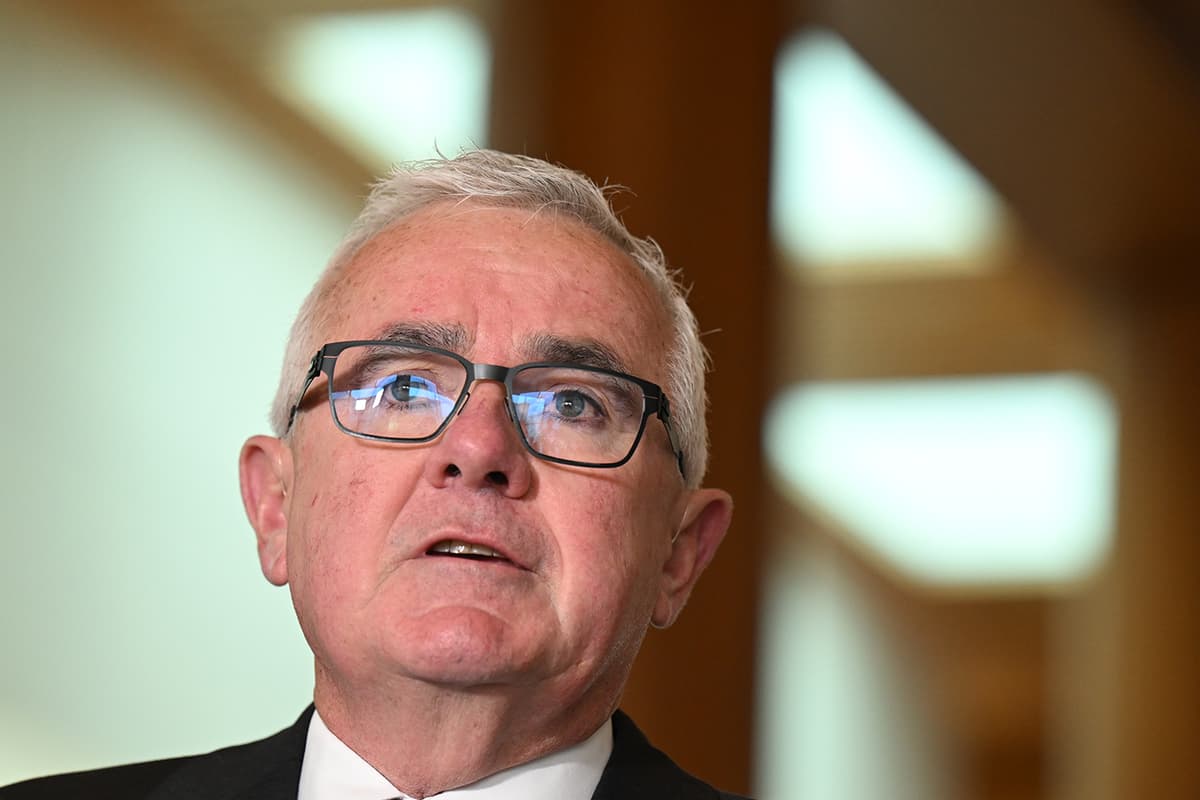
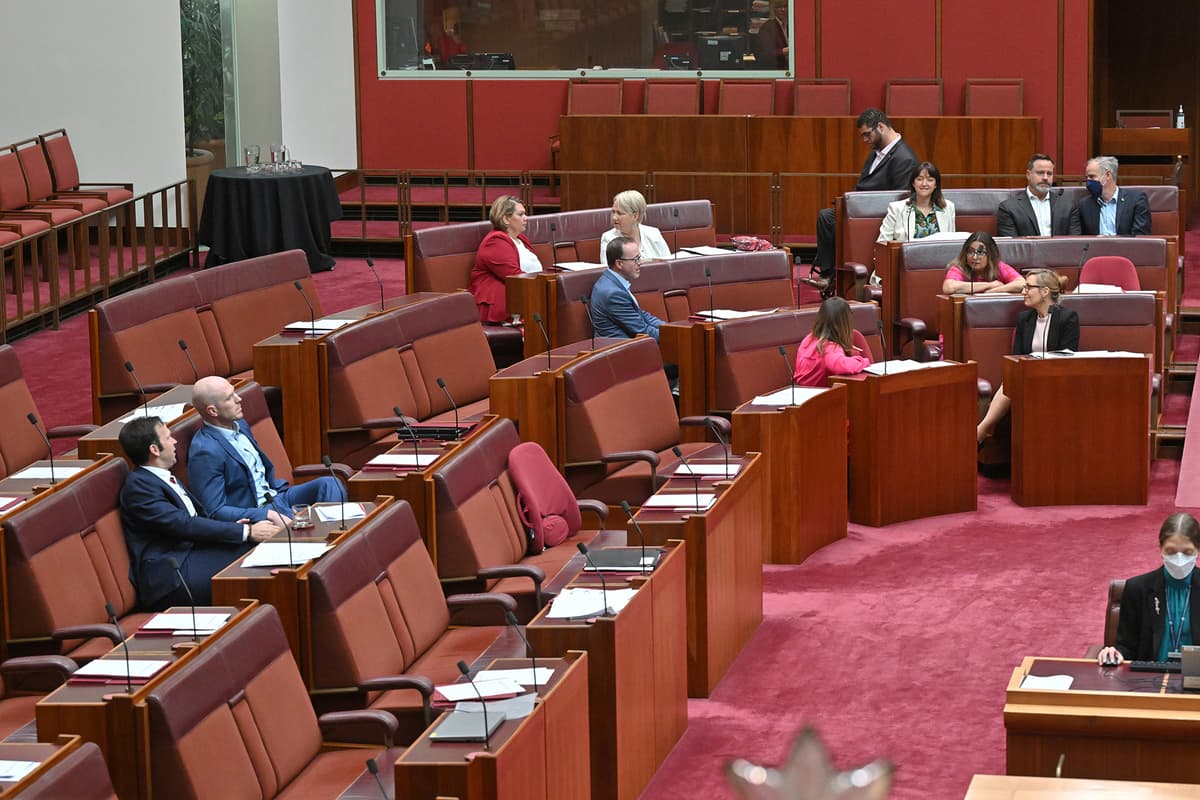
As governments around the world grapple with growing voter disillusionment and distrust, Independent MP Andrew Wilkie has called for more free votes in Parliament, arguing politicians should be able to put their constituents ahead of party loyalty.
Speaking on a webinar with the Australia Institute, the Tasmanian MP said he’d “need a magic wand” to make it happen but believed breaking away from strict party voting would lead to better decision-making in Parliament.
A free vote, sometimes referred to as a conscience vote, means members can vote according to their own beliefs, rather than taking the party’s official stance.
“Allow every member of the Parliament to represent their community and vote how they decide … except for probably voting on the budget and on confidence,” he said.
“I tell you what, you’d get some wildly unexpected and different outcomes, but the community would finally be represented.”
Mr Wilkie believed voter dissatisfaction and distrust were “near on a record high” as Australians struggle through a housing and cost-of-living crisis.
“I often try and look them in the eye on, on you know, votes on to do with conscience like animal welfare or gambling,” he said.
“I try to look them in the eye, and they’ll turn away. They won’t look me in the eye because they know what’s going on.
“They know they’re just ultimately, at the end of the day, a party hack, and they’re not following their conscience.”
The Australia Institute’s Noah Schultz-Byard noted the country’s “rigid” approach to party discipline was “almost uniquely Australian”.
“It’s not controversial in many other jurisdictions, but it’s a huge deal here,” he said.
“In most parliaments around the world, do you know what they call crossing the floor?
“Voting.”
Mr Wilkie contended those who crossed the floor to represent their constituents’ views would be rewarded at the ballot box and go a long way in restoring faith in democracy.
“I think that’s the way to rebuild public trust in governance and governments and politicians in this country to start governing for the people and not governing for vested interests like the fossil fuel export companies or the gambling companies, or the live cattle export industry into Asia, which is still largely untouched,” he argued.
Mr Schultz-Byard said the country needed to continue having conversations about “the way that coal and gas money is continuing to shape our climate policy in this country”.
“These battle lines in Canberra and across the country, they reveal a deep struggle over who politics really serves in this country,” he said.
“Satisfaction in our democracy—it’s under serious pressure, and there’s public concern about the influence of big money and lobbyists, and that’s growing.”
The Tasmanian MP wants to see political donations banned and fully publicly funded elections to “really clean things up”.
“When a donor hands over big money, that’s an investment, and they want a return on that investment,” he said.
He mentioned that the Albanese government was “trying to address some of the big issues” such as housing.
Treasurer Jim Chalmers has been forced to defend Labor’s housing reforms unveiled in the May budget, which saw changes made to the capital gains tax discount and negative gearing.
“There’s an area of policy that has been very very difficult historically, and I applaud the government for making some pretty politically tough decisions,” said Mr Wilkie.
“They’re going to lose a bit of skin over this, but that’s the sort of thing governments are elected to do.”
He urged all parties to “stop complaining about things and start developing a sophisticated policy offering that’s not only a mile wide” but said it must “be more than an inch deep.”
Despite the shortcomings, the independent MP said the country still has “one of the world’s best and most honest electoral systems”.
“I’m actually very grateful that the place works as well as it does, despite the politicians,” he said.