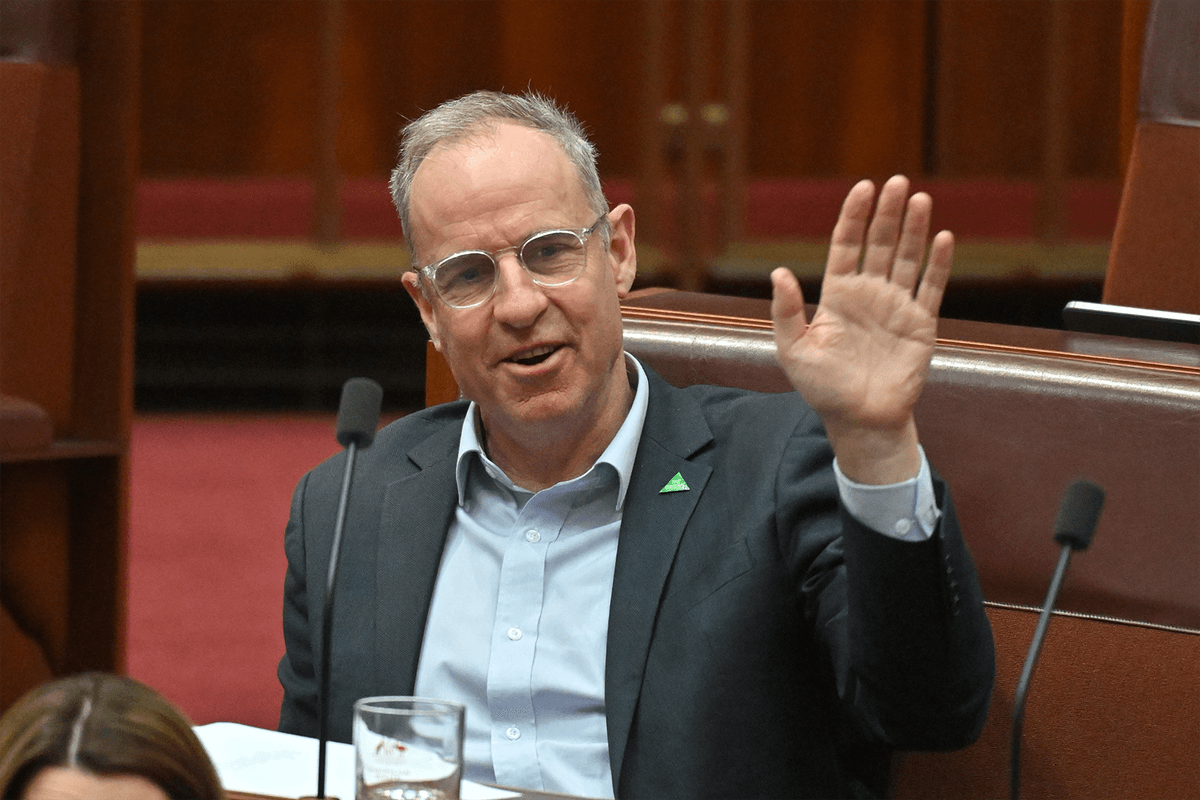
Senator McKim said the Greens wouldn’t “cop a lecture” from a government that recently budgeted $28 million to “help prop up” native forest logging.
“Chris Bowen and the Labor party have the blood of countless forest-dwelling creatures on their hands,” he said.
“For him to now claim he cares for Australia’s native forests is the height of hypocrisy, and the Greens aren’t falling for it.”
The vote will now take place on 15 September, with not just the future of koala habitat forests in northern NSW potentially at stake, but public forests across NSW, QLD, and Tasmania
In May, the Minns government announced its long-promised Great Koala National Park would be partly funded by selling carbon credits from the park to big industrial companies.
It later declared the credits would “not be able to be sold to coal and gas projects”. However, the NSW government can’t enforce that promise; the Safeguard Mechanism is a federal scheme, and nothing stops a buyer reselling credits on to a coal or gas plant anywhere in Australia, regardless of what NSW intends.
“This NSW ALP have promised for a decade to protect these forests, and then in late 2025 the shifted the goal posts to say they will only protect them as a carbon offset source for the nation’s biggest polluters. That’s a broken promise that benefits polluters, not forests or communities.” said Louise Morris, head of Fossil Fuel Transition at the Australia Institute.
“Applied to one park, it is token, and in a federal carbon trading pool, hard to implement.
Research by the Australia Institute demonstrates the country’s flagship climate policy is failing to reduce actual emissions because major polluters are given unlimited carbon offsets. Adding public native forests to that pool of offsets turns our forests into carbon trading chips and makes more pollution permits available for this uncapped greenwashing of emissions by coal, gas, AI Data centres and every big polluter in the country.
The Australia Institute report argues Labor’s Safeguard Mechanism has failed to drive reductions in gross emissions from Australia’s largest industrial facilities.
Instead, it says the scheme allows some companies to increase pollution while still claiming progress on climate action.
“Australia hands out $16.3 billion a year in fossil fuel subsidies,” said Ms Morris.
“Redirect a fraction of that, and then the protection of native forests can be done as it always has by governments; because it is in the public interest and the right thing to do. Not just because it makes sense for some neoliberal capitalist concept that a forest is only worth standing it if allows big companies to keep polluting.”